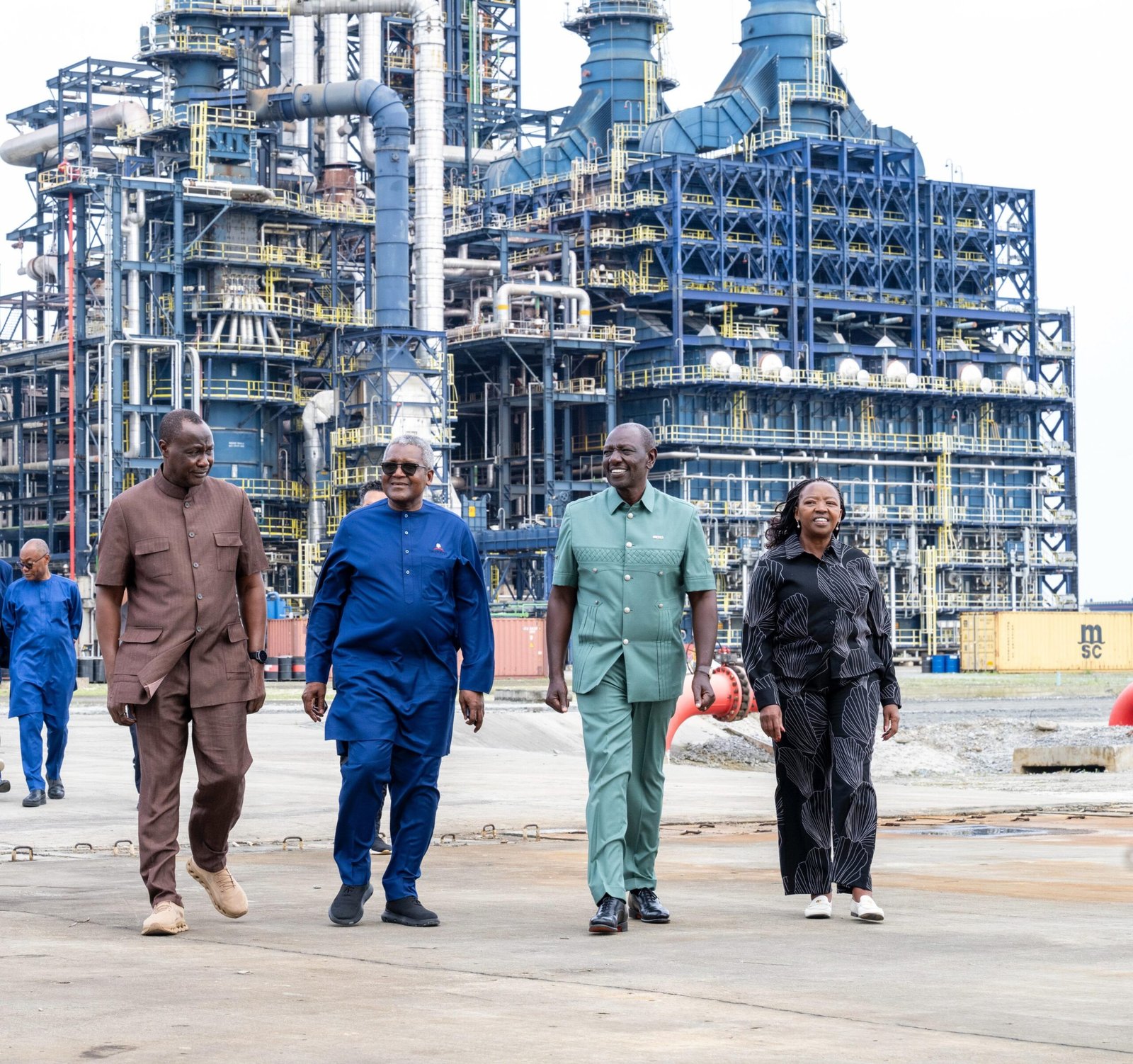
Nigerian billionaire Aliko Dangote and Kenyan President William Ruto on Wednesday broke ground on a $16 billion Dangote Kenya refinery in Lamu, marking the start of construction of a facility designed to reduce East Africa’s dependence on imported refined petroleum products.
The refinery is planned to process 700,000 barrels of crude oil per day, matching the designed capacity of Dangote’s refinery in Lagos and making it one of the largest planned refining projects in Africa. The facility is expected to be completed around 2030, although Dangote said at the groundbreaking ceremony that construction could be completed within 40 months.

Key Highlights
- Dangote Kenya refinery construction begins in Lamu at an estimated cost of $16 billion.
- The refinery is designed to process 700,000 barrels of crude oil per day.
- Dangote said construction could be completed within 40 months, while officials have targeted around 2030.
- The project includes a planned 1,000-megawatt power plant.
- Engineers India Limited has secured a $450 million engineering contract.
- Honeywell Technologies will provide engineering services, technology licensing and equipment.
- Regional governments have been offered a combined 30 percent stake in the refinery.
- The project is expected to supply petrol, diesel and jet fuel to Kenya and other East African markets.
- The refinery faces legal challenges and opposition from some residents and environmental groups.
Dangote Kenya Refinery Targets 700,000 Barrels Per Day
The Dangote Kenya refinery is designed to process 700,000 barrels of crude oil per day and supply petroleum products to Kenya and neighbouring countries.
The project is expected to produce diesel, petrol and jet fuel, while also supporting petrochemical, base oil and bitumen industries.
Dangote has said the refinery will serve a wider East African market as countries seek to reduce their dependence on imported refined petroleum products.
$16 Billion Project to Boost East Africa’s Fuel Supply
The refinery is being developed at Lamu Port on Kenya’s northern coast, with the project positioned as a major investment in the region’s energy infrastructure.
Kenyan President William Ruto described the refinery as Kenya’s largest foreign direct investment and said it would support energy security, industrialisation and regional integration.
According to Reuters, Ruto said the investment could increase Kenya’s annual gross domestic product by about 12 percent.
Regional demand for petroleum products is estimated at between 20 million and 30 million metric tonnes annually, according to David Ndii, Ruto’s chief economic adviser.
The scale of the projected demand has strengthened the case for additional refining capacity in East Africa, which remains heavily dependent on imported petroleum products.
Engineers India, Honeywell Join Dangote Refinery Project
Engineers India Limited has been awarded a $450 million engineering contract for the project, while Honeywell Technologies will provide engineering services, technology licensing and equipment.
Honeywell said its previous work with Dangote on the Nigerian refinery would provide experience that could help accelerate the Kenyan project.
The two companies previously worked together on upgrades to the Dangote refinery in Nigeria.
1,000MW Power Plant Planned for Lamu Refinery
The Dangote Kenya refinery will also include a planned 1,000-megawatt power plant.
The power facility is expected to supply electricity to the refinery, with surplus power potentially sold to other customers through the Kenyan grid.
The integrated power component is intended to support the refinery’s large-scale industrial operations and contribute to the wider energy infrastructure around the Lamu project.
Read also:
- Dangote Lamu Refinery: Kenyan Court Orders Status Quo On Disputed Land Ahead Of Groundbreaking
- NNPCL Posts ₦7.2 Trillion Profit After Tax in 2025 Despite 24% Revenue Drop
- Ruto’s Dangote Refinery Tour Offers Blueprint for Kenya’s Lamu Project
- Nigeria Urges Private Sector Investment to Drive Oil Refining, Gas Development
- InfraCredit Secures m IFC Facility to Boost Local-Currency Infrastructure Finance in Nigeria
Dangote Offers Regional Governments 30% Stake
Dangote has offered governments in the region a combined 30 percent stake in the refinery.
Kenya and Rwanda are among the countries that have expressed interest in participating, with Dangote saying governments would be allowed to spread their equity payments over several years.
The refinery’s shares are also expected to be listed on the Nairobi Securities Exchange in the future.
Regional Leaders Attend Lamu Groundbreaking
The groundbreaking ceremony attracted several African leaders, including Ethiopian Prime Minister Abiy Ahmed, Ugandan President Yoweri Museveni, Benin President Romuald Wadagni and Togolese President Jean-Lucien Savi de Tové.
Former Nigerian President Olusegun Obasanjo was also among the dignitaries present.
The gathering highlighted the regional importance attached to the project as East African countries seek greater control over their petroleum supply chains.
Dangote Refinery Faces Land and Environmental Challenges
Despite the groundbreaking, the project faces legal and environmental challenges.
Some Lamu residents have raised concerns over land acquisition and compensation, while conservationists have expressed concerns about the potential impact on the area’s environment and marine ecosystem.
A Kenyan court has ordered that the status quo be maintained over parts of the disputed land pending further proceedings. Dangote has maintained that the court action would not stop the project’s launch, although it could affect some activities at the site.
Lamu Old Town, a UNESCO World Heritage site, is also located in the wider area, prompting environmental concerns about the potential impact of large-scale industrial development.
Dangote Defends Kenya Refinery Project
Dangote has defended the project against criticism from residents, conservationists and other stakeholders.
He has argued that the refinery is intended to strengthen energy security and reduce the amount of foreign exchange African countries spend importing refined petroleum products.
Dangote has also dismissed claims that the project is intended to disadvantage local businesses, saying the refinery would create new industrial and economic opportunities.
Jobs and Regional Industrial Growth Expected
The project is expected to generate tens of thousands of jobs during construction and operation while supporting industries linked to petroleum refining and petrochemicals.
Dangote and Kenyan officials have also highlighted opportunities for skills development and employment for local workers.
The refinery is ultimately intended to serve Kenya and a wider market stretching across East Africa, helping the region retain more value from its petroleum consumption within Africa.
Dangote Expands Refining Footprint Across Africa
The Lamu project represents a major expansion of Dangote’s refining ambitions beyond Nigeria.
The planned Kenyan facility follows the development of the Dangote refinery in Lagos, which has a designed capacity of 700,000 barrels per day and is undergoing plans to expand its capacity further.
With the Lamu refinery, Dangote is seeking to replicate the Nigerian model in East Africa by combining large-scale refining with associated energy and industrial infrastructure.
The success of the Kenyan project will depend on construction progress, financing, crude supply, infrastructure development and the resolution of outstanding legal and environmental issues.
For more updates, follow us on X.