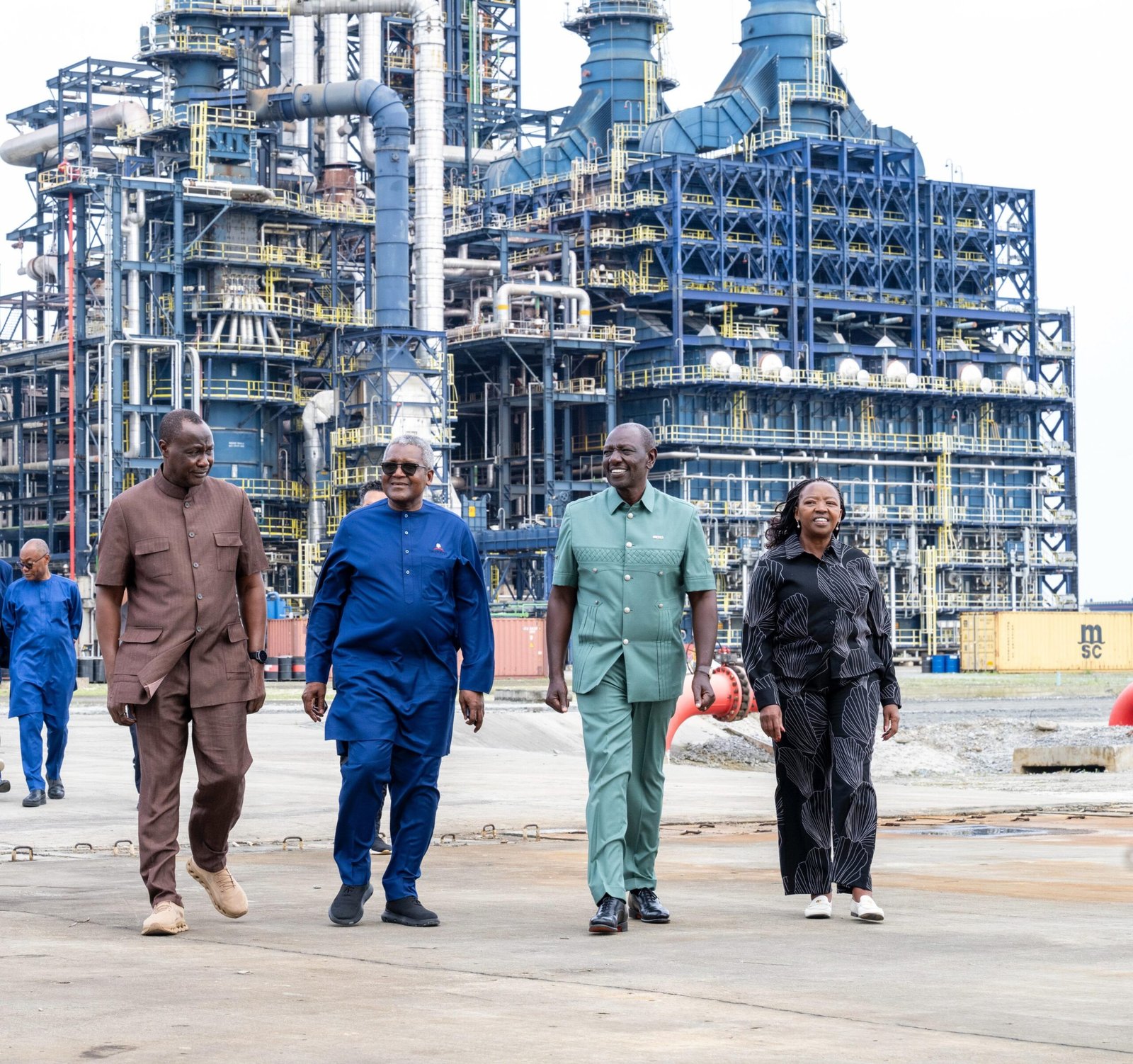
Kenyan President William Ruto toured the Dangote Petroleum Refinery in Lagos on September 25, 2026, ahead of the planned September 30 groundbreaking for the Dangote-backed East Africa Refinery in Lamu, Kenya. Ruto said the Kenyan project would be bigger, while current public descriptions put its planned capacity at 700,000 barrels per day.
Key Highlights
- Ruto toured the Dangote refinery in Lekki with First Lady Rachel Ruto and senior Kenyan officials.
- Ruto described the Lagos complex as a 700,000-barrel-per-day refinery; some reports list its current capacity at 650,000 bpd.
- The Lamu refinery is planned for 700,000 barrels per day, despite Ruto saying it would be bigger.
- Kenya expects the project to support fuel security, industrialisation and about 60,000 jobs.
- The proposed refinery is estimated at about KSh 2.2 trillion, with reports putting its dollar cost between $15 billion and $17 billion.
- The planned September 30 groundbreaking would advance a project linked to the LAPSSET corridor and regional fuel markets.
Ruto Inspects Dangote Refinery in Lagos
Ruto visited the refinery in Lekki at the invitation of Dangote Group chairman and chief executive Aliko Dangote. The Kenyan president was accompanied by First Lady Rachel Ruto and senior officials.

Ruto said the Nigerian complex has a crude refining capacity of 700,000 barrels per day and produces petrol, diesel and aviation fuel. He also highlighted infrastructure that he said includes 120 kilometres of subsea connections for moving crude from ships to the refinery.
“This huge achievement is a testament to what African governments, investors and financial institutions can do together,” Ruto said after the tour. The visit came days before the planned start of construction on the Lamu project. The Star reported on Ruto’s refinery tour and the planned Lamu groundbreaking.
Lamu Refinery Targets 700,000 Barrels Per Day
Kenya’s proposed East Africa Refinery is planned to process 700,000 barrels of crude oil per day. Ruto said the Lamu facility would be bigger than the refinery he toured in Lagos. However, the capacity figures publicly reported for the two projects are close: Ruto described Dangote’s facility as 700,000 bpd, while some reports give its current capacity as 650,000 bpd and the Lamu project’s design capacity as 700,000 bpd.
Dangote has also announced plans to expand the Lagos refinery, which could eventually change the comparison. The Lamu project remains planned and has not yet begun operations.
Kenyan officials have presented the refinery as a way to strengthen domestic fuel supply and reduce reliance on imported refined products. The project is also intended to serve markets in the wider East African region.
Jobs, Financing and the LAPSSET Corridor
The Kenyan government expects the refinery to support about 60,000 jobs and attract industries such as fertiliser, chemicals and packaging. These are projections associated with the project, rather than jobs already created.
Recent reports estimate the project cost at about KSh 2.2 trillion, or roughly $15 billion to $17 billion. The proposed financing is expected to combine private investment and public-sector participation, with Dangote Group and the Africa Finance Corporation among the parties reported to be involved. Kenya has previously been reported as considering an equity stake.
The planned site is connected to Lamu’s deep-water port and the Lamu Port-South Sudan-Ethiopia Transport (LAPSSET) Corridor, which is intended to link Kenya’s coast with inland markets. The location could support the movement of crude to the refinery and refined products across the region.
Read also:
- Dangote Refinery Supplied 71% Of Nigeria’s Petrol In August, NMDPRA Says
- Dangote Refinery To Double Workforce As Processing Capacity Targets 1.4 Million Bpd
Groundbreaking Planned for September 30
Ruto’s tour followed discussions with Dangote and Africa Finance Corporation chief executive Samaila Zubairu during the United Nations General Assembly meetings in New York. The planned groundbreaking ceremony in Lamu is scheduled for September 30, 2026, with Ruto expected to lead it.
Construction has been projected to take roughly three to five years, depending on financing and construction timelines. The project’s progress will depend on funding, engineering, logistics and policy arrangements as Kenya seeks to translate the Lagos visit into a large-scale industrial project in Lamu.
For more updates, follow us on X.