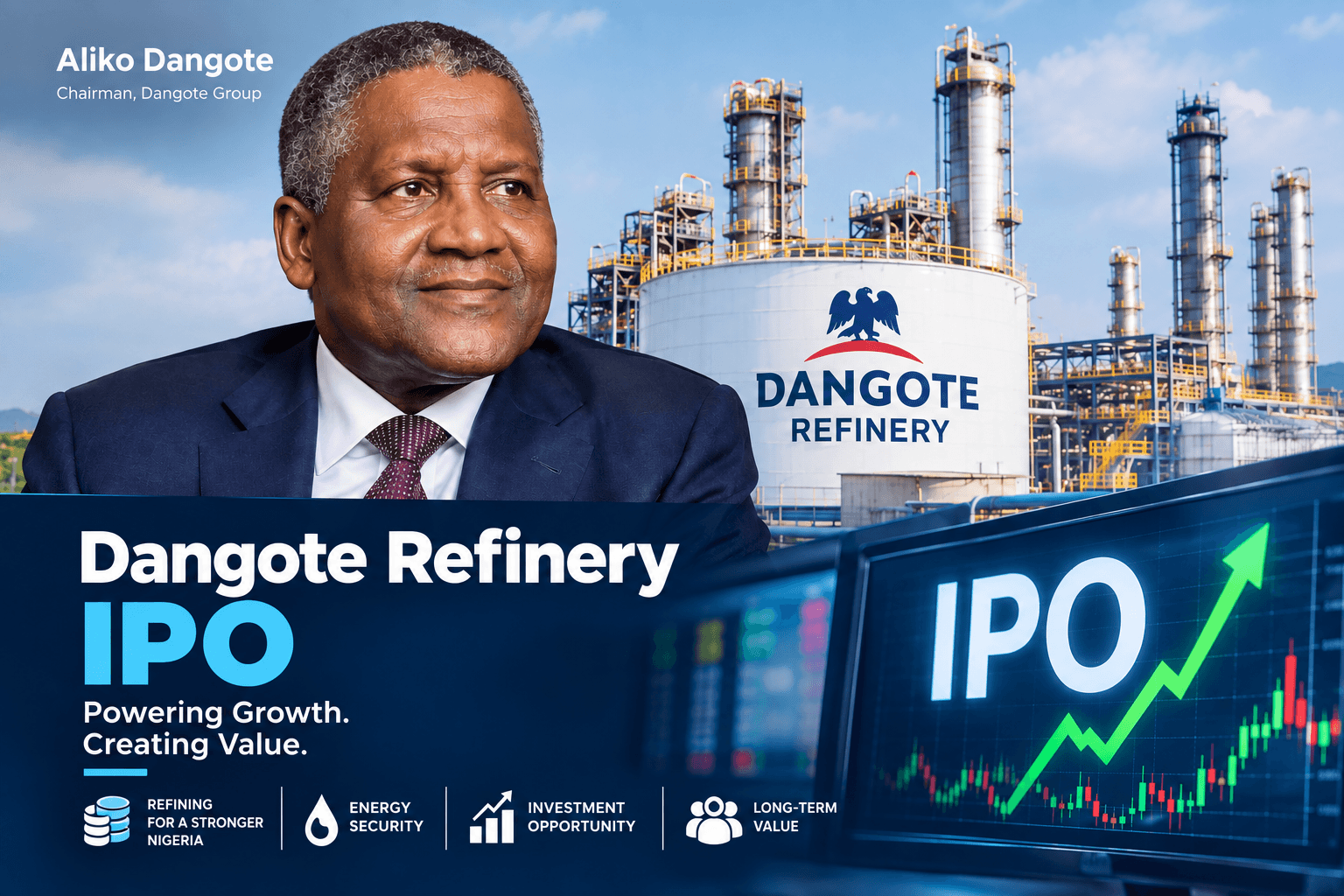
The Dangote Petroleum Refinery’s public share offer has opened amid debate over its valuation, ownership structure and the risks for investors. Social media commentator VeryDarkMan has criticised the offer, while questions about Dangote Flour Mills’ history have resurfaced as Nigerians weigh the refinery’s investment case.
Key Highlights
- The Dangote Refinery IPO opened on September 14, 2026, after receiving regulatory approval.
- The offer comprises 4.1 billion shares at ₦525 each, with a 10-share minimum subscription of ₦5,250.
- VeryDarkMan has criticised the offer and questioned whether ordinary Nigerians will benefit.
- The SEC had warned against unauthorised IPO marketing in June, before the formal offer was filed and approved.
- Analysts and shareholder groups have raised questions about valuation, allocation and the ownership structure.
- Dangote Flour Mills’ past ownership changes are part of the discussion, but that company’s history does not determine the refinery’s future performance.
VeryDarkMan Criticises the Dangote Refinery IPO
Social media commentator Martins Vincent Otse, known as VeryDarkMan, has criticised the share offer and compared it to a Ponzi scheme, questioning whether ordinary Nigerians would benefit from buying shares. That comparison represents his opinion; it is not a regulatory finding about the IPO.

He has also questioned the consumer impact of Dangote Group businesses and raised a privacy concern after saying he received promotional messages about the offer. He questioned how his phone number had been obtained. The message and the circumstances around its delivery have not been independently established in the material reviewed for this report.
The comments have added to a broader debate about the refinery’s valuation, the portion of shares available to public investors and the information investors need to assess the offer.
IPO Is Open After Earlier SEC Warning
The Securities and Exchange Commission warned in June 2026 that no application had then been filed or approved for a purported Dangote Refinery public offer. The notice addressed unauthorised promotional activity at that time; it preceded the formal offer.
The refinery’s IPO subsequently received SEC approval and opened on September 14. The offer comprises 4.1 billion shares priced at ₦525 each, with a minimum application of 10 shares, or ₦5,250. The SEC has advised the public to use only approved subscription channels and official offer information. Read the SEC’s notice on the approved Dangote Refinery IPO.
Before the formal offer, shareholder groups had called for clarity about retail investor allocation and participation. Reports have also raised questions about the offer’s valuation, the shareholding structure after the IPO and restrictions applying to some earlier investors. These are matters for investors to assess against the offer documents and company disclosures.
Dangote Flour Mills’ History Returns to the Debate
Dangote Flour Mills was a publicly listed company before Tiger Brands acquired a controlling stake in 2012. Tiger later reported losses in its Nigerian operations and agreed to sell its stake back to Dangote Industries in 2015. Dangote Industries subsequently agreed to sell the flour business to Singapore-based Olam; the transaction was completed in 2019, after which the company was delisted.
Some commentators cite that history as a reminder that investments linked to the same business group can have different outcomes. However, the flour business and the refinery are separate companies with different assets, operations, financial positions and market conditions. Dangote Flour Mills’ past performance cannot by itself show how the refinery shares will perform.
Read also:
- Dangote Refinery IPO Oversubscription: What Happens If Demand Exceeds Available Shares?
- 8 Things You Must Do After Buying Dangote Refinery IPO Shares
- Crude Supply to Nigerian Refineries Rises 17% as Petrol Imports Drop 26%
- Tinubu Seeks Fresh Read also:
.5bn World Bank Financing as Nigeria’s Debt Hits ₦166.79tn - Dangote Foundation Launches Share Grant for 2 Million Nigerian Women Through Refinery IPO
t
Investors Urged to Review Offer Documents
The debate underscores the need to distinguish official offer information from promotional claims and social media commentary. Investors assessing the IPO can review the prospectus, audited financial statements, valuation basis, ownership structure, dividend policy, debt and disclosed risks before making a decision.
The refinery’s size and strategic role in domestic fuel supply may form part of an investment case, but they do not remove exposure to crude prices, foreign exchange movements, operating costs, maintenance, competition and policy changes. The share offer’s eventual performance will depend on the company’s results and market conditions.
For more updates, follow us on X.