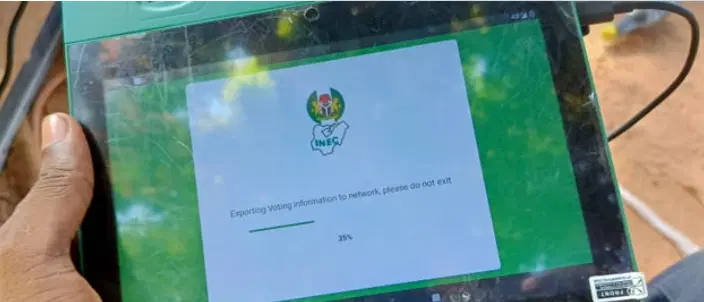
About 48.8 per cent of result sheets uploaded to the Independent National Electoral Commission’s (INEC) IReV portal during the 2023 presidential election came from mobile phones or other devices that were not BVAS machines, according to an analysis by Mundx Analytics.
The analysis examined 103,399 result sheets with readable device metadata. Mundx Analytics said about 50,432 of the result sheets were uploaded from non-BVAS devices, while approximately 52,967 were uploaded using BVAS devices.

Key Highlights
- Mundx Analytics found that 48.8 per cent of analysed 2023 presidential result sheets were uploaded from non-BVAS devices.
- The analysis covered 103,399 result sheets with readable device metadata.
- About 50,432 result sheets were linked to non-BVAS devices.
- Approximately 52,967 result sheets were linked to BVAS devices.
- Infinix, Tecno, Samsung, Xiaomi and Huawei were among the phone brands identified.
- Lagos was identified as one of the areas with a notably high volume of non-BVAS uploads.
- Mundx Analytics said the finding does not establish that votes were altered or that unlawful activity occurred.
- The analysis has renewed calls for greater clarity over the results-upload process ahead of the 2027 general elections.
2023 Presidential Election IReV Uploads Analysed
Martin Uwakwe, founder of Mundx Analytics, disclosed the findings during an interview on Channels Television’s Morning Brief.
According to the analysis, 103,399 result sheets with readable device metadata were examined. Of these, 48.8 per cent, representing approximately 50,432 result sheets, were uploaded from mobile phones or other devices that were not BVAS machines.
The remaining 51.2 per cent, or approximately 52,967 result sheets, were identified as having been uploaded from BVAS devices.
The analysis identified Infinix, Tecno, Samsung, Xiaomi and Huawei among the phone brands associated with the non-BVAS uploads. Lagos was also identified as having a notably high volume of such uploads.
Mundx Calls for Greater Transparency
Uwakwe said the findings raise questions about the digital accountability and chain of custody of election results.
He called on INEC to explain the process through which results move from being announced and signed at polling units to appearing on the IReV portal.
“48% of result sheets on the IREV portal were uploaded using devices that are not the BVAS machine — and that raises a lot of concern,” Uwakwe said.
He also called for greater transparency ahead of the 2027 general elections, particularly on who is authorised to upload result sheets, the circumstances under which alternative devices may be used and how digital records are protected.
Read also:
- Osun Election: INEC Uploads 3,292 Polling Unit Results as Collation Nears Final Stage
- Of INEC, Amupitan, and the way forward
- INEC seeks legal backing for IReV in Electoral Act
Analysis Does Not Establish Vote Manipulation
Mundx Analytics has stressed that its findings do not allege that votes were altered or that any unlawful activity took place.
Instead, the analysis focuses on the technology and accountability surrounding the transmission of polling-unit result sheets to IReV.
The use of a non-BVAS device to upload a result sheet, by itself, does not establish that the underlying result was changed. Further examination would be required to determine the circumstances surrounding individual uploads and whether they complied with INEC’s procedures.
The finding therefore raises questions about the results-upload process rather than establishing electoral fraud.
BVAS and the IReV Results Portal
The Bimodal Voter Accreditation System, known as BVAS, was introduced by INEC as part of Nigeria’s electronic election technology framework.
IReV provides public access to polling-unit result sheets after they are uploaded. The EC8A form contains the results recorded at the polling unit and is a key document in the results-management process.
The public availability of these documents has enabled journalists, election observers and technology platforms to independently examine polling-unit results. Recent election-monitoring work has also demonstrated how technology can be used to process and analyse large numbers of IReV documents.
2023 Election Faced IReV Upload Challenges
The 2023 presidential election was also affected by delays and technical problems involving the electronic upload of results to IReV.
INEC previously attributed some delays to technical issues, including problems involving the presidential election’s folder structure, server errors, offline queues and devices being switched off after some presiding officers had left polling units. The commission also acknowledged other problems, including delays and instances of blurred result-sheet images.
These challenges contributed to questions about the timing and reliability of electronic result uploads during the election.
What the Finding Means Ahead of 2027
As Nigeria prepares for the 2027 general elections, the latest analysis places renewed attention on the complete journey of polling-unit results.
Questions include who can upload result sheets, whether alternative devices can be authorised under particular circumstances, how device metadata is recorded and how the integrity of uploaded documents can be independently verified.
Mundx Analytics has described itself as an independent election data and technology platform that works with result sheets published by INEC. Its technology processes polling-unit documents and applies checks to make election data easier for the public to examine.
The platform has also been involved in more recent election-monitoring efforts, including real-time analysis of polling-unit results during the 2026 Ekiti and Osun governorship elections.
The 48.8 per cent finding does not, on its own, establish that the 2023 presidential election results were manipulated. However, it raises questions about the technical process through which result sheets reached IReV and the level of transparency surrounding that process.
With the 2027 elections approaching, a clear explanation from INEC of the results-upload workflow, device authorisation, metadata and safeguards could help the public better understand how polling-unit results move from the point of announcement to their publication on IReV. For updates on this and other election stories, follow us on X.