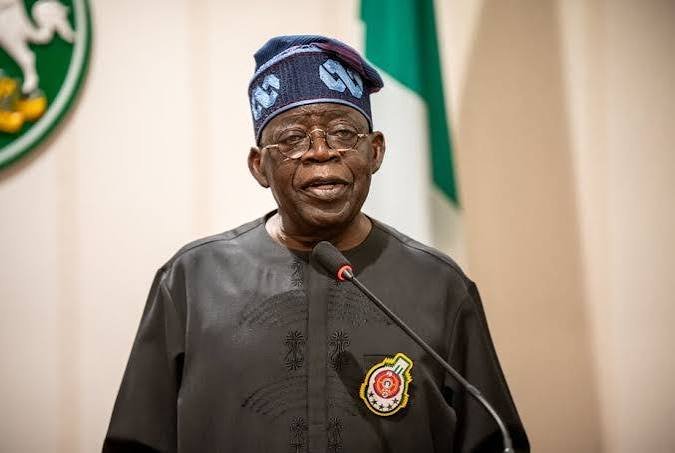
More than 600 senior academics from public universities across Northern Nigeria have endorsed President Bola Ahmed Tinubu for a second term in 2027, giving fresh political weight to his administration as it seeks to build a new relationship with university lecturers through the renegotiated Federal Government-ASUU agreement.
The academics announced their support at a closed-door engagement held on September 10 at the Umaru Musa Yar’Adua Centre in Kaduna. The meeting was convened by Ibrahim Masari, Special Adviser to the President on Political Matters, to assess the Tinubu administration and discuss Nigeria’s political direction ahead of the 2027 general elections.

Key Highlights
- More than 600 northern academics reportedly endorsed Tinubu for a second term in 2027.
- The academics were drawn from public universities across Northern Nigeria.
- ASUU President Chris Piwuna said the union has not endorsed Tinubu or any political candidate.
- The endorsement came amid implementation of the renegotiated ASUU-FG agreement.
- ASUU has threatened to reactivate its nationwide strike over outstanding implementation issues.
- The academics backed Tinubu but demanded action on insecurity, inflation, unemployment and infrastructure.
Northern Academics Back Tinubu
The development is significant because it comes against the backdrop of the Federal Government’s renegotiated agreement with the Academic Staff Union of Universities, ASUU, formally unveiled in January 2026 after years of negotiations.
However, the endorsement does not represent the official position of ASUU.
ASUU President, Professor Chris Piwuna, said the union remains apolitical and has never endorsed a political candidate.
Piwuna maintained that individual academics are free to participate in politics in their personal capacities, but such activities should not be presented as the position of the union.
The distinction is important because the academics who endorsed Tinubu were not acting under an official ASUU mandate. They were presented as senior academics drawn from public universities across the 19 northern states.
Representatives from the North-West, North-Central and North-East reportedly addressed the gathering.
The Vice Chancellor of Kaduna State University, Professor Abdullahi Ibrahim Musa, spoke for academics from the North-West, while the Chief Librarian of the Federal University Lafia, Professor Abdulrazaq Baba Abdulrahman, represented the North-Central zone.
A representative of the Federal College of Agriculture, Gwoza, spoke for the North-East, while Professor Mohammed Umar Sanda of the Federal University Dutsinma was also reported to have attended.
However, there was no indication that every academic associated with the gathering was physically present.
Professor Mainasara Yakubu Kurfi of Bayero University, Kano, was reportedly listed as an attendee but later denied being present, saying he was not aware of the meeting.
Tinubu Endorsement Comes With Conditions
The meeting was structured around an assessment of the Tinubu administration and the 2027 political contest.
An invitation letter reportedly listed the economy, security, education, infrastructure and social welfare among the areas to be assessed. It also referred to securing the “endorsement and active support” of the academic community for Tinubu’s re-election.
The academics subsequently endorsed Tinubu but made it clear that their support should not be interpreted as a blank cheque.
They acknowledged that some of the administration’s economic reforms had resulted in short-term hardship through higher living and transportation costs and inflationary pressures.
At the same time, they credited the administration with progress in education financing, agriculture, infrastructure, business support, compressed natural gas, investment and the digital economy.
The academics called on the government to tackle rising food and transportation costs, unemployment and insecurity.
They also demanded increased investment in agriculture, education, healthcare, roads, electricity, irrigation and other infrastructure, particularly across Northern Nigeria.
The conditional nature of the endorsement adds another dimension to the political development, as the academics combined their support for Tinubu with specific expectations from his administration.
Read also:
- FG Releases CATA Payments To Academic Staff In Universities, Polytechnics, Colleges of Education
- Gombe Varsity ASUU Suspends Planned Indefinite Strike
- Tinubu Latest News: A Complete Guide to the Tinubu Presidency, Reforms and the 2027 Election
ASUU-FG Agreement Faces Implementation Test
The political endorsement comes as the Tinubu administration seeks to establish a more stable relationship with university lecturers following years of recurring industrial disputes.
The Federal Government and ASUU formally unveiled the renegotiated 2025 agreement in January 2026.
The agreement provided for a 40 per cent upward review of the emoluments of academic staff, effective from January 1, 2026, through the Consolidated Academic Tools Allowance structure.
It also introduced a Professorial Credit Allowance of N1.8 million annually for professors and between N840,000 and N870,000 for academic readers.
The Federal Government presented the agreement as a framework for ending recurring industrial disputes and improving stability in Nigeria’s university system.
In February, the government announced that implementation of the 40 per cent increase in the Consolidated Academic Allowance had commenced, directing federal universities to incorporate the approved increase into their payroll systems.
The Education Ministry later announced that funds had been released for eight months of the Consolidated Academic Tools Allowance, covering January to August 2026.
According to the ministry, the funds were released to federal universities, polytechnics and colleges of education, with institutions directed to commence payment to eligible academic staff.
ASUU Threatens Fresh Strike
Despite the progress claimed by the Federal Government, tensions over implementation remain.
On September 11, one day after the Kaduna meeting, ASUU threatened to reactivate its suspended nationwide strike, citing what it described as incomplete or haphazard implementation of the 2025 agreement.
The union also demanded payment of the remaining 3.5 months of salaries withheld during the previous industrial dispute, as well as remittance of billions of naira deducted from lecturers’ earnings, including pension, cooperative and union dues.
The development presents a delicate situation for the Tinubu administration.
On one side, more than 600 senior academics from northern public universities have reportedly declared support for the President’s re-election.
On the other, the national leadership of ASUU is warning that unresolved welfare and implementation issues could trigger another nationwide shutdown of universities.
The two positions, however, represent different levels of the academic community.
The Kaduna group made a political declaration in support of Tinubu, while ASUU, as an organisation, continues to focus on institutional and welfare demands and insists that it will not endorse political candidates.
Northern Universities and ASUU Agreement
There is also evidence that implementation of the new agreement is progressing at different rates across the country.
ASUU has acknowledged that implementation has commenced in several states, including Bauchi, Ekiti, Ogun, Benue, Yobe, Adamawa, Kebbi, Katsina and Borno.
At the same time, disputes over implementation remain in some institutions.
In Kaduna State, Governor Uba Sani’s administration recently approved measures giving effect to provisions of the 2025 FGN-ASUU agreement following pressure from lecturers.
The development is noteworthy because Governor Sani was also among the political leaders present at the Kaduna meeting where the northern academics endorsed Tinubu.
Other northern governors reportedly present included Dauda Lawal of Zamfara, Mai Mala Buni of Yobe, Babagana Zulum of Borno and Inuwa Yahaya of Gombe.
Defence Minister Bello Matawalle, Housing Minister Muttaqha Rabe Darma and former Katsina Governor Aminu Bello Masari were also reported to have attended.
The gathering therefore brought together academics and influential political figures from the region at a politically significant moment.
What the Endorsement Means for Tinubu
Whether the endorsement will translate into electoral influence remains a separate question.
A declaration by 600 or more academics does not automatically translate into 600 votes or establish a measurable bloc of votes.
Its political significance, however, lies in the profile of the academics involved, the geographical spread claimed for the gathering and the symbolism of academics from Northern Nigeria openly backing an incumbent president ahead of the 2027 election.
The endorsement also gives the Tinubu administration an opportunity to highlight support from sections of the northern intellectual community.
However, the ASUU reaction places a clear limit on that narrative.
Piwuna’s position means the government cannot legitimately claim that ASUU has endorsed Tinubu. The union has made it clear that the Kaduna declaration belongs to the participating academics and not to ASUU.
That distinction could become increasingly important as the 2027 political season gathers momentum.
ASUU-FG Deal and the 2027 Test
For Nigeria’s university sector, the more consequential issue may ultimately be whether the Federal Government can fully implement the ASUU agreement before another industrial crisis emerges.
The January agreement was designed to provide greater predictability for lecturers, students and university administrators. It sought to address remuneration, academic allowances, research support, governance and other longstanding grievances.
The government has described the agreement as a foundation for industrial harmony and uninterrupted academic calendars.
But ASUU’s latest warning shows that signing an agreement is only the beginning.
The bigger challenge is implementation.
If the Federal Government succeeds in clearing outstanding obligations and maintaining dialogue with ASUU, the agreement could become one of the administration’s major education-sector achievements ahead of the 2027 election.
If implementation stalls, however, the current political goodwill among some northern academics could be overshadowed by renewed industrial action.
For now, the Kaduna endorsement has created a striking political picture: more than 600 northern academics are reportedly backing Tinubu for a second term, even as the union representing university academic staff warns that unresolved issues could once again shut down the nation’s universities.
The real test of the administration’s new relationship with the university sector may therefore not be whether individual lecturers are willing to endorse the President, but whether the government can turn the ASUU-FG agreement into lasting industrial stability.
As 2027 approaches, the distinction between individual academic support and organised union endorsement is likely to become increasingly important. More information on the union’s positions is available on the ASUU website.
Tinubu may have secured a significant endorsement from sections of the northern academic community, but the wider university sector is still watching to see whether the promises contained in the ASUU-FG agreement will be fully delivered. For more updates, follow us on X.