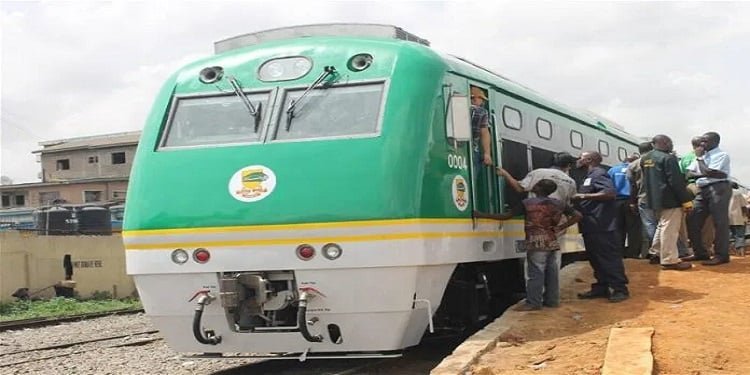

The Nigerian Railway Corporation (NRC) has released its preliminary report on the June 8 derailment of the Ujevwu-Itakpe train service at Owa-Oyibu, near the Goodluck Jonathan Railway Station in Delta State, with investigators pointing to a possible bogie and wheel defect as a potential cause of the accident.
Key Highlights
- NRC says a possible bogie and wheel defect may have triggered the derailment.
- The manner in which the train brakes were applied may have worsened the incident.
- Investigators found the track points intact and no evidence of vandalism.
- The Nigerian Safety Investigation Bureau is conducting an independent investigation.
- The affected railway track has been restored, while the locomotives are being reconditioned.
- Resumption of the Ujevwu-Itakpe train service will depend on detailed safety audits.
- The incident involved 482 passengers, killed four people and injured 64 others.
Bogie, wheel defect suspected in train derailment
According to the NRC preliminary report, the derailment may have resulted from the sudden development of a defect involving the train’s bogie and wheel while it was travelling.
Investigators also noted that the manner in which the brakes were applied could have contributed to the severity of the incident.
The NRC said an inspection of the railway infrastructure found the track points intact, with investigators finding no evidence that vandalism contributed to the derailment.
However, the Corporation stressed that the findings remain provisional because an independent investigation by the Nigerian Safety Investigation Bureau (NSIB) is still underway.
NRC recommends stronger railway safety measures
Following the preliminary findings, the NRC recommended stronger inspection procedures for rolling stock and improvements in railway safety operations.
Read also:
- FG launches Northern CNG, Electric Vehicle corridor in Kano to boost clean transport
- Nigeria, Türkiye seal deal on establishing military training facility in Nigeria
- Nigeria’s Capital Market set for historic T+1 settlement cycle transition in 4 days
The recommendations include enhanced emergency preparedness, improved staff training, stronger safety procedures and sustainable funding for railway modernisation.
The Corporation said the affected section of the railway track had been restored, while the locomotives involved in the incident were undergoing reconditioning.
However, the NRC said the Ujevwu-Itakpe train service will not resume until detailed safety audits have been completed.
NRC commiserates with victims’ families
The NRC Managing Director, Kayode Opeifa, commended stakeholders who supported the response to the incident.
Opeifa also expressed condolences to the families of those who lost their lives and reaffirmed the Corporation’s commitment to improving railway safety and restoring public confidence in train services.
The June 8 incident involved a train carrying 482 people. Five coaches, a locomotive and a power car were affected by the derailment.
Four people, comprising three adults and one child, died in the incident, while 64 others sustained injuries.
The NRC said further findings from the ongoing independent investigation would help determine additional measures required to strengthen safety on the route and across Nigeria’s railway network.