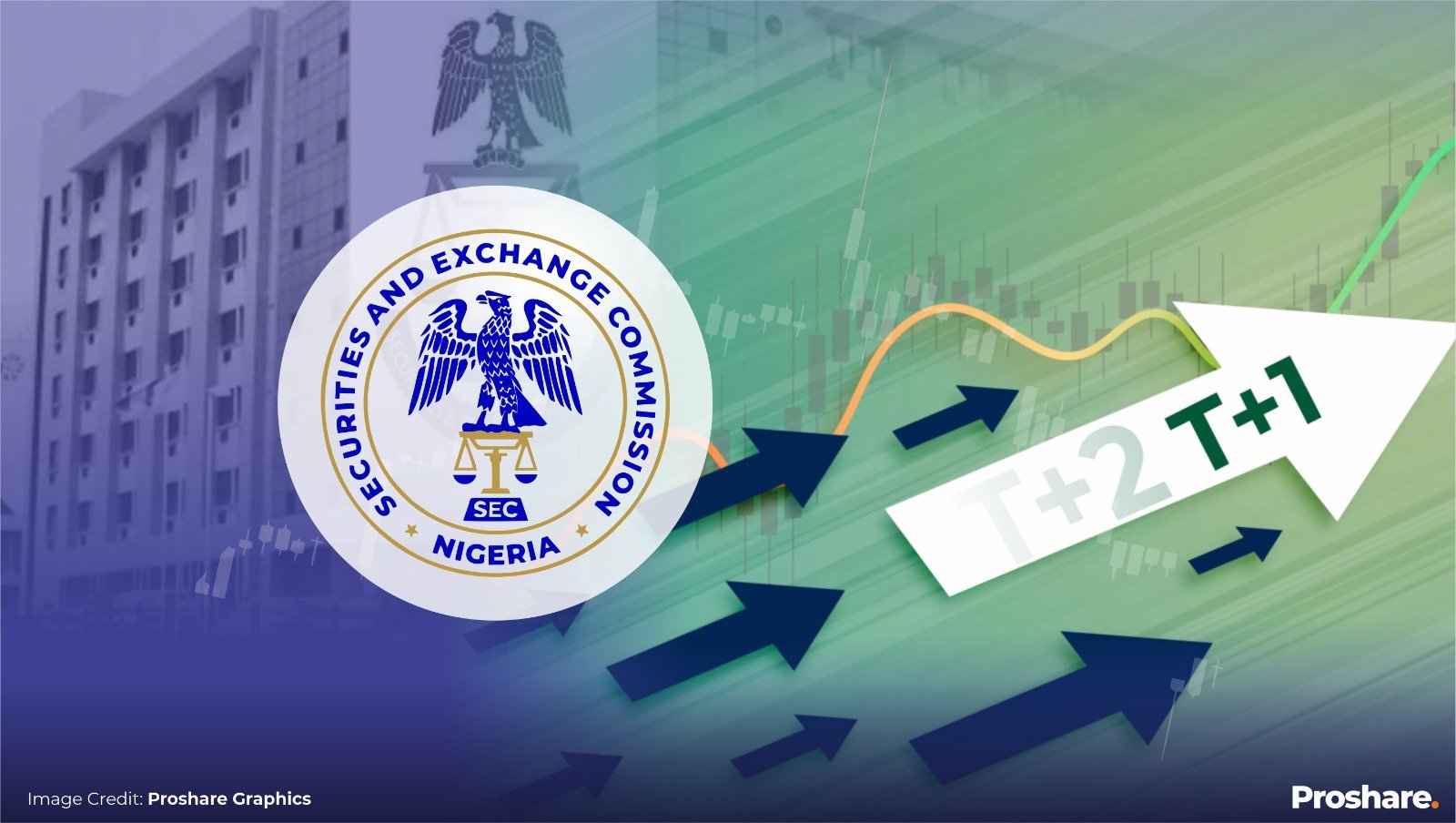
Nigeria’s capital market is preparing for a major transformation as the countdown begins for the implementation of the T+1 Settlement Cycle, scheduled to take effect on Monday, June 1, 2026.
Key Highlights:
- Nigeria to migrate from T+2 to T+1 Settlement Cycle on June 1, 2026.
- Trades will now settle one business day after execution.
- SEC directs brokers, custodians, and operators to complete readiness measures.
- Transition expected to improve liquidity, reduce settlement risks, and boost investor confidence.
- Friday, May 29, marks the final trading day under the T+2 regime.
The new framework will see equities and commodities transactions cleared and settled by the Central Securities Clearing System one business day after trade execution instead of the current two-day settlement window.

The Securities and Exchange Commission has directed all market participants to ensure full operational readiness ahead of the transition, which analysts describe as another major milestone in the modernisation of Nigeria’s capital market.
Under the T+1 Settlement Cycle, investors who execute trades from June 1 onward will receive cash or securities the next business day, significantly reducing waiting time and improving market efficiency.
Market experts believe the shorter settlement cycle will reduce counterparty and settlement risks by narrowing the time between trade execution and final transfer of funds and securities.
The transition is also expected to improve market liquidity by allowing investors quicker access to their funds and investment assets, while positioning Nigeria’s capital market closer to global best practices already adopted in countries such as the United States and India.
According to market operators, the move could further strengthen investor confidence, particularly among institutional and foreign investors seeking faster transaction finality and reduced exposure risks.
The transition follows Nigeria’s earlier migration to the T+2 settlement regime in November 2025, reflecting ongoing efforts by regulators and market stakeholders to deepen efficiency and competitiveness within the financial market ecosystem.
To ensure a seamless rollout, regulators disclosed that trades executed on Friday, May 29, under the T+2 regime, alongside trades executed on Monday, June 1, under the new T+1 framework, will both settle on Tuesday, June 2, 2026.
The SEC and the CSCS have urged brokers, custodians, registrars, exchanges, and other capital market operators to complete all required system upgrades, testing procedures, and staff training before the implementation date.
The Nigerian Exchange Group and CSCS have also intensified stakeholder engagements through webinars and operational updates aimed at ensuring a smooth migration process.
Read also:
- Nigeria cancels $717.7m World Bank Loan for power sector reform amid electricity crisis
- Dangote Refinery IPO: Why investors are rushing to buy into Africa’s biggest Refinery listing
- Naira trades mixed against US Dollar as official, parallel FX rates stabilise
The Securities and Exchange Commission says the transition could make Nigeria’s market more attractive to high-frequency traders and institutional investors who prioritise speed, efficiency, and lower settlement exposure.
However, operators have also cautioned market participants to strengthen internal processes and funding arrangements to avoid settlement failures and operational errors due to the compressed settlement timeline.
As Nigeria enters the final days before implementation, anticipation continues to build across the investment community, with regulators expressing confidence that the T+1 Settlement Cycle will enhance the resilience, transparency, and global competitiveness of the nation’s capital market.