The media has long been described as the Fourth Estate of the Realm, an institution whose primary responsibility is to inform the public, scrutinise government actions and hold those in power accountable. In every democratic society, the relationship between government and the press is not expected to be one of convenience or patronage, but one built on transparency, constructive engagement and mutual respect.
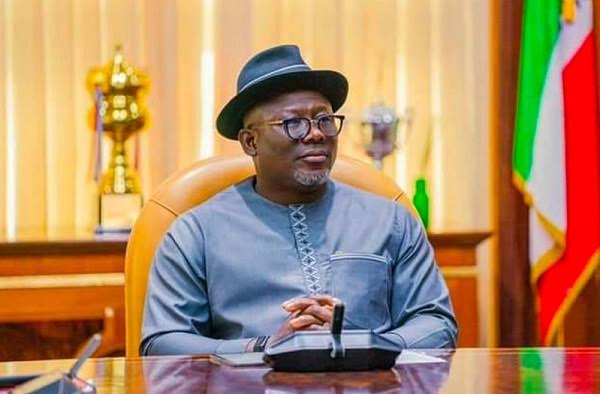
In Delta State, however, that relationship appears to have undergone a profound transformation over the past decade. More than three years into the administration of Governor Sheriff Oborevwori, there has been no open, comprehensive media briefing involving the full body of accredited journalists in the state. Such an engagement was once regarded as a routine feature of governance in Delta. Today, it has become conspicuously absent.

This development raises an important question: What has changed in the Delta State Council of the Nigeria Union of Journalists (NUJ)? The answer may not lie solely with Government House. Rather, it appears to reflect a deeper institutional challenge affecting the NUJ itself.
During the administration of Chief James Onanefe Ibori (1999–2007), regular interaction between government and journalists formed part of governance. Quarterly press briefings were held, and journalists from accredited media organisations had opportunities to question government officials on policies, projects and public expenditure. Governor Ibori also made appearances on state-owned media platforms, taking questions and explaining government decisions directly to the people.
Read Also:
- Delta APC Faults Report On Stakeholders’ Meeting, Says Event Ended Peacefully
- APC Delta Central Leadership Meeting Turns Violent as SSA, Commissioner Caught in Fracas
- Omo-Agege’s Loyalists Cross to Oborevwori Camp as Silence Sparks Political Speculation in Delta
His successor, Emmanuel Uduaghan, largely sustained this tradition. Media engagements remained relatively open, and journalists continued to serve as an important bridge between government and citizens. While disagreements naturally arose, there was little doubt that the press remained a recognised stakeholder in governance.
These interactions reinforced democratic accountability by allowing journalists to perform one of their most important constitutional functions—asking difficult questions on behalf of the public.
A noticeable shift began during the administration of Senator Ifeanyi Okowa. Rather than maintaining unrestricted access for accredited journalists, press briefings reportedly became selective. Invitations were no longer extended to the entire press corps but to carefully chosen participants.
One incident that attracted attention occurred during an early quarterly media briefing when the then South-South Vice President of the NUJ, Edward Akpati Ogwude, reportedly found himself excluded until he protested before eventually gaining access. The controversy highlighted a new approach in which access to government had become controlled rather than open.
What surprised many observers was not merely the policy itself but the muted response from the Delta State Council of the NUJ. The union, whose responsibility includes defending journalists’ professional rights, did not mount any sustained institutional challenge against the practice.
Many journalists viewed this silence as the beginning of a gradual erosion of media independence. Over the years, successive governments have appointed several respected journalists into political positions.
Former Delta NUJ Chairman Norbert Chiazor, who left office in 2017, later served in Governor Okowa’s media team and currently serves as Executive Assistant to Governor Sheriff Oborevwori on Media. His successor, Michael Ikeogwu, is now a Senior Special Assistant on Media to Governor Oborevwori.
Similarly, the current Chief Press Secretary to the Governor, Festus Ahon, built an accomplished journalism career, serving as Delta State Bureau Chief of Vanguard Newspapers before entering government. Ordinarily, such appointments should be celebrated. They demonstrate that journalism remains a respected profession capable of producing competent public communicators.
Indeed, many journalists initially welcomed these appointments, believing they would strengthen relations between government and the media while improving journalists’ welfare. Ironically, many now argue that the opposite has occurred.
Whether fairly or unfairly, a growing perception has emerged that these appointments have created a relationship of dependence rather than constructive engagement. The concern is not that journalists accept government appointments—every citizen has the constitutional right to public service—but that the repeated movement of union leaders into government positions creates a perception that the union may become reluctant to confront those in power.
In democratic institutions, perception matters almost as much as reality. Once the public begins to question the independence of the watchdog, confidence in the institution inevitably suffers.
Another structural issue confronting the Delta NUJ is the composition of its leadership. A significant number of union officials are government employees working in state-owned media establishments. While there is nothing inherently wrong with this arrangement, it creates an unavoidable institutional dilemma.
Can officials who depend on government for employment effectively challenge that same government when necessary?
Can a union aggressively defend press freedom if many of its leaders are professionally accountable to the very administration they may be required to criticise?
These are difficult but legitimate questions. The challenge is less about individual integrity than about institutional design. Even where leaders act in good faith, conflicts of interest can weaken public confidence and reduce the union’s ability to negotiate forcefully on behalf of its members.
If the evolution of government-media relations in Delta is viewed chronologically, a clear pattern emerges. Under previous administrations, journalists generally enjoyed open access. Later, access became restricted to selected participants. Today, open press briefings involving the broader body of accredited journalists appear to have disappeared altogether.
This progression suggests a gradual shrinking of media access rather than a sudden policy shift. The troubling aspect is that what initially appeared to be an exception eventually became accepted as the norm. Perhaps the most uncomfortable question concerns the role of the Delta State Council of the NUJ itself. Professional unions exist not merely to organise social activities or negotiate welfare packages. They are expected to defend institutional values.
A stronger response might have included formal memoranda, sustained advocacy, communiqués, public campaigns or structured dialogue demanding regular access to the Governor. Instead, many journalists believe the union gradually accepted the status quo. If this perception is accurate, the union’s greatest challenge is not external pressure from government but an internal weakening of its institutional resolve.
Governor Oborevwori’s administration has continued to engage national television stations and private media organisations on several occasions. Yet many local journalists argue that these engagements should complement—not replace—regular interaction with accredited journalists covering Delta State on a daily basis.
Equally concerning is the apparent decline in the use of state-owned media as a platform for direct engagement with citizens, a practice that featured more prominently under previous administrations. Democratic accountability is strongest when leaders submit themselves to questions from journalists who consistently report on local governance and understand the state’s peculiar challenges.
Some critics attribute the Governor’s limited engagement with local journalists to personal communication challenges. Others disagree, arguing that the issue is better explained by media strategy and political caution. Whatever the explanation, assigning motive without direct evidence would be speculative. What can be established, however, is that the administration has not maintained the tradition of broad-based, routine press engagement that once characterised governance in Delta State.
Ultimately, this debate is not about Governor Sheriff Oborevwori alone, nor is it solely about the leadership of the Delta State Council of the NUJ. It is about the health of democratic institutions. A democracy functions best when government remains accessible, journalists remain independent and professional unions remain fearless in defending institutional values.
When governments engage individuals instead of institutions, when professional associations become overly dependent on political patronage, and when journalists begin to accept privileges in place of principles, accountability inevitably weakens. The danger is gradual. Institutions rarely collapse overnight; they erode incrementally until practices once considered unacceptable become normal. The decline of open media engagement in Delta State appears to illustrate precisely that process.
The central challenge confronting the Delta State Council of the NUJ is not simply the absence of regular access to the Governor. It is the apparent weakening of its institutional independence. Governments will always seek to manage information. That is politics. The responsibility of a journalists’ union is to ensure that such management never comes at the expense of transparency, accountability and the public’s right to know.
History will ultimately judge not only those who governed, but also those who were entrusted with asking the questions. If the Fourth Estate falls silent, democracy itself loses one of its strongest defenders.