A former Coordinator of Defence Media Operations, Major General John Enenche (rtd), has dismissed calls for the resignation or replacement of the nation’s security chiefs, insisting that such a move would not provide a lasting solution to the country’s deep-rooted security challenges.
Key highlight:

- Retired Major General John Enenche opposed calls for the resignation or replacement of Nigeria’s security chiefs, saying it would not solve the country’s security problems.
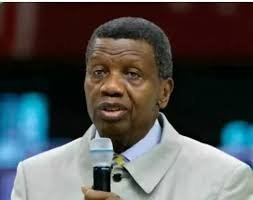
- He was responding to remarks by Pastor Enoch Adeboye, who urged President Bola Tinubu to give security chiefs a 90-day deadline to eliminate terrorists or resign.
- Enenche argued that frequent changes in military leadership have not historically improved security and are not the answer to Nigeria’s challenges.
- He emphasized that insecurity requires a long-term, coordinated national strategy rather than leadership changes driven by public pressure.
- The retired general called on Nigerians to treat insecurity as a national emergency and support efforts to combat terrorism, banditry, kidnapping, and other crimes.
Enenche stated this during an interview on Arise Television while reacting to recent remarks by the General Overseer of the Redeemed Christian Church of God, Pastor Enoch Adeboye, who urged President Bola Tinubu to issue a 90-day ultimatum to security chiefs to eliminate terrorists or resign from office.
Adeboye had expressed concern over the worsening security situation across the country, including persistent attacks by terrorists, bandits, kidnappers and other criminal groups.
Speaking during a workers’ meeting at the Redemption Camp in May, the cleric argued that security chiefs should be held accountable for delivering results in the fight against insecurity.
“You can only advise the commander-in-chief. You can’t command him because if you command the commander-in-chief, then you become the commander of the commander-in-chief. That doesn’t make sense,” Adeboye said.
- Gov. Zulum pledges more secure, prosperous Borno before handing over to new administration
- Peter Obi faces questions over 2009 ‘Office of Her Excellency’ budget after renewed criticism of First Lady Office
- Police arrest family insider linked to kidnap of Adelabu’s sister, twin sons in Ibadan
“If I were asked to make suggestions, I would say quietly to our government, move fast. And tell our security chiefs, get rid of these terrorists within 90 days, or resign.”
Responding to the call, Enenche argued that frequent changes in military leadership had historically failed to address the complex security threats confronting Nigeria.
Read also:
“People may be thinking the service chiefs are not working, but I can tell you that changing service chiefs every six months or every year is not the solution at all,” he said.
According to the retired general, Nigeria’s security crisis requires a long-term and coordinated strategy rather than leadership changes driven by public frustration.
He stressed that insecurity should be treated as a national emergency, urging Nigerians to support efforts aimed at defeating criminal elements threatening lives and property across the country.
“I don’t joke with security at all, and I encourage every other person to do the same. We must, as a matter of fact, take it seriously,” Enenche stated.
He further warned that failure to adopt decisive and sustained measures could allow the security crisis to persist across successive administrations.
“It is not beyond what we should do because if we don’t act now, it will continue and keep rolling over from one administration to another, and that must stop,” he added.
Enenche’s remarks come amid growing public concern over escalating insecurity in several parts of Nigeria, where communities continue to grapple with terrorism, banditry, kidnapping, communal clashes and other violent crimes despite ongoing military operations.
The debate over the performance of the nation’s security chiefs has intensified in recent months as fresh attacks and abductions continue to claim lives and disrupt economic activities across different regions of the country.
While some Nigerians have called for a change in military leadership, others argue that the security challenges are systemic and require broader reforms beyond the replacement of top commanders.