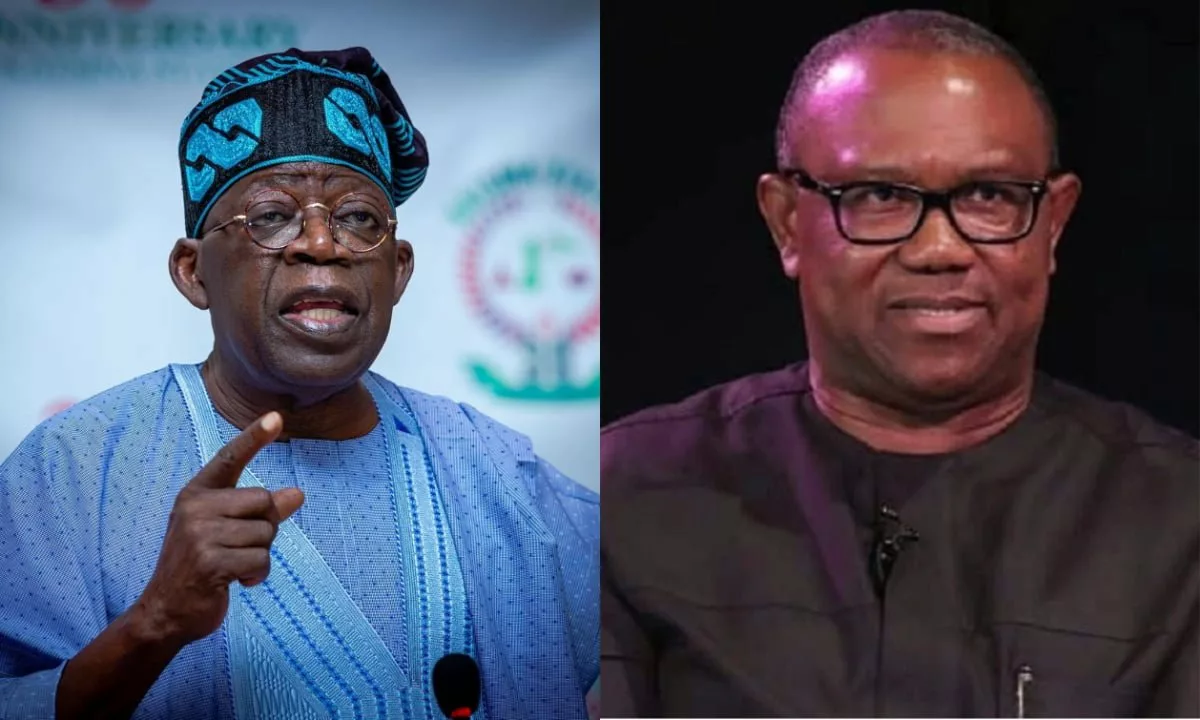
Former presidential candidate of the Labour Party, Peter Obi, has taken a swipe at President Bola Tinubu over the recent state visit to the United Kingdom, questioning what tangible economic benefits Nigeria gained from the trip.
Obi, in a statement on Saturday, said foreign diplomacy must go beyond ceremonies and optics, insisting that state visits should be assessed strictly on measurable outcomes such as investments, industrial partnerships, job creation and technology transfer.

Key Highlights:
- Peter Obi criticised President Bola Tinubu over his recent UK state visit, questioning its economic benefits to Nigeria.
- Obi said foreign diplomacy should produce measurable outcomes such as investments, job creation, trade deals, and industrial partnerships.
- He argued that state visits should not be treated as ceremonies or “tourism,” but evaluated based on tangible economic impact.
- Obi questioned what specific gains—such as factories, power agreements, or agricultural investments—came from the UK trip.
- He also criticised the size and cost of the presidential delegation, saying it is wasteful amid Nigeria’s economic challenges.
He stressed that “state visits by leaders are not tourism, and diplomacy is not a fashion parade,” adding that Nigerians deserve clear evidence of returns from every international engagement involving public funds.
The former Anambra State governor argued that foreign trips by government officials should translate into “factory expansion, trade agreements, industrial partnerships and employment opportunities,” rather than symbolic displays.
Citing examples of structured economic diplomacy in advanced economies, Obi referenced a reported visit involving U.S. President Donald Trump to China, which he claimed produced multi-billion-dollar trade outcomes and aircraft orders through coordinated business-government engagement.
Turning his focus back to Nigeria, Obi questioned what concrete outcomes were achieved during Tinubu’s UK state visit, asking what new factories, power agreements, agricultural partnerships or industrial investments were secured for the country.
He also demanded clarity on job creation prospects tied to the visit, saying Nigerians are yet to see measurable benefits amid worsening economic conditions.
Obi further criticised the size of the Nigerian delegation that accompanied the president, listing a large entourage that included senior government officials, lawmakers, aides, security personnel and associates.
According to him, such extensive foreign delegations raise questions about cost efficiency at a time when citizens are grappling with inflation, unemployment, insecurity and economic hardship.
“It is not enough to attend royal banquets, wear matching outfits and release glossy photographs,” he said, arguing that symbolism without substance cannot address Nigeria’s socio-economic challenges.
Obi added that Nigeria urgently needs a shift toward productivity-driven leadership, where foreign engagements are judged strictly by their economic returns rather than ceremonial value.