
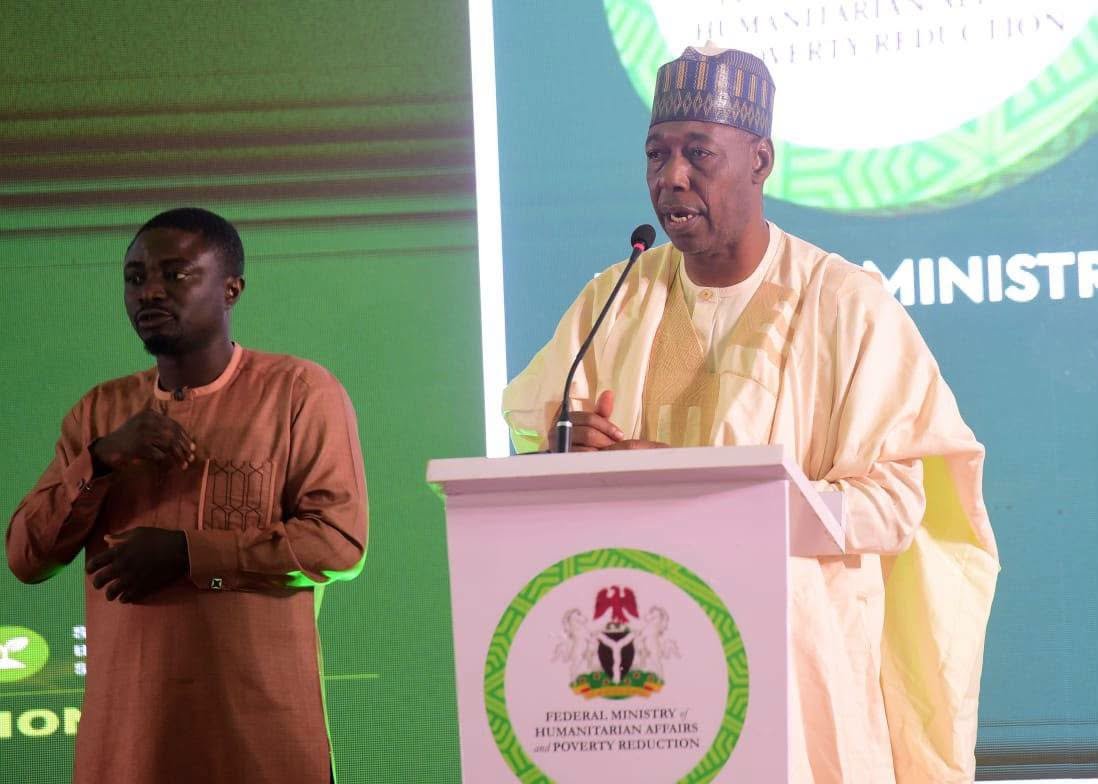
Borno State Governor, Prof. Babagana Umara Zulum, has called for the inclusive and transparent implementation of the $1 billion Household Prosperity and Empowerment Social Protection Project (HOPE-SP), warning that poor targeting of beneficiaries could undermine the objectives of the programme.

Key Highlights:
- Zulum urged transparent and inclusive implementation of the $1 billion HOPE-SP programme.
- The Borno governor warned against flawed beneficiary selection in social intervention programmes.
- He said poverty, illiteracy and inequality contribute to insecurity and insurgency.
- Zulum said military operations alone cannot resolve Nigeria’s security challenges.
- He urged the Federal Government to adopt clear vulnerability criteria for selecting beneficiaries.
Zulum made the call at the official launch of the HOPE-SP programme, themed “From Palliative to Pathways,” organised by the Federal Ministry of Humanitarian Affairs and Poverty Reduction in Abuja.
The programme was unveiled by Nigeria’s First Lady, Senator Oluremi Tinubu, at the Banquet Hall of the State House.
Read Also:
- Governor Zulum Announces €61m UN Peacebuilding Programme For Borno
- Governor Zulum Seeks Stronger UN, Donor Investment For Borno’s Recovery
- Governor Zulum Approves Promotion Benefits, Leave Grants For Borno Civil Servants
- Zulum Urges Investors To Turn Borno’s Post-Insurgency Recovery Into Economic Opportunities
The governor commended President Bola Ahmed Tinubu for the initiative, describing it as a critical intervention capable of addressing some of the socio-economic factors contributing to insecurity and insurgency in the country.
According to Zulum, poverty, illiteracy and social inequality are among the underlying causes of insurgency and instability in different parts of the world, including Nigeria.
He stressed that military operations and other kinetic measures alone could not completely resolve the country’s security challenges, urging greater attention to the socio-economic and political dimensions of insecurity.
“The kinetic measures alone will not end the insurgency. Addressing the socio-economic and political dimensions of the crisis is critical to addressing insecurity challenges in Nigeria,” he said.
Zulum assured the Federal Government that state governments would provide the necessary support to ensure the success of the programme.
However, he identified poor implementation, particularly flawed beneficiary selection, as one of the major challenges that could affect social intervention programmes.
He therefore urged the Ministry of Humanitarian Affairs and Poverty Reduction and relevant implementing agencies to establish clear vulnerability criteria for selecting beneficiaries.
“I want to call upon the Ministry of Humanitarian Affairs to ensure that targeted beneficiaries are selected based on certain vulnerability criteria that will ensure inclusivity,” Zulum said.
Speaking on behalf of Nigerian governors, he emphasised that sustainable peace and security required interventions that go beyond immediate humanitarian assistance to tackle the conditions that expose individuals and communities to poverty and vulnerability.
He congratulated the Federal Government, the Ministry of Humanitarian Affairs and Poverty Reduction and the implementing agencies on the launch of the programme, expressing optimism that it would improve the lives of vulnerable Nigerians.
The HOPE-SP initiative is designed to strengthen Nigeria’s social protection system by moving from short-term palliative measures towards sustainable pathways out of poverty.