FIFA President Gianni Infantino has secured growing support across Africa through increased football development funding, investment in infrastructure, expanded youth competitions and closer engagement with the continent’s football leadership. These initiatives have strengthened his relationship with African football administrators as he seeks another term as head of world football.
Key Highlights
- President Bola Tinubu and all 54 African football associations have endorsed Infantino’s re-election bid.
- Infantino proposed increasing FIFA development funding to $25 million per member association for the 2027–2030 cycle.
- FIFA has supported Nigeria’s $4.88 million NFF technical centre project in Abuja.
- Youth competitions across Africa have increased from six in 2016 to 34 in 2026.
- FIFA Talent Academies in Africa have grown from six in October 2025 to 20 in 2026.
- The endorsements give Infantino significant backing ahead of the March 18, 2027 FIFA presidential election in Rabat, Morocco.
- African football leaders are expected to demand greater investment, accountability and development opportunities.
The endorsement by President Bola Tinubu, Confederation of African Football (CAF) President Patrice Motsepe and all 54 African football associations at the 48th CAF Ordinary General Assembly in Abuja reflects the support Infantino has secured among key stakeholders since becoming FIFA president in 2016.

Nigeria’s endorsement was announced by National Sports Commission Chairman Shehu Dikko, who said he was conveying President Tinubu’s message of support for Infantino’s re-election.
Motsepe subsequently announced that all 54 CAF member associations had unanimously endorsed the FIFA president, giving him significant backing ahead of the March 18, 2027 FIFA presidential election in Rabat, Morocco.
But what accounts for Infantino’s growing appeal among African football leaders? And why does his leadership resonate with a continent seeking greater investment, representation and opportunities in the global game?
His support appears to rest on a combination of financial commitments, development programmes, international football opportunities and sustained engagement with Africa’s football ambitions.
FIFA’s Proposed $25 Million Development Funding
One of the strongest indications of Infantino’s commitment to football development came at the 48th CAF General Assembly in Abuja, where he announced plans to increase FIFA development funding to $25 million for each member association over the 2027–2030 cycle.
The proposed allocation under the planned FIFA Forward 4.0 programme represents a substantial increase from the current $8 million four-year funding arrangement.
For African countries, where inadequate infrastructure and limited development resources remain major obstacles, the proposal could provide additional opportunities to strengthen national football systems. Infantino said the funding would support infrastructure, football development and opportunities for young players.
However, the proposed $25 million represents a four-year allocation, not an immediate cash payment or an annual grant. Its implementation remains subject to the necessary FIFA approval processes.
Nevertheless, the proposal has raised expectations that another Infantino administration could make more resources available to African football.
For Nigeria, the proposed funding could support grassroots facilities, coaching education, youth competitions, women’s football and improved training infrastructure.
The critical issue, however, will be ensuring that the money is properly managed and translated into visible development outcomes.
Since becoming FIFA president in 2016, Infantino has overseen the expansion of the FIFA Forward development programme, which provides financial support to national football associations.
The programme has increased the resources available to member associations for infrastructure, competitions, administration and other football development activities.
For African countries that have historically struggled to finance long-term football projects, the programme has created additional opportunities to improve facilities and strengthen development structures.
Infantino’s case for continuity is partly built around this expanded financial support. His administration has consistently presented FIFA as an organisation seeking to make more resources available to its member associations, particularly those with limited financial capacity.
For many African football administrators, the prospect of increased funding and continued access to FIFA development programmes remains an important consideration in their relationship with the current FIFA leadership.
However, the programme’s success must ultimately be measured by the quality of projects delivered and their impact on football at grassroots level.
Nigeria’s $4.88 Million FIFA-Supported Technical Centre
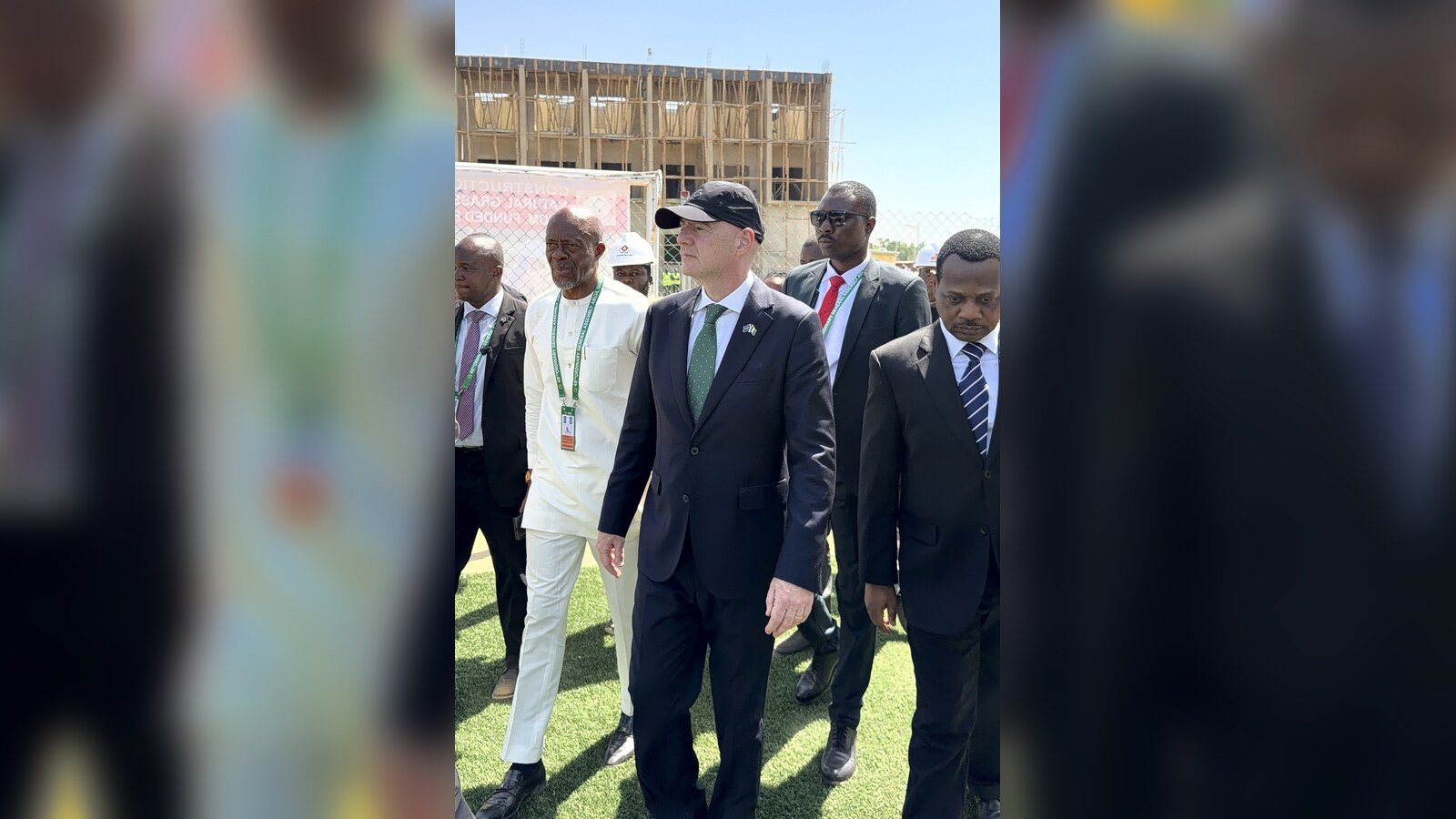
Nigeria’s relationship with Infantino’s FIFA administration has also produced a notable infrastructure project: the ongoing development of the Nigeria Football Federation’s (NFF) technical centre at the Moshood Abiola National Stadium in Abuja.
Supported by approximately $4.88 million through FIFA’s Forward programme, the project is designed to provide modern training and accommodation facilities for the country’s national teams.
The development includes a 68-room players’ accommodation wing, two training pitches, dressing rooms, spectator terraces and other supporting facilities.
Work began in March 2025, with the facility expected to improve preparation conditions for Nigeria’s men’s and women’s national teams.
During his November 2026 visit to Nigeria, Infantino inspected the project and praised the collaboration between FIFA and the NFF.
The investment is significant because Nigeria has long needed improved facilities for national-team preparation and football development.
Once completed and fully operational, the technical centre could support coaching education, talent identification and national-team preparations while providing a lasting asset for Nigerian football.
For Infantino, the project also offers a practical example of how FIFA development funding can support football infrastructure in one of Africa’s leading football nations.
Infantino’s Visit To Warri City Stadium
Infantino’s visit to the renovated Warri City Stadium in Delta State further demonstrated his engagement with football infrastructure development in Nigeria.
The stadium was renovated by the Delta State Government under Governor Sheriff Oborevwori, with improvements to the playing surface, athletics track, floodlights, changing rooms and other facilities.
Infantino praised the facility and highlighted its potential to create opportunities for young people.
Although the renovation was funded by the Delta State Government rather than FIFA, his visit brought international attention to the project and reinforced the importance of cooperation between governments and football authorities.
The distinction is important: FIFA should receive credit for projects it finances, while state and national governments should be recognised for investments funded from their own resources.
Infantino’s engagement with such projects nevertheless reinforces the perception that FIFA is paying attention to Africa’s football infrastructure needs.
Expansion Of Youth Competitions And FIFA Talent Academies
Another factor behind Infantino’s growing appeal in Africa is his administration’s emphasis on youth football development.
At the Abuja assembly, he highlighted the growth of regional youth competitions across the continent, saying their number had increased from six in 2016 to 34 in 2026.
He also disclosed that FIFA Talent Academies in Africa had increased from six in October 2025 to 20 in 2026.
These initiatives are important because Africa has an enormous pool of young football talent but continues to face challenges in providing structured development pathways.
More youth competitions and talent academies can improve scouting, coaching and access to international football opportunities.
For countries such as Nigeria, Ghana, Senegal, Morocco, Côte d’Ivoire and Cameroon, stronger youth development structures could help produce players capable of competing at the highest international level.
However, the continent needs more than tournaments and academies. It also requires qualified coaches, modern facilities, sustainable domestic leagues and effective systems that help young players progress into professional football.
Why Africa’s Endorsement Matters To Infantino
The endorsement of Infantino by Motsepe and all 54 CAF member associations is more than a symbolic gesture.
It demonstrates the importance African football leaders attach to their relationship with FIFA and their desire to strengthen the continent’s influence in global football administration.
With 54 member associations, Africa represents a significant voting bloc in the FIFA presidential election.
A united endorsement therefore gives Infantino substantial political backing ahead of the 2027 contest, although the eventual vote will be determined by FIFA’s electoral process.
CAF has also pursued increased financial support for its member associations, announcing a 33 per cent increase in annual assistance, with the maximum allocation rising from $525,000 to $700,000.
The six CAF zonal unions are also expected to benefit from increased support.
These developments reinforce the wider conversation about financial resources, development opportunities and Africa’s position within the global game.
For Motsepe, maintaining a productive relationship with FIFA could help advance the continent’s priorities, including infrastructure, youth development and greater opportunities for African teams.
However, the endorsement also places responsibility on African football leaders to ensure that the continent secures measurable benefits from its relationship with FIFA.
Read also:
- Tinubu, CAF Endorse Infantino’s Fourth-Term Bid As FIFA President
- Infantino Inspects FIFA-Funded Football Projects In Abuja, Hails NFF As Facilities Near Completion
- FIFA President Gianni Infantino Inspects Warri City Stadium Ahead of Saturday’s Commissioning
Africa’s Growing Influence In Global Football
Infantino’s engagement with Africa is also part of his broader approach to expanding the continent’s participation in international football.
African nations have consistently sought more opportunities to compete, greater representation and improved access to football development resources.
The expansion of FIFA competitions and development programmes has provided part of the response to those demands.
For African administrators, maintaining a FIFA leadership that recognises the continent’s football potential is an important consideration.
Africa’s influence extends beyond its voting strength. The continent is a major source of football talent, an expanding commercial market and a region with considerable potential for further development.
Infantino’s willingness to engage African leaders and make financial commitments has helped strengthen his relationship with the continent.
Yet, greater recognition must also translate into stronger African leagues, better facilities, improved administration and more competitive national teams.
What Infantino’s Support Means For Nigerian Football
For Nigeria, support for Infantino should provide an opportunity to demand more meaningful investment in the country’s football future.
Nigeria has a rich football history, a large pool of young talent and a strong international reputation. However, its domestic football system still requires significant improvement.
Grassroots facilities remain inadequate in many communities, women’s football needs stronger investment, coaching development requires greater attention, and the domestic league needs more effective structures.
The proposed $25 million FIFA allocation could help address some of these challenges if the NFF develops a clear and transparent investment strategy.
Nigeria should prioritise the completion and effective use of the Abuja technical centre, the development of football facilities across the six geopolitical zones, improved youth competitions and stronger support for women’s football.
The NFF must also ensure that every development grant is properly accounted for and that the benefits reach players, coaches, clubs and communities.
Governance And Accountability Remain Critical
Despite the development initiatives under Infantino’s leadership, FIFA continues to face questions about governance, transparency and the concentration of influence within the organisation.
Such concerns should not be overlooked simply because African football leaders have endorsed his re-election.
The continent must continue to demand accountability in the management of development funds and insist that promised opportunities translate into tangible results.
How many grassroots facilities have become operational? To what extent has increased funding improved domestic leagues? What progress has been made in women’s football? Are national associations demonstrating transparency in the management of FIFA resources?
These are necessary questions because African football needs sustainable development, not just financial announcements and political endorsements.
Infantino’s supporters may see his leadership as an opportunity for continuity, but continuity must be accompanied by measurable progress.
The Real Test Of Infantino’s Fourth-Term Ambition
Infantino’s growing support in Africa rests on a combination of financial commitments, development initiatives, direct engagement with football administrators and promises of greater opportunities for the continent.
The proposed $25 million funding allocation, expansion of youth competitions, FIFA Talent Academies and infrastructure projects such as Nigeria’s Abuja technical centre have strengthened the argument that his administration is making more development resources available to African football.
His relationship with Motsepe and other African football leaders has also contributed to a united position among the continent’s football associations in support of his fourth-term ambition.
However, Africa’s support should not be interpreted as unconditional loyalty. It also reflects a strategic calculation based on what the continent expects to gain from FIFA’s leadership.
For Nigeria, Tinubu’s endorsement should create room for stronger partnerships and increased investment, while the NFF must demonstrate the capacity to convert those opportunities into lasting benefits.
Ultimately, Infantino’s appeal among African football leaders will be judged not only by funding announcements and political engagement but also by whether African football becomes stronger, more competitive and better organised.
Africa’s support may strengthen his fourth-term bid, but the lasting test will be whether his promises translate into better opportunities for the continent’s players, coaches, clubs and future generations.
Follow us on X for more updates on African football and the race for the FIFA presidency.