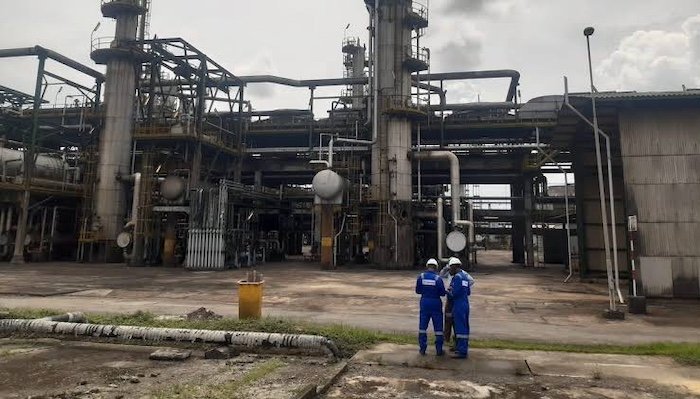
The Nigerian National Petroleum Company Limited (NNPC) has ruled out plans to sell the Warri Refinery and Petrochemicals Company as scrap, insisting the facility remains a strategic national asset with strong commercial potential as Chinese investors commence technical assessments aimed at restoring full operations.

The national oil company disclosed that a team of 35 engineers from Chinese firms Sanjiang Chemicals and New Future Group has begun a comprehensive evaluation of the refinery ahead of a Final Investment Decision (FID), which could pave the way for the refinery to resume sustainable operations within the next 24 months, with renewed emphasis on petrochemical production.
Key Highlights:
- NNPC dismisses reports of plans to sell the Warri Refinery and Petrochemicals Company as scrap.
- Chinese firms Sanjiang Chemicals and New Future Group begin technical assessment of the refinery.
- Final Investment Decision could restore refinery operations within 24 months.
- NNPC says refinery will adopt a new business model focused on profitability and petrochemicals.
- Company insists refinery equipment remains intact and no scrap sale has been approved.
- Partnership expected to provide technical expertise, investment and operational efficiency.
Speaking on the development, NNPC Group Chief Executive Officer, Bayo Ojulari, reaffirmed the company’s commitment to reviving the Warri Refinery and Petrochemicals Company, describing the ongoing inspection as the first step toward implementing a sustainable and commercially viable operating model.
“We will not sell the refineries as scrap. These refineries remain viable national assets,” Ojulari stated.
According to him, the technical assessment by the Chinese partners will determine the scope of rehabilitation required before a final investment decision is reached.
Read Also:
- Warri refinery resumes partial operations after revamp – NNPC
- Group urges FG to concession Warri Refinery to private firm
- Warri Refinery’s test run sparks hope for Nigeria’s refining industry
“The Chinese partners are carrying out a detailed assessment of the facility ahead of a final investment decision that will reposition the refinery for sustainable operations,” he added.
The Warri refinery was shut down after briefly resuming operations last year, leading to renewed calls from some stakeholders for the sale of Nigeria’s state-owned refineries. However, the NNPC maintained that such calls are based on misinformation and do not reflect the actual condition or economic value of the assets.
The company argued that the growing interest shown by international investors further confirms the commercial viability of the refinery.
According to NNPC, Sanjiang Chemicals, one of China’s leading petrochemical companies, and New Future Group, an investment firm with interests across Africa, are proposing a partnership to finance, rehabilitate and operate the refinery if the project advances to implementation.
“Our inspection shows that the Warri Refinery and Petrochemicals Company remains a valuable asset that can be retooled and returned to profitable operations,” the company noted.
Responding to concerns over foreign participation, NNPC explained that the proposed partnership is intended to preserve the refinery as a strategic national asset while leveraging global technical expertise, operational efficiency and investment capital needed to restore commercial viability.
The national oil company also dismissed reports alleging that refinery equipment had already been designated for disposal as scrap.
It clarified that no approval has been granted for the sale of refinery components, stressing that all existing infrastructure remains part of the rehabilitation programme.
“NNPC has not authorised the sale of scrap materials or refinery components as they remain viable assets,” the company stated.
The planned rehabilitation of the Warri Refinery and Petrochemicals Company forms part of broader efforts by the Federal Government to restore Nigeria’s domestic refining capacity, reduce dependence on imported petroleum products and strengthen the country’s downstream oil and gas sector.