
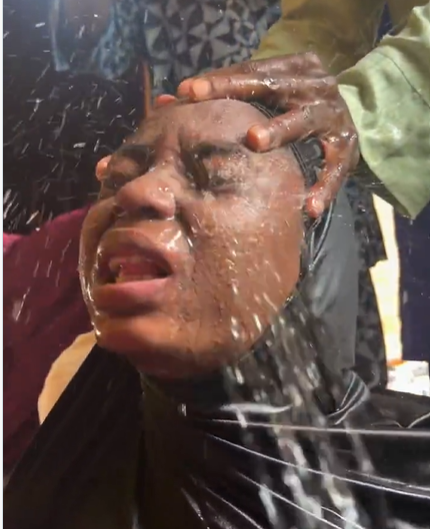
A viral video showing a woman being repeatedly doused with water while a man holds her by the head has sparked widespread reactions on social media, with viewers divided over whether the incident was a legitimate Ruqyah healing session or an excessive and potentially harmful practice.
The 43-second video, posted on X on October 7, 2026, has attracted more than 110,000 views, hundreds of likes and bookmarks, and numerous comments after the original poster described the scene as “wickedness” that no religion should permit.

Key Highlights
- Viral video shows a woman repeatedly doused with water during an alleged Ruqyah session.
- The footage has generated strong reactions on X, with users divided over the practice.
- Some commenters said the woman was undergoing spiritual treatment for alleged jinn possession.
- Critics questioned whether the method amounted to physical assault or excessive treatment.
- The footage does not independently establish why the woman was being treated or whether she consented.
- The debate has renewed discussion about Ruqyah practices and the treatment of people believed to be spiritually afflicted.
Viral Video Shows Woman During Alleged Ruqyah Session
The footage shows a woman wearing a black head covering sitting or kneeling indoors while a man dressed in green holds her head and repeatedly pours water over her face and scalp.
As the water flows over her, the woman appears distressed, gasps and opens her mouth while other people watch from the background.
The circumstances surrounding the recording, including the identity of the woman, the man involved and the location where the incident occurred, were not immediately established from the video.
The footage also does not independently confirm whether the woman consented to the procedure or whether she was receiving treatment voluntarily.
What Is Ruqyah?
Ruqyah is an Islamic spiritual practice involving the recitation of Quranic verses and supplications for protection or relief from what practitioners may regard as spiritual affliction.
Some practitioners associate the practice with alleged jinn possession, although interpretations and methods vary among Muslim communities.
In parts of Nigeria and other West African communities, some Ruqyah practitioners reportedly use Quranic recitations alongside water, oil or other forms of spiritual treatment.
The use of water during such sessions can involve reciting prayers over the water before it is consumed, applied to the body or used for bathing.
However, practices can differ considerably between individual practitioners and communities.
Social Media Users Defend the Practice
Several users who commented on the viral video defended the scene, arguing that the woman was undergoing an intervention intended to remove an alleged jinn from her body.
One commenter wrote that the practitioners were attempting to “cast out demon (jinn) from her,” while another claimed that delaying such treatment could cause the affected person to “run mad.”
Another user appeared to acknowledge the intensity of the scene but described it as less aggressive than other alleged cases, while expressing concern that the treatment should not become violent.
These reactions suggest that some viewers interpreted the woman’s visible distress as evidence that the spiritual intervention was having an effect.
Critics Question Method Used
Other social media users strongly criticised the footage, particularly the physical handling of the woman.
A separate commentary by X user @YusufAsunmogejo described similar footage as “physical assault and charlatanism disguised as religion.”
The commentator questioned the physical contact between the male practitioner and the woman and argued that certain Islamic restrictions concerning contact between unrelated men and women should still apply during Ruqyah.
The post also argued that a more restrained approach involves Quranic recitation over water for the affected person to drink or use for bathing, rather than aggressive physical intervention.
Read also:
- Nafiu Baba-Ahmed Dies at 70 as Tinubu, Gumi, Pantami Mourn Shari’ah Council Secretary-General
- Viral ‘Better Half’ Phone Calls Video Sparks Reactions on Nigerian X
- Chinese Pastors Visit Winners’ Chapel To Receive ‘Revival Grace’ From Bishop Oyedepo
Debate Over Religion and Healing
The video has triggered a broader argument over where spiritual treatment ends and potentially harmful conduct begins.
Supporters of the practice argue that people seeking Ruqyah may voluntarily undergo difficult procedures because they believe they are experiencing spiritual problems.
Critics, however, say visible distress should not automatically be interpreted as proof that a spiritual treatment is working.
They have also questioned whether people who are mentally or physically vulnerable can always provide meaningful consent during such interventions.
Questions Remain Over the Viral Footage
Despite the intense reaction online, important details surrounding the video remain unclear.
It has not been independently established when or where the footage was recorded, who the woman is, what prompted the session or whether she agreed to the treatment shown.
The identity and credentials of the person conducting the session are also unclear from the footage.
As a result, the video alone cannot establish whether the incident represents an accepted form of Ruqyah, an individual practitioner’s interpretation of the practice or conduct that could constitute abuse.
Viral Ruqyah Videos Continue to Spark Controversy
The latest footage has reignited an ongoing social media debate surrounding videos of people undergoing alleged spiritual treatments for jinn possession.
While some Muslims regard Ruqyah as a legitimate form of spiritual practice, methods differ widely and controversial videos can generate strong disagreement over what constitutes acceptable treatment.
The viral clip has therefore moved beyond a discussion of one particular incident, prompting wider questions about consent, religious practice, physical treatment and the protection of vulnerable people.
For more trending stories, follow us on X.