With the US midterm elections approaching on November 3, Latino voters are emerging as one of the most closely watched voting blocs, as Democrats seek to rebuild support among Hispanic voters while Republicans intensify efforts to maximise turnout.
Recent polling shows a significant shift among Latino voters on the generic congressional ballot, while President Donald Trump is urging Republicans to use early and mail-in voting methods that he has previously criticised. At the same time, Trump’s defence of artificial intelligence data centres in Ohio has created another political challenge for Republican Senate candidate Jon Husted.

Key Highlights
- US midterm elections are scheduled for November 3.
- Latino voters are emerging as a potentially decisive bloc in competitive congressional races.
- An NBC News/Telemundo poll showed Democrats with a 24-point advantage among Latino voters on control of Congress.
- Cost of living remains a major concern among Hispanic voters.
- Trump has urged Republicans to vote early, by mail or in person on Election Day.
- The President has previously criticised mail-in voting despite encouraging Republicans to use it.
- Trump defended artificial intelligence data centres during a visit to Ohio.
- Polling shows significant opposition among Ohio voters to new AI data-centre projects.
- The Ohio Senate race between Republican Jon Husted and Democrat Sherrod Brown remains closely watched.
Latino Voters Become Key Focus in US Midterm Elections
Latino voters are attracting renewed attention from both Democrats and Republicans as the parties prepare for the November 3 midterm elections.
An NBC News/Telemundo poll conducted between September 21 and 28 found Democrats leading Republicans by 24 percentage points among Latino voters on which party should control Congress.
The poll put Democratic support at 59 percent compared with 35 percent for Republicans.
The findings represent a notable change from the 2024 presidential election, when Donald Trump made significant gains among Latino voters, including on economic issues.
Republican pollster Micah Roberts described Latino voters as among the most politically fluid groups in the electorate, while analyst Nate Cohn’s aggregation of national polling also showed Democrats holding a substantial advantage among Hispanic likely voters on the generic congressional ballot.
Hispanic Voters Remain a Movable Political Bloc
A September analysis by UnidosUS and BSP Research highlighted what it described as a “moveable middle” within the Hispanic electorate.
The group includes undecided voters, independents and Hispanic voters who crossed party lines during the 2024 election.
The analysis estimated that this group accounts for about 38 percent of the Hispanic electorate and has a significant presence in several competitive House districts.
Cost of living was identified as the leading concern among these voters.
The research also found that voters in the movable group were more pessimistic about their financial situation than Latino voters overall and were less likely to report having heard directly from a political campaign.
The findings suggest that neither party can assume that Latino voters have permanently aligned with one side.
Trump Urges Republicans to Vote Early and by Mail
Trump has also adjusted his election messaging as Republicans prepare for the midterms.
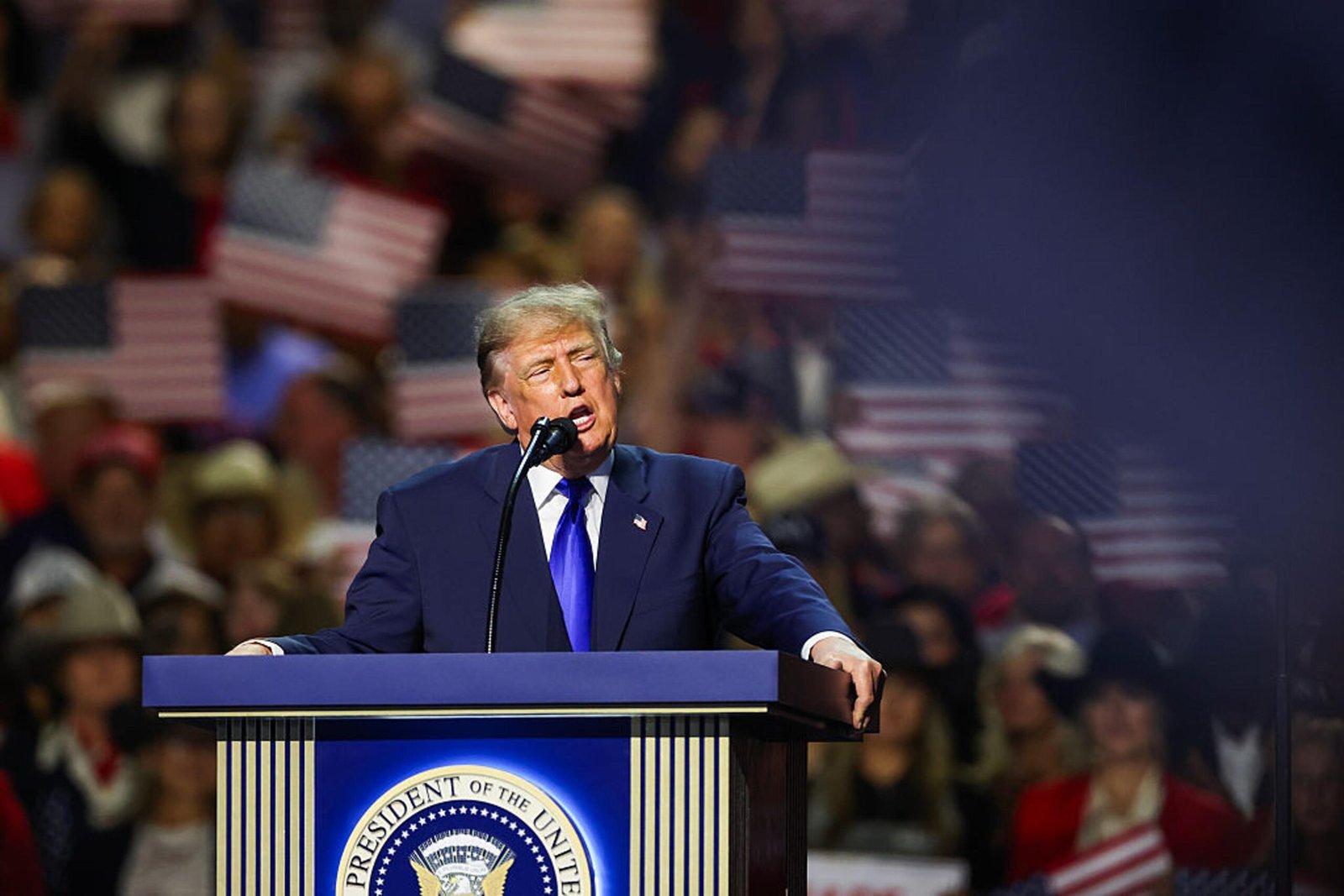
On Saturday, he posted a video on Truth Social urging Republicans to vote early, vote by mail or vote in person on Election Day.
He also directed supporters to the Republican campaign website, Swamp the Vote, for voting information.
Trump’s latest message contrasts with years of criticism of mail-in voting.
The President has repeatedly questioned the integrity of mail ballots and previously described the system in highly negative terms.
However, there is no evidence of widespread fraud in US mail voting.
Trump himself has used mail voting, including in recent elections in Florida.
The shift in messaging reflects the Republican Party’s effort to maximise turnout by encouraging supporters to use every legally available voting method.
Read also:
- Trump Midterm Election Fight: Rising Prices Put Economy at Centre of CBS Poll
- Trump $5,000 Dividend: Trump Renews Promise to Pay U.S. Adults If Republicans Win Midterms
- OpenAI, Anthropic Allies Spend $55.7 Million on 2026 US Midterms
Ohio Data Centres Create Fresh Challenge for Republicans
Trump’s campaign message on voting came as he also addressed another politically sensitive issue in Ohio: the expansion of artificial intelligence data centres.
Speaking at Butler High School in Vandalia, Ohio, Trump defended the development of data centres and said the state stood to benefit financially from the projects.
Trump argued that the facilities should not simply be rejected because of concerns about their impact on electricity demand.
He also linked the development of artificial intelligence infrastructure to the broader technological competition between the United States and China.
Trump backed Senator Jon Husted’s efforts to ensure that data centres do not shift their costs onto other electricity consumers.
Ohio Voters Express Opposition to AI Data Centres
The political challenge for Husted is that polling suggests many Ohio voters are concerned about the expansion of data centres.
A New York Times/Siena poll reported that 63 percent of Ohio voters opposed building data centres for artificial intelligence, while 31 percent supported the projects.
The same poll found that Democratic Senate candidate Sherrod Brown held an 11-point advantage over Husted on the issue.
Husted, who was appointed to the Senate after JD Vance became vice president, had previously helped attract data-centre projects during his tenure as Ohio lieutenant governor.
Brown has used that record to criticise Husted, arguing that tax incentives for large technology companies could leave ordinary residents carrying part of the cost.
Amazon Plans Major Ohio Data Centre Investment
The data-centre debate comes as major technology companies continue to expand their presence in Ohio.
Amazon has announced plans to invest $10 billion in Ohio data centres by 2030, adding to the state’s growing role in the artificial intelligence and cloud-computing industries.
For Republicans, the issue presents a difficult political balance between promoting investment and protecting voters from higher electricity costs.
The Ohio Senate race is therefore being watched closely as one of the competitive contests that could influence control of the US Senate.
Latino Voters and Economic Issues Could Shape Midterms
The developments in Ohio and the changing political preferences of Latino voters highlight the broader challenges facing both parties ahead of the US midterm elections.
For Democrats, the task is to convert recent polling gains among Latino voters into actual turnout.
For Republicans, maintaining support among Hispanic voters while addressing economic concerns and mobilising their base will be crucial.
With the election approaching, both parties are likely to increase their focus on cost-of-living concerns, turnout strategies and voters who remain politically uncommitted.
For more global news, follow us on X.