
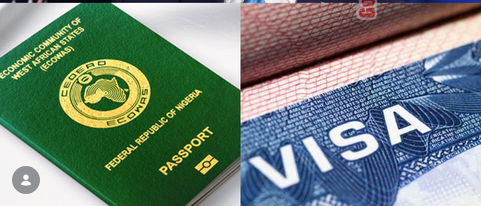
The United States Citizenship and Immigration Services (USCIS) has told a federal court that concerns over widespread document fraud and unreliable record-keeping systems in Nigeria and several other countries influenced its decision to temporarily suspend the processing of certain immigration benefit applications.
In a declaration filed by USCIS Deputy Director Angelica Alfonso-Royals, the agency said it had previously identified cases where immigration benefits were granted using information that could not be adequately verified, raising concerns about the authenticity of supporting documents submitted by applicants.
The filing formed part of the U.S. government’s legal defence of immigration restrictions introduced under former President Donald Trump, which targeted several countries considered to pose security and identity verification risks.

According to the declaration, USCIS officials argued that countries including Nigeria lack sufficiently reliable identity management systems needed to consistently verify personal records. The agency also alleged that corruption and structural weaknesses in some jurisdictions undermine the credibility of official documentation.
It further claimed that in Nigeria, birth and death registrations are sometimes completed years after the actual events, while marriage and divorce records are often incomplete or not properly captured in official databases. These gaps, USCIS said, make it difficult for U.S. authorities to properly vet applicants seeking immigration benefits such as green cards and work permits.
The agency maintained that these verification challenges contributed to its decision to temporarily halt processing of applications from Nigeria and 38 other countries as part of broader security screening measures.
Read also:
- US cuts African visa hubs to 20, drops Abuja from processing list
- U.S. Embassy suspends Visa appointments in Abuja over security concerns, issues travel advisory on Nigeria
- US to require Nigerians to post up to $15,000 visa bond for B1/B2 travel visas
However, a U.S. federal judge, John McConnell, ruled on June 11 that the administration lacked the legal authority to enforce the suspension of immigration applications from the affected countries. Following the ruling, USCIS said it would resume processing pending applications while considering further legal options.
The declaration also cited broader concerns about document fraud across several countries, including Somalia, Yemen, Afghanistan, Pakistan, South Sudan, Liberia, Ethiopia, Angola, and Sierra Leone.
The development has reignited debate over identity management systems and public record-keeping standards in Nigeria, amid past controversies involving former Minister Geoffrey Nnaji, former Finance Minister Kemi Adeosun, and allegations surrounding President Bola Tinubu.