
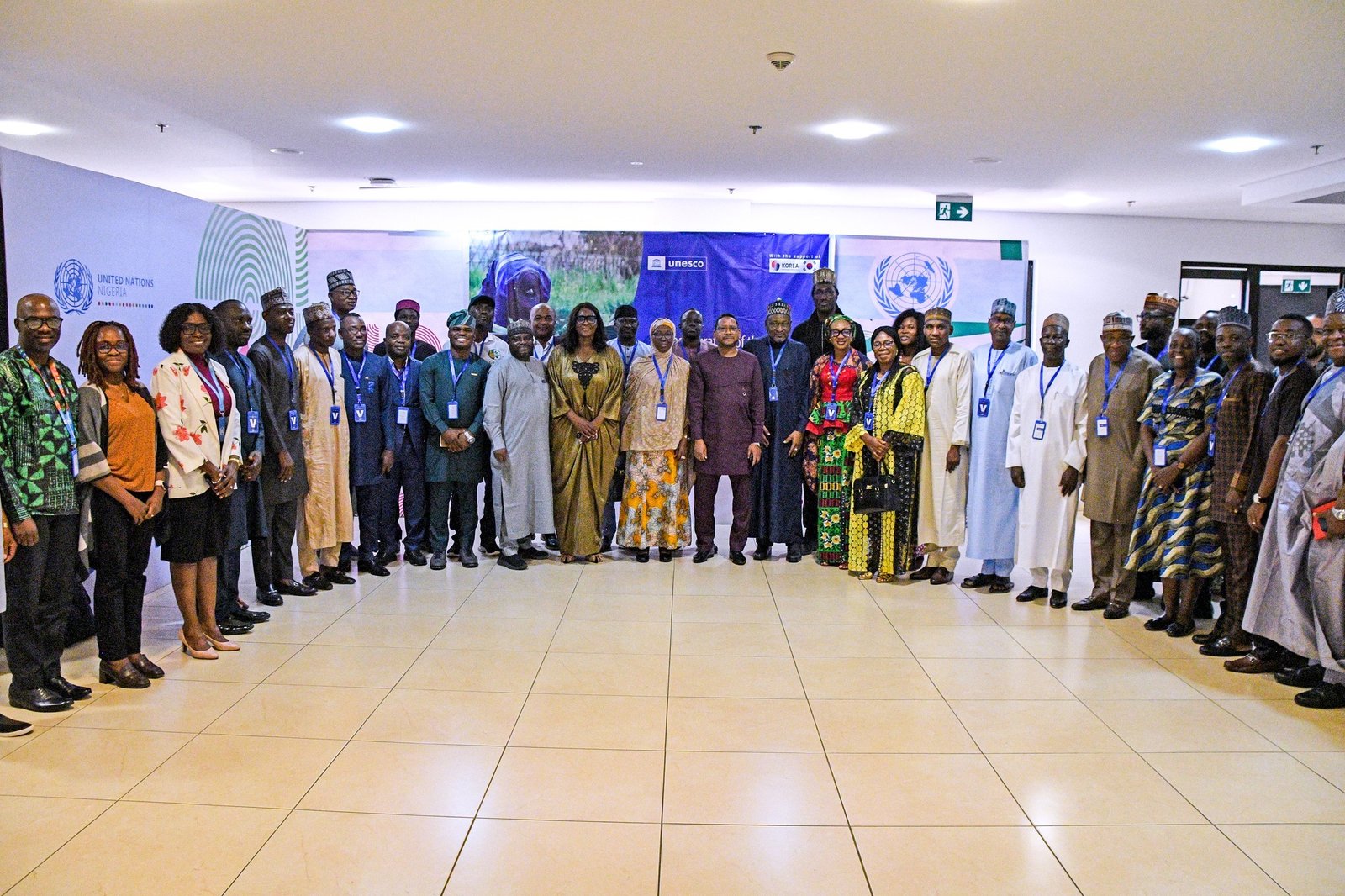
UNESCO has called for immediate action to strengthen skills development among young people in Nigeria, warning that gaps in practical education continue to drive unemployment, particularly in the agro-processing sector.
The organisation’s Head of Office and Representative in Abuja, Jean-Paul Abiaga, made the call at a Labour Market Workshop on Skills Gap Analysis in the Agro-Processing Sector. The event was held under the BEAR III project with support from South Korea.

Abiaga stressed that only relevant and market-driven skills can equip young people to succeed in a rapidly evolving global economy shaped by artificial intelligence, technology, and digital innovation.
The workshop focused on aligning policy, legislation, and implementation within the agro-processing industry, with particular emphasis on strengthening Technical and Vocational Education and Training programmes to meet current and future industry demands.
Director of Technology and Science Education at the Federal Ministry of Education, Patricia Ogungbemi, highlighted the need for increased investment in practical and technical skills. She called for stronger collaboration among stakeholders to improve food security and ensure that training institutions produce graduates equipped for modern industrial environments.
Read Also:
- 273 million children out of school globally as education crisis deepens — UNESCO report
- Kano hosts 2025 UNESCO World Heritage program to boost state’s world heritage bid
- Kano renews partnership with UNESCO, Korea for Youth Skills Development
Also speaking, Ibrahim Ado, representing the Kano State Ministry of Education, underscored the importance of Work-Based Learning in bridging the gap between classroom instruction and real-world industry practice. He noted the commitment of Governor Abba Yusuf to strengthening technical education and aligning policies with global standards.
Chairman of the Sector Skills Council for Agriculture, Onallo Akpa, pointed to persistent gaps in agro-processing and post-harvest management skills as a major concern. He said ongoing workshops in Abuja, Kano, and KRIVET are part of efforts to address these challenges with support from the Korean government.
The event reflects UNESCO’s continued push for reforms that will equip Nigerian youths with practical, industry-relevant skills needed to compete in a technology-driven labour market.