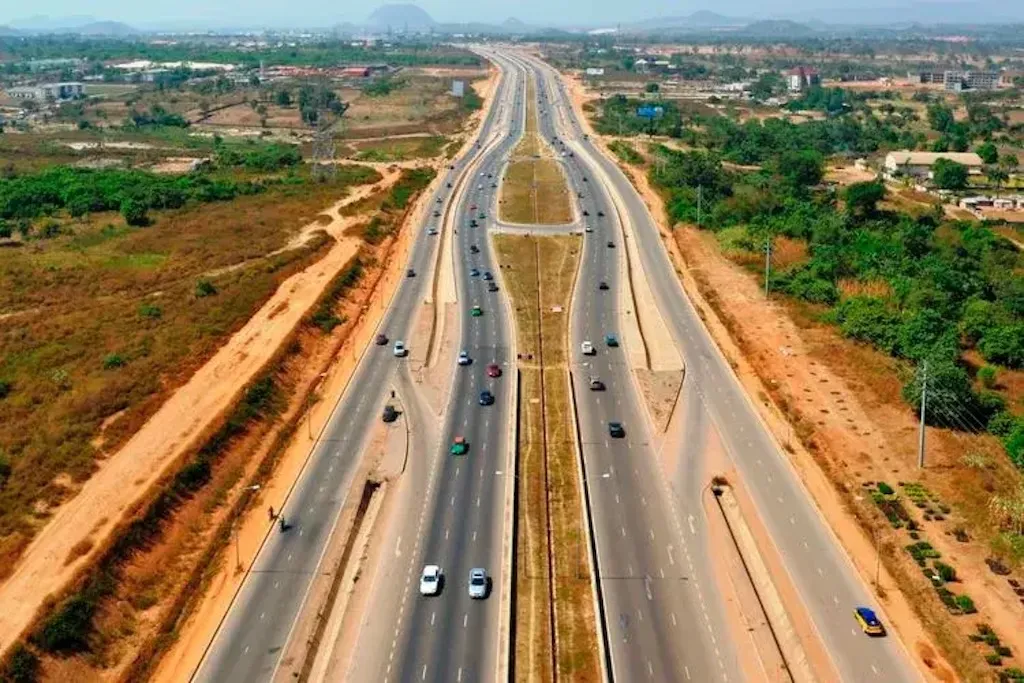
The Minister of Works, David Umahi, has said the Federal Government is targeting completion of the 750-kilometre Lagos-Calabar Coastal Highway within the next three years, potentially placing its delivery around 2029.
Key Highlights
- David Umahi says the Federal Government is targeting completion of the Lagos-Calabar Coastal Highway within approximately three years.
- The minister defends the direct procurement method used to award the project, saying it is lawful.
- Umahi says about 17,000 kilometres of federal roads are under construction or reconstruction.
- He reports that approximately 1,700 kilometres of roads have been completed since the Tinubu administration took office.
- The minister defends the financing structure of major infrastructure projects and cites congestion along the Lagos corridor.
- Umahi says he will personally fund a proposed initiative involving 4,000 social media influencers to promote government projects.
Umahi made the projection during an interview on Arise Television on Friday, where he defended the government’s infrastructure priorities and the procurement process adopted for the coastal highway.

Umahi Defends Lagos-Calabar Highway Procurement
The minister acknowledged that the Lagos-Calabar Coastal Highway was awarded without public bidding but maintained that the direct procurement method used was lawful.
“There was no public bidding, but there was direct procurement. It’s within the law. That’s all I’ve just said,” he said.
Asked when the entire highway would be completed, Umahi said the administration was working towards delivering it within approximately three years.
“We have four years plus by God’s special grace. So we are looking at three years,” he said.
Expressing confidence in President Bola Tinubu’s administration, the minister said he believed the project could be completed within the projected period.
“I’m a child of God. Faith is the evidence of things not seen. Okay, so I’m giving you the faith I have and the president that I know, that I believe that within the next three years plus, the president will be able to complete that project,” Umahi added.
However, the minister did not provide a detailed construction schedule or specific completion dates for individual sections of the highway.
Lagos-Calabar Coastal Highway Project Faces Public Scrutiny
The Lagos-Calabar Coastal Highway is one of the Federal Government’s major infrastructure projects, designed to connect coastal communities and improve transportation along Nigeria’s southern corridor.
The project has generated public debate over its procurement process, cost, funding arrangements and the decision to prioritise major new infrastructure while several existing federal roads remain in poor condition.
Umahi defended his ministry’s broader road construction programme, saying approximately 17,000 kilometres of federal roads were under construction or reconstruction, excluding major legacy projects.
“Out of about 35,000 kilometres of our federal roads, the one that is before me in the Ministry of Works, if you remove the few legacy projects we are constructing, we are constructing 17,000 kilometres of roads presently,” he said.
He added that the ministry had completed about 1,700 kilometres of roads since the Tinubu administration took office, alongside more than six kilometres of flyovers, bridges and underpasses.
Read also:
- Umahi Says Lagos-Calabar Coastal Highway Is Not Abandoned, Explains East-West Road Realignment
- Diri: Donald Duke Contesting for President Just to Be Rehabilitated
- Lagos-Calabar Coastal Highway Realignment Sparks Controversy as Ondo Coastline Faces Bypass
Umahi Defends Federal Government Road Spending
Responding to concerns about spending on major projects while existing roads remained in poor condition, Umahi argued that the legacy projects also involved improvements to existing road networks rather than entirely new construction.
“I’ve said that the legacy projects are not entirely greenfield. And so that justification is that we are also reworking the existing roads within these four legacy projects,” he said.
The minister also defended the financing arrangements for the projects, saying they were structured to attract investment rather than depend solely on direct government funding.
“These legacy projects are investment-driven because 30 per cent is from companies of the federal government and 70 per cent is loan-driven,” he stated.
Minister Cites Lagos Traffic Congestion as Reason for Coastal Highway
Umahi cited congestion along the Lagos corridor as another reason for pursuing the coastal highway, warning that traffic could worsen significantly without intervention.
“In the next five years, unless something is done in the corridor from VI to Lekki, it becomes, you know, a car park because of the congestion. And that’s why we are building the seven taxi route,” he said.
The minister’s remarks highlight the government’s argument that additional transport infrastructure is needed to address congestion and improve movement along the Lagos coastal corridor.
Umahi to Personally Fund Social Media Influencer Initiative
The minister also addressed controversy surrounding plans to engage 4,000 social media influencers to promote the administration’s projects.
Umahi insisted that he would finance the initiative personally rather than use funds from the Ministry of Works.
“Dave Umahi is funding, not Minister of Works, is funding influencers to advertise what I’m doing because I believe in what I’m doing. I believe in what the president is doing,” he said.
He added that the influencers would promote President Tinubu’s achievements nationwide, describing the initiative as a catalyst for campaigning ahead of the 2027 presidential election.
Umahi acknowledged that the initiative would provide political support for Tinubu, while dismissing speculation that his criticism of presidential candidate Peter Obi was connected to his own presidential ambitions.
“I cannot wish the position of my boss. It is disloyalty and it’s unspiritual and disrespectful,” he said.
Umahi Speaks on Infrastructure Legacy and South-East Integration
The minister said he hoped to be remembered for infrastructure development, helping people and supporting the integration of the South-East into national politics.
“My legacy will be the people I have made to laugh. The roads I have constructed, the people I have lifted up. And the region of South-East that I support being totally integrated,” he said.
Umahi’s comments come amid continuing public discussion about the pace of federal infrastructure development, the cost of major highway projects and the government’s approach to road construction and rehabilitation.
For more infrastructure and 2027 election news, follow us on X.