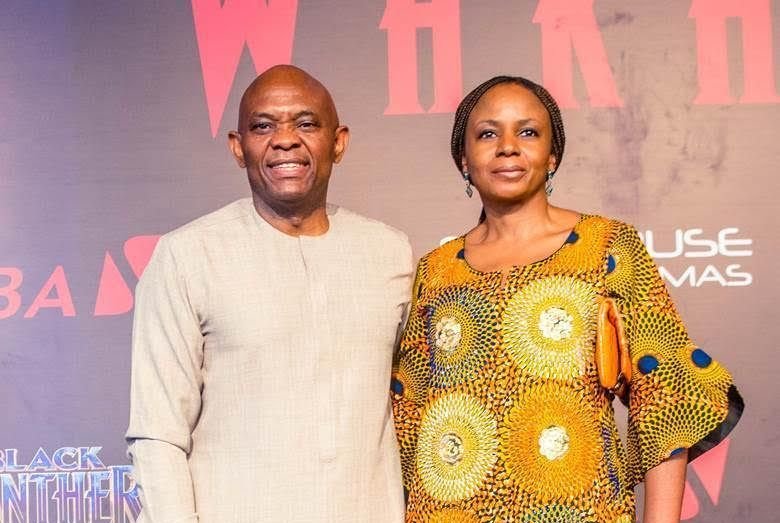
A false divorce rumour about Nigerian billionaire businessman Tony Elumelu has caused fresh controversy in the country and sparked debate about how authorities handle defamation cases.
The story, which spread widely on social media, claimed that Elumelu had separated from his wife.

However, United Bank for Africa (UBA) labeled the report as “fabricated, reckless, and malicious,” emphasizing that it aimed to tarnish Elumelu’s reputation and mislead the public.
The bank stated that security agencies were alerted, resulting in the arrest of three individuals—Kingsley Akunemeihe, Chigozie Success Ihebom, and John Surpruchi Nwanorue, connected to the spread of the false information.
The rumours, which spread rapidly across all social media, have triggered heated reactions, with many Nigerians questioning the intersection of influence, privacy, and law enforcement.
Read Also:
- Tony Elumelu urges African Leaders to embrace transparency, good governance to attract global investment
- Tony Elumelu calls for global support to empower young African Entrepreneurs
- Shettima, Oborevwori, Okowa, others storm Delta for Elumelu father in-law’s burial
This incident has sparked controversy online, with human rights activist Omoyele Sowore criticizing the police for the arrests. He contended that sharing or reporting on alleged divorce news about a public figure should not be considered a criminal act, arguing that it falls under civil defamation rather than grounds for detention.
“We must remind the Nigerian Police @policeng @TunjiDisu1 that it is not a criminal offense for bloggers to report that @TonyOElumelu, Chairman of @UBAGroup, has allegedly divorced his wife. At most, such issues belong to civil law and do not warrant police intervention or repression. The @PoliceNG should immediately release Kingsley Akunemeihe (@Directorkem), Chigozie Success Ihebom, and John Surpruchi Nwanorue (@problemchimky),” he posted on his official X page.
The situation has reignited broader discussions in Nigeria regarding the influence of powerful individuals on police actions, with critics questioning whether law enforcement is being used to stifle online discourse.
@Olisechallant expressed, “I used to have great admiration for Tony Elumelu and his family, but not anymore. This is absurd. This is using wealth and influence to oppress the less fortunate. Spreading false divorce rumors about your family is not a valid reason to arrest people.”
@DrJones added, “Those who intentionally spread false information or provoke unnecessary discord and should be held accountable through proper legal processes not illegal detention. If found responsible, reasonable penalties like fines or community service can serve as a deterrent.
At the same time, we should encourage responsible speech and ensure that people are not punished simply for expressing opinions or engaging in discussions.”
@Stephenisomeh remarked “But when did we start arresting people for civil cases?
This isn’t democracy if wealthy men could arrest people that defame them!
Tony can sue them for damages but arrest is illegal.
If those that spread that rumors are in America – would he arrest them?
Nigerians and oppression = 5&6”
Others argue that intentional misinformation that could harm reputations should have legal repercussions.
@Ayinla26 commented, “If you’re not well raised at home, you’ll learn outside… How can someone just wake up and post false information about another person for likes and comments?”
@connectwithtola urged, “Dear Sir, Tony Elumelu. I implore you in the name of Yeshua, please do not mix justice with mercy for those idiots. They deliberately defame people here for the sake of 𝕏 payouts, and it’s escalating. They lie about various individuals for impressions and monetization. Please, address them in a way they will never forget. If anyone advocates for them, deal with them too. Character assassination has no place in our society.”
Meanwhile, fact-checking reports indicate that the divorce story itself had no credible basis and originated from unverified social media posts.
As discussions continue, the case has become another flashpoint in Nigeria’s ongoing tension between online free expression, misinformation control, and the role of authority in handling viral claims involving high-profile figures.