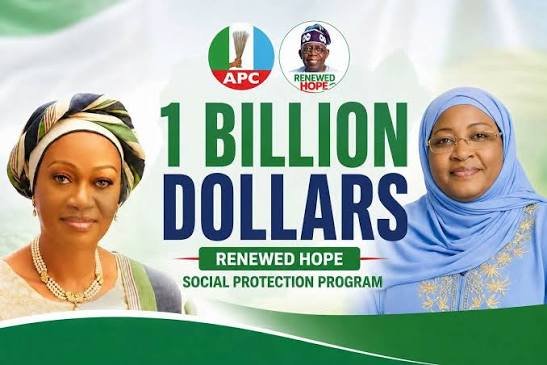
The Tinubu Media Support Group (TMSG) has defended the federal government’s $1 billion Renewed Hope Social Protection Programme (HOPE-SP), rejecting suggestions that it was introduced in response to former Vice President Atiku Abubakar’s economic proposals.
TMSG made the claim in a statement signed by its Chairman, Emeka Nwankpa, and Secretary, Dapo Okubanjo, in Abuja on Tuesday.

According to the TMSG, HOPE-SP has been under development for several months following a directive from President Bola Tinubu and is therefore not a hurried political response to Atiku’s economic recovery plan.
TMSG specifically claimed that the Minister of Humanitarian Affairs and Poverty Reduction, Bernard Doro, and his team have been working on the programme since November 2025.
The group acknowledged that HOPE-SP was launched about a week after Atiku unveiled his economic plan. However, it argued that the timing did not establish a causal link between the two events.
TMSG further argued that the programme is too elaborate to have been designed within a few days, describing the HOPE-SP as a long-term social-protection programme rather than another temporary palliative.
The group said the programme is intended to provide sustainable economic support to vulnerable Nigerians and was designed against the economic difficulties associated with fuel-subsidy removal and exchange-rate reforms.
TMSG also claimed that HOPE-SP would track beneficiaries and measure their progress towards economic inclusion and self-reliance.
Read also:
- FG Targets 20,000 New Medical Students Annually To Tackle Health Workers Shortage
- Minister Backs National Farm Cities Project To Empower Persons With Disabilities
- Of CIPSMN’S Circus Show, Presidential Censure, And National Development
- PDP Joins G-100 Coalition To Unseat Tinubu, APC
- Atiku Vows To Release Local Government Funds Directly If Elected President
- Show No Mercy to Opposition Parties, Governor Nwifuru Charges New LG Chairmen
- Tinubu-Shettima Support Group Begins Nationwide Mobilisation Campaign For 2027 Elections
- FCT Minister Urges APC Women To Mobilise Support For Tinubu In 2027
On Nigeria’s existing social-protection system, TMSG said the federal government’s cash-transfer programme has reached about 10 million vulnerable households over the past three years.
The group also attributed to the World Bank concerns about gaps in Nigeria’s social-protection system, including the reach of government-funded interventions. TMSG said only 44 percent of such schemes were reaching their intended beneficiaries.
TMSG further claimed that HOPE-SP, together with a recently unveiled World Bank-backed $3 billion programme, form part of a broader strategy to reduce multidimensional poverty.
The group said the success of the initiatives would depend partly on the involvement of state and local governments. It proposed coordinated implementation across Nigeria’s 8,809 wards.
TMSG also referred to President Tinubu’s position that his economic reforms would cause some hardship but that vulnerable Nigerians would not be abandoned.
The group urged Nigerians to be cautious about political claims concerning government policies, particularly ahead of the 2027 elections, and accused political actors of attempting to misrepresent the administration’s programmes.
Related Stories: