


By Omotayo Edubi
A new survey has revealed that four in every 10 people living with HIV in Lagos State are unaware of their infection, while fewer than half of the estimated HIV-positive population have achieved viral suppression.

Related: Lagos, Benue top chart as Nigeria records over 20,000 new HIV cases in Q1 2026
Key Highlights
- 41.7 per cent of people living with HIV in Lagos do not know their status.
- HIV prevalence in Lagos is estimated at 1.2 per cent: 1.6 per cent among women and 0.8 per cent among men.
- 93.4 per cent of diagnosed people are on treatment, and 88.9 per cent of those are virally suppressed.
- Overall viral suppression among all people living with HIV in the state is 48.3 per cent.
- Early infant diagnosis fell from 7.7 per cent in 2021 to 1.5 per cent in 2025.
The findings highlight persistent gaps in HIV testing, diagnosis and treatment outcomes despite the high proportion of diagnosed patients accessing antiretroviral therapy.
The results are contained in the 2025–2026 Nigeria State-Level Antiretroviral Therapy (ART) Impact Survey, conducted between November 2025 and February 2026 with funding from the United States government through the US Centres for Disease Control and Prevention (CDC).
What the Lagos HIV survey found
The survey covered people aged 15 to 64 and estimated HIV prevalence in Lagos at 1.2 per cent, with women recording 1.6 per cent compared with 0.8 per cent among men.
According to the assessment, only 58.3 per cent of people living with HIV in the state knew their status, leaving 41.7 per cent unaware of their infection.
Among those who had been diagnosed, 93.4 per cent were receiving antiretroviral treatment, while 88.9 per cent of those on medication had achieved viral suppression.
However, when measured against the estimated total population of people living with HIV, the overall viral suppression rate was 48.3 per cent.
The findings were presented in Ikeja, where the Permanent Secretary of the Lagos State Ministry of Health, Dayo Lajide, said the survey would help the state measure progress since the 2018 Nigeria HIV/AIDS Indicator and Impact Survey.
She said the data would guide interventions aimed at improving HIV testing, treatment access and long-term management of the infection.
Lajide also reaffirmed the state government’s commitment to strengthening HIV services through the provision of rapid diagnostic kits, antiretroviral medicines and improved healthcare delivery.
Gaps in mother-to-child transmission and paediatric care
The survey further exposed challenges in preventing mother-to-child transmission of HIV and providing treatment for infected children.
Figures presented by Lajide from the 2025 HIV Health Sector Report showed that prevention of mother-to-child transmission coverage increased from 45 per cent in 2018 to 57.6 per cent in 2025.
However, early infant diagnosis declined from 7.7 per cent in 2021 to 1.5 per cent in 2025, while paediatric HIV treatment coverage stood at approximately 44.5 per cent.
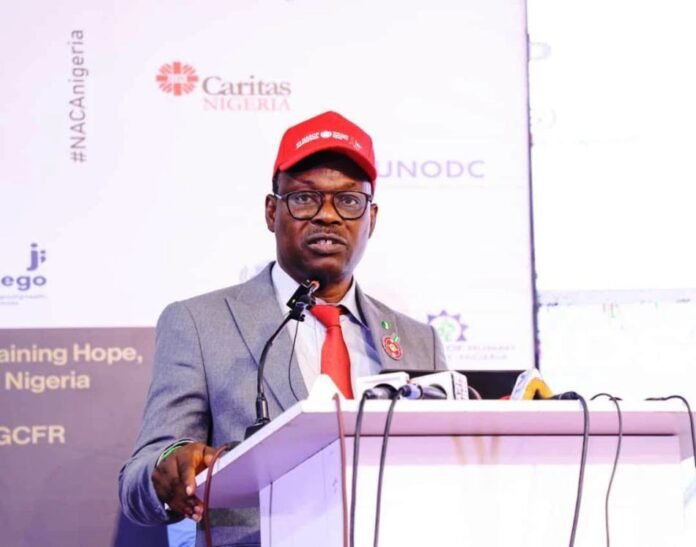
Also speaking at the presentation, the Director-General of the National Agency for the Control of AIDS (NACA), Dr Temitope Ilori, said the major challenge was not simply collecting data but translating the findings into meaningful improvements in healthcare services.
She urged stakeholders to identify populations being left behind, take responsibility for addressing the gaps and direct resources towards communities requiring urgent HIV interventions.
Ilori added that the Federal Government was ready to support states in strengthening their HIV response.
Read also:
- Lagos, Benue top chart as Nigeria records over 20,000 new HIV cases in Q1 2026
- NACA, WHO Urge Media to Counter HIV Misinformation and Stigma
- Expert Predicts Nigeria Can End HIV/AIDS As Public Health Threath By 2030
The Health Assistant Coordinator in the Office of the US Embassy’s Department of State, Abuja, Omoshalewa Oyelaran, also identified the large number of people unaware of their HIV status as a major concern.
She stressed the importance of using the survey findings to improve testing and ensure that infected persons are linked to treatment.
Meanwhile, the Chief Executive Officer of the Lagos State AIDS Control Agency (LSACA), Dr Folakemi Animashaun, said the results would support planning, budgeting, accountability and sustainable financing of HIV programmes.
The Network of People Living with HIV/AIDS in Nigeria (NEPWHAN) also called for greater involvement of people living with the virus in designing and implementing interventions.
How Lagos measures against the 95-95-95 targets
The figures are particularly significant in relation to the global 95-95-95 targets established by UNAIDS to accelerate progress towards ending AIDS as a public health threat.
The targets seek to ensure that 95 per cent of people living with HIV know their status, 95 per cent of those diagnosed receive sustained treatment, and 95 per cent of those receiving treatment achieve viral suppression.
With only 58.3 per cent of HIV-positive residents in Lagos aware of their status, the survey indicates that identifying undiagnosed infections remains a major challenge for the state.
Health stakeholders have consequently called for expanded testing, improved access to antiretroviral medicines, regular viral load monitoring and stronger interventions for pregnant women and children.
For more health news, follow us on X.


