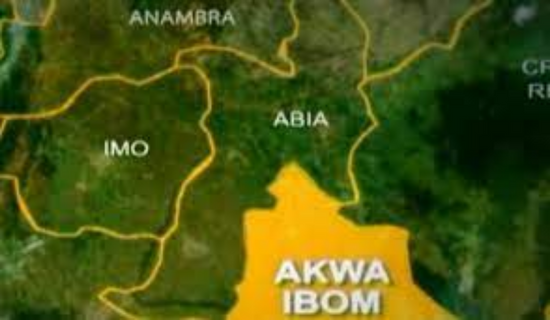
The controversy surrounding ownership of the Stubbs Creek Forest Reserve in Akwa Ibom State has deepened, with the Unyenge community in Mbo Local Government Area strongly disputing claims by the Ekid ethnic nationality that the reserve belongs exclusively to Eket and Esit Eket local government areas.
Leaders of the Unyenge community argue that the forest reserve stretches across four local government areas, Mbo, Ibeno, Eket and Esit Eket, and cannot be claimed solely by the Ekid people. Their position comes amid rising tensions and renewed public exchanges over the disputed land.

The Ekid People’s Union (EPU) had earlier accused the Akwa Ibom State Government of unlawfully taking over the forest reserve and allocating parts of it to private companies without compensation to the original landowners. The state government has, however, dismissed the allegation, maintaining that the land remains legally vested in the state.
In a communiqué issued after an emergency meeting, leaders of the Unyenge community said they were closely observing ongoing discussions between the EPU and Ibeno communities over the forest’s ownership. The statement, signed by Chief Itama Ekpe, criticised what it described as renewed attempts by the EPU to assert exclusive ownership of the reserve.
The Unyenge leaders warned that previous violent confrontations linked to the forest dispute, some of which reportedly resulted in loss of lives, should serve as a reminder of the dangers of unresolved land conflicts. They recalled particularly fierce clashes between Unyenge and Eket communities and expressed concern that lingering grievances continue to fuel tension in the area.
According to the communiqué, between 70 and 75 per cent of the Stubbs Creek Forest Reserve lies within Unyenge territory. The community accused residents of Eket of engaging in logging, fishing, farming and raffia palm tapping on Unyenge land, with some allegedly living there, despite the absence of a direct boundary between both communities.
Read Also:
- Breaking: Akwa Ibom State Commissioner of Police reportedly dead
- IGP appoints new CP to head Akwa Ibom State Command
- APC swears in Ntukekpo as Akwa Ibom State chairman
The Unyenge leaders explained that their community and Eket are separated by a valley and are only indirectly linked through Ntak Inyang in Esit Eket, at Nkung Nkanga.
Chief Ekpe further recalled that Eket had instituted a legal action against Unyenge in 1994 over ownership of the forest reserve but lost both at the High Court and at the Court of Appeal in Calabar. He said the case was fought between Unyenge, representing the Ibeno axis, and Eket, representing the Ekid axis.
He dismissed the claims of Eket and Esit Eket over the 310.8-square-kilometre forest reserve, stressing that ancestral narratives or economic activities do not amount to legal ownership. According to him, although Eket refers to the forest as Akoiyak due to historical fishing activities, existing documents and court rulings favour Unyenge’s claim.
Meanwhile, the Akwa Ibom State Government has reiterated that the forest was lawfully gazetted as a reserve under Forest Reserve Order No. 45 of 1930 and is held in trust by the governor in accordance with the Land Use Act of 1978.
As of January 2026, the dispute remains unresolved and is viewed as a potential risk to major projects in the area, including the Lagos–Calabar Coastal Highway and the proposed BUA oil refinery. The state government recently restated its authority over the land, dismissing EPU’s position as a misinterpretation of a 1918 court record.
Another community leader, Mr. Bassey Ekpimah, also rejected Eket’s ownership claims, describing them as baseless. He noted that the alleged principal landowner has remained silent, while Eket, occupying what he described as a small portion of the area, continues to assert control.
“The land earmarked for the BUA refinery does not belong to Ibeno or Eket,” Ekpimah said. “It is Unyenge land, and we are closely watching how events unfold.”