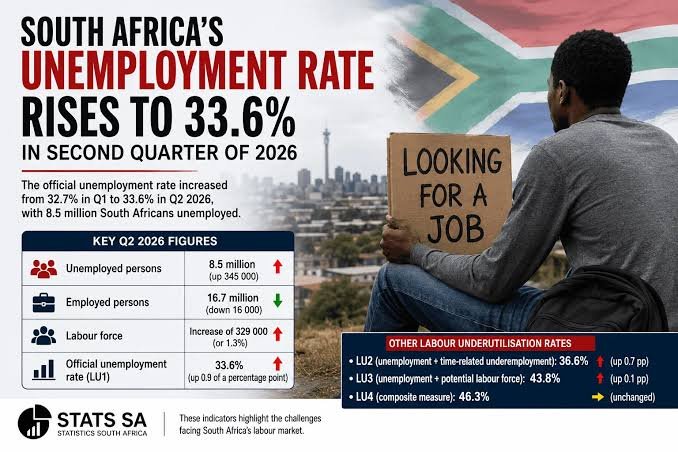
South Africa’s unemployment rate has risen to 33.6 percent in the second quarter of 2026, despite the departure of thousands of foreign workers amid intensified anti-migrant pressure and immigration enforcement.
According to the latest figures cited in the report, the number of unemployed South Africans increased by 345,000 to 8.5 million, while the number of employed people fell by 16,000 to 16.7 million. Youth unemployment also worsened, with about five million young people now unemployed.

Key Highlights
South Africa’s unemployment rate rose from 32.7% to 33.6%.
The number of unemployed people reached 8.5 million.
Youth unemployment increased by 264,000.
Thousands of foreign workers left amid anti-migrant pressure.
Labour shortages emerged in agriculture, construction, domestic services and other sectors.
The figures raise questions about claims that removing foreign workers would create more jobs for South Africans.
The development has renewed debate over the economic consequences of South Africa’s treatment of foreign workers. Reports indicate that migrants from Zimbabwe, Malawi, Ghana, Nigeria and other African countries left the country amid threats, protests, business disruptions and intensified enforcement. South Africa has also recorded formal deportations.
Read also:
- South Africa Launches Digital Visa System, Nigerians Excluded In First-Phase Rollout
- How To Apply For Ontario’s New Canada Permanent Residence Programme
- Super Falcons Face Banyana Banyana In Crucial World Cup Playoff Battle
- Oprah Winfrey to Close South Africa Girls’ Academy After 20 Years, Launch Scholarship Programme
The departures reportedly created labour shortages in some sectors, particularly agriculture and other industries that rely heavily on migrant workers. Some employers have struggled to replace workers in physically demanding, seasonal and low-paid occupations.
However, South Africa’s unemployment crisis predates the latest migrant exodus. The country has experienced unemployment above 30 percent for several years, suggesting that the problem is rooted in deeper structural weaknesses.
These include slow economic growth, inadequate skills development, infrastructure constraints, weak investment and a mismatch between available jobs and the skills of job seekers.
The latest figures therefore challenge the argument that removing foreign workers would, by itself, substantially reduce unemployment. The data show that joblessness continued to rise even as thousands of migrants left the country.
The figures point instead to the need for policies capable of expanding economic activity, improving skills and infrastructure, creating formal employment and managing migration effectively.