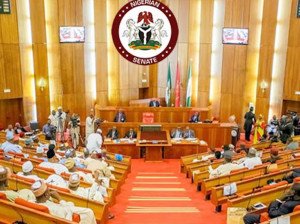
In a move that has stirred political debate ahead of the 2027 elections, the Nigerian Senate has amended its Standing Rules to restrict eligibility for top leadership positions to ranking lawmakers, a decision widely interpreted as reshaping the contest for Senate President.
The amendment, adopted after a closed-door session lasting nearly three hours, effectively limits access to presiding and principal offices in the 11th National Assembly to senators who are currently serving in the 10th Senate and secure re-election in 2027.
Key Highlights
Senate amends rules to restrict leadership positions to ranking members
Only senators with two consecutive terms eligible for top offices
New rule requires at least eight years of Senate experience
Amendment linked to 2027 leadership succession dynamics
Critics describe move as attempt to limit competition

Under the revised rules, only lawmakers who have served two consecutive terms, including the immediate past tenure, will qualify to contest for presiding offices such as Senate President and Deputy Senate President, as well as key principal roles.
Presenting the amendment during plenary, Deputy Senate Leader, Oyelola Ashiru, who stood in for Senate Leader Opeyemi Bamidele, said the changes were designed to strengthen legislative processes and ensure institutional stability.
He cited Section 60 of the 1999 Constitution (as amended), noting that the Senate has the authority to regulate its internal procedures, including leadership selection.
According to Ashiru, the amendment to Orders 4 and 5 of the Standing Rules introduces a clear requirement that any senator aspiring to presiding office must have served for at least two terms, amounting to eight years, with one term immediately preceding the election.
He explained that the revision aims to establish a structured ranking system aligned with global parliamentary practices, ensuring that only experienced lawmakers occupy leadership positions.
The amended Order 4 outlines a hierarchy of ranking, including former Senate Presidents, former Deputy Senate Presidents, former principal officers, and other lawmakers with prior legislative experience, while placing first-time senators at the lowest level.
Order 5 further narrows eligibility by stating that only senators who have served two consecutive terms immediately before nomination can contest for principal offices, effectively excluding new entrants and returning politicians who were not part of the 9th and 10th Senate.
Beyond leadership eligibility, the revised rules also introduce procedural reforms, including restrictions allowing only sworn-in senators to participate in voting and proceedings, revised timelines for swearing-in, and stricter disciplinary measures.
The Senate also moved to strengthen committee operations by ensuring balanced representation across Nigeria’s geopolitical zones and recognising new committees focused on areas such as regional development, livestock, and socio-economic justice.
Read also:
- Senate confirms Muttaqha Rabe Darma as Minister, approves key appointments, Pension Reform Bill
- Nigeria Senate demands urgent rescue of 416 abductees as Boko Haram threatens victims in Borno State
- Senate confirms Lamido Yuguda as CBN deputy governor
- Senate Endorses Akpabio for 2027 Return, Declares Top Leadership Seats Closed to Contest
While the Senate leadership maintains that the reforms are aimed at improving efficiency and institutional capacity, the amendments have generated controversy in political circles.
Some critics argue that the changes are a strategic move to shape the 2027 leadership race and consolidate power within the existing structure. A ranking senator, who spoke anonymously, described the amendment as a calculated effort to limit competition and favour insiders.
The development comes amid growing speculation over the political ambitions of key figures, including Hope Uzodimma, whose reported interest in the Senate Presidency has been widely discussed in political circles.