The House of Representatives Public Accounts Committee has intensified its investigation into revenue remittances by government-owned enterprises, directing the Office of the Accountant-General of the Federation to provide a comprehensive breakdown of outstanding operating surplus and other revenues allegedly owed to the federal government by the Central Bank of Nigeria (CBN), the Nigerian National Petroleum Company Limited (NNPCL) and other public institutions.
Key Highlights
- The House of Representatives Public Accounts Committee has intensified its investigation into revenue remittances by government-owned enterprises.
- The committee directed the Office of the Accountant-General of the Federation (OAGF) to provide details of outstanding operating surplus allegedly owed by the CBN, NNPCL and other public institutions.
- Lawmakers are also investigating the OAGF’s deductions from the accounts of Ministries, Departments and Agencies (MDAs), including the reported ₦15 billion deduction from UBEC.
- The probe is part of the committee’s oversight under the Fiscal Responsibility Act, which requires government-owned enterprises to remit part of their operating surplus to the Consolidated Revenue Fund.
- OAGF officials disclosed that the Central Bank of Nigeria allegedly owes ₦5.3 trillion in outstanding operating surplus.
The House ommittee also demanded explanations over claims that the OAGF made deductions from the statutory accounts of several Ministries, Departments and Agencies (MDAs), including the reported withdrawal of ₦15 billion from the Universal Basic Education Commission (UBEC), raising concerns that the practice may have affected the ability of some agencies to carry out their statutory responsibilities.

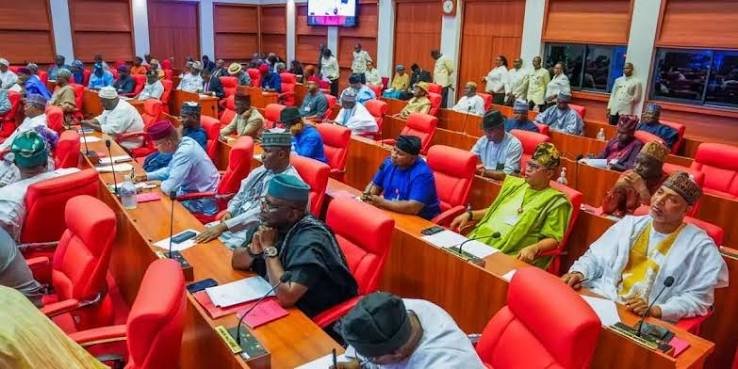
The directives were issued on Tuesday, during an investigative hearing at the National Assembly attended by the Accountant-General of the Federation, Shamseldeen Ogunjimi, alongside senior treasury officials.
The ongoing investigation forms part of the House committee’s oversight responsibilities under the Fiscal Responsibility Act, which requires government-owned enterprises to remit a specified percentage of their operating surplus into the consolidated revenue fund.
The operating surplus policy is designed to strengthen government revenue and reduce financial leakages.
However, compliance has remained a recurring challenge, with several agencies accused over the years of failing to remit, or under-remitting, the required funds.
During the hearing, a member of the House committee, Rep. Gboyega Isiaka expressed concern over the country’s low revenue performance, arguing that poor compliance with remittance obligations continues to weaken Nigeria’s fiscal position.
Responding, the Director of Revenue and Investment, Makinde Mogaji, disclosed that the Central Bank of Nigeria allegedly owes the federal government ₦5.3 trillion in outstanding operating surplus.
The hearing also examined the OAGF’s policy of making automatic deductions from the accounts of MDAs to recover anticipated operating surplus before the end of each fiscal year.
Defending the policy, Ogunjimi maintained that the initiative has significantly improved government revenue generation.
“That was an ingenious way of taking, in advance, what was due to government, and it helped us generate substantial revenue last year,” he said.
He acknowledged, however, that the policy generated resistance from some government agencies, leading to adjustments and reversals in certain instances.
Read also:
- LP Candidate’s Campaign Agenda Emerges Online, Raises Stakes In Abakaliki/Izzi Reps Race
- Kalu allegedly bows out of Abia guber race
Providing further clarification, Mogaji said the auto-deduction policy remains in operation and is intended to reconcile agencies’ actual operating surplus after their accounts have been finalised.
Lawmakers also questioned the legality of withdrawing funds from statutory agencies established to deliver essential public services.
Committee Chairman, Rep. Bamidele Salam referred to petitions received from UBEC and several other agencies alleging that statutory allocations had been deducted without prompt reimbursement.
In response, Ogunjimi insisted that the deductions were temporary and carried out only to meet urgent government financial obligations, with the understanding that the funds would be refunded whenever the affected agencies required them.
The committee chairman, however, rejected the explanation, insisting that funds appropriated by law for statutory agencies should not be diverted for other purposes.
At the end of the session, the House committee directed the OAGF to submit detailed records of outstanding operating surplus owed by the CBN, NNPCL and other government-owned enterprises.
It also requested comprehensive documentation on deductions made from MDA accounts, refunds already processed and outstanding balances.