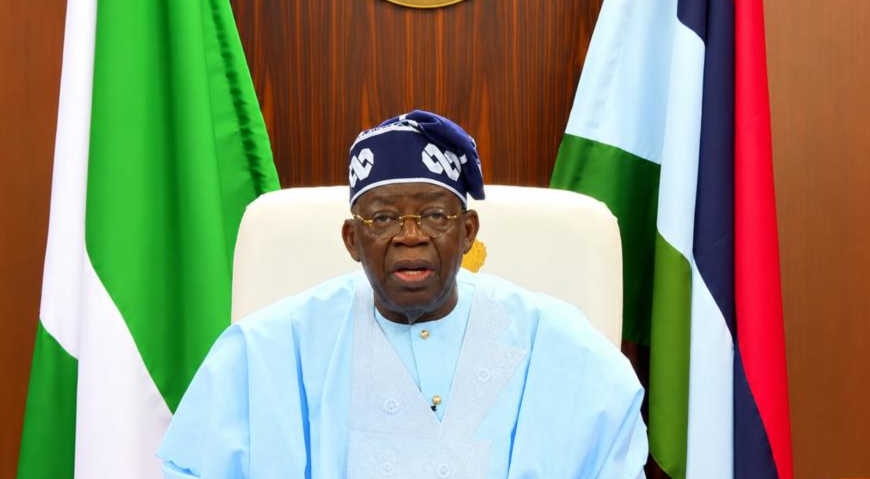
The Presidency has rejected former Vice-President Atiku Abubakar’s proposal for a targeted production subsidy on petroleum products, describing it as a “dangerous mathematical fantasy wrapped in political deceit.” Special Adviser to President Bola Tinubu on Media and Public Communications, Sunday Dare, said the proposal was unrealistic because Nigeria’s available crude oil volumes may be insufficient to support the scheme without creating fresh fiscal and supply challenges.
Key Highlights
- The Presidency has dismissed Atiku Abubakar’s proposal for a targeted subsidy on petroleum products refined in Nigeria.
- Sunday Dare argued that Nigeria lacks sufficient unencumbered crude oil to sustain the proposed arrangement at scale.
- Atiku says his production-based subsidy would reduce refining costs, encourage local production and lower petrol prices.
- The former vice-president accused the Tinubu administration of copying elements of his economic plan without adopting its safeguards.
- The Presidency defended temporary fuel-price measures as market-stabilisation tools rather than a return to the former subsidy regime.
- The government cited compressed natural gas (CNG), local refining and other energy policies as alternatives to broad fuel subsidies.
- The disagreement highlights competing approaches to fuel affordability and economic policy ahead of the 2027 elections.
Presidency Says Atiku’s Fuel Subsidy Proposal Is Unrealistic
In a statement responding to Atiku’s recent criticisms of government measures to moderate petrol prices, Dare argued that the former vice-president’s proposal did not adequately account for Nigeria’s available crude oil supplies.

The Presidency maintained that any production-based subsidy must be supported by sufficient crude volumes and a credible financing structure to prevent the scheme from creating new fiscal pressures.
Dare described the proposal as economically unrealistic, arguing that the government could not guarantee preferential crude supplies on the scale required without accounting for existing production agreements and contractual obligations.
The Presidency also warned that a poorly designed subsidy could recreate problems associated with the previous petrol subsidy regime, including opacity, diversion of products and losses to public finances.
What Is Atiku’s Production-Based Fuel Subsidy Plan?
Atiku, the African Democratic Congress (ADC) presidential candidate for the 2027 elections, has advocated a production-based subsidy aimed at supporting petroleum products refined domestically rather than subsidising imported fuel.
Under the approach outlined in his economic recovery plan and related statements, qualifying domestic refineries would receive crude oil at preferential prices, subject to clearly defined limits and oversight mechanisms.
The proposed safeguards include:
- Fiscal ceilings and budgetary appropriations.
- Independent verification of crude volumes supplied and products refined.
- Electronic tracking of crude intake and refinery output.
- Obligations to supply petroleum products to the domestic market.
- Transparent pricing and independent audits.
- Penalties for diversion or other forms of abuse.
Atiku argues that support should “follow the barrel” refined in Nigeria rather than subsidise imported petroleum products.
He maintains that the arrangement could lower refinery production costs, encourage investment in domestic refining, create jobs and help moderate pump prices.
The former vice-president has also distinguished his proposal from the previous subsidy system, arguing that his version would be capped, budgeted and independently audited rather than operate as an open-ended government commitment.
Presidency Questions Nigeria’s Available Crude Oil Supply
A central argument in the Presidency’s rejection is that Nigeria does not have enough freely available crude oil to sustain a large-scale production subsidy.
Citing government officials, including Coordinating Minister of the Economy and Minister of Finance Wale Edun, the reports put Nigeria’s crude oil production at approximately 1.8 million barrels per day.
However, the Presidency argued that a significant share of production is committed to joint-venture arrangements, production-sharing contracts, royalties, production costs and other obligations.
According to the government’s position, the Federal Government is left with fewer than 700,000 barrels per day of free equity crude after accounting for these commitments.
The Presidency said a production-subsidy arrangement that ignores these constraints could create a gap between the volume of crude promised to refineries and the quantity actually available.
It also argued that domestic refiners, including the Dangote Petroleum Refinery, supplement local supplies with imported crude because available Nigerian crude does not always meet their requirements without affecting existing contractual commitments.
These figures and their implications form part of the government’s argument against Atiku’s proposal; a full assessment would require detailed, independently verifiable production and allocation data.
Atiku Accuses Tinubu Government of Copying His Economic Plan
The dispute intensified after Atiku criticised the NNPC Retail fuel discount introduced around Nigeria’s Independence anniversary and subsequently extended, alongside a price-modulation framework involving an interim ceiling on ex-gantry costs.
Atiku described the measures as a temporary, “panic-driven gimmick” and alleged that President Tinubu had borrowed elements of his production-subsidy proposal without adopting the structural safeguards he considers necessary.
He compared the administration to a student who copied an answer but failed to reproduce it correctly.
The Presidency rejected the allegation, with Dare dismissing the comparison and describing Atiku’s broader argument as demagoguery.
The exchange reflects the growing political contest over which policies can best reduce fuel costs while protecting government finances and encouraging domestic refining.
Read also:
- Atiku Accuses Tinubu of Copying His Fuel Subsidy Plan as Keyamo Fires Back, NLC Maintains 14-Day Ultimatum
- NNPC Retail Discount: Who Pays, Who Benefits?
- NNPC 30-Day Petrol Discount Sparks Opposition Backlash as Presidency Denies Subsidy Return
Presidency Defends Temporary Fuel-Price Measures
The Presidency said the NNPC Retail discount and price-modulation measures were intended to cushion short-term volatility in petroleum prices rather than restore the former open-ended subsidy regime.
Under the framework described in reports, refiners and importers absorb some short-term cost increases above an interim ceiling, with the possibility of recovering those costs when market conditions ease. The reported ceiling has been around ₦1,350 per litre at the ex-gantry level, subject to cost reviews.
The government presented the arrangement as a temporary market-stabilisation measure.
However, the precise operation of the framework, including how costs are recovered and how the ceiling is reviewed, would need to be assessed against the applicable policy documents and implementation data.
Government Cites CNG and Local Refining as Alternatives
Beyond the temporary price measures, the Presidency pointed to other policies intended to reduce Nigeria’s exposure to petrol-price volatility.
These include expanding compressed natural gas (CNG) infrastructure, supporting crude-oil supply arrangements with domestic refineries, developing strategic energy reserves, applying windfall taxes to eligible operators and implementing tax reforms.
The government argued that expanding the use of CNG could provide a cheaper transport-energy alternative for some households and businesses, while increased domestic refining could reduce dependence on imported petroleum products.
It also defended the 2023 removal of the petrol subsidy and foreign-exchange market reforms, saying they helped reduce pressure on public finances and increase allocations to state and local governments.
The administration has maintained that the reforms eliminated the fiscal burden associated with the previous subsidy system. Critics, however, continue to question the transparency of reported savings and whether the benefits have adequately offset higher transport, food and other living costs.
Fuel Subsidy Debate Intensifies Ahead of 2027 Elections
The disagreement between Atiku and the Presidency highlights a broader debate over the future of Nigeria’s petroleum pricing policy.
Atiku’s proposal centres on targeted support for domestic refining, with safeguards intended to limit costs and prevent abuse. The Tinubu administration, by contrast, argues that market-based pricing, temporary stabilisation measures, increased local refining and alternative fuels offer a more sustainable approach.
Both sides have emphasised the importance of transparency and safeguards, but they disagree over crude-oil availability, the fiscal implications of preferential pricing and the risk of repeating past subsidy-related problems.
For Nigerian households and businesses, the central issue remains whether the competing approaches can improve fuel affordability without placing unsustainable pressure on public finances.
As the 2027 elections approach, fuel prices, the cost of living and the wider effects of subsidy removal are likely to remain prominent issues in the debate over Nigeria’s economic direction.
For more updates on Nigeria’s economy and the 2027 elections, follow us on X.