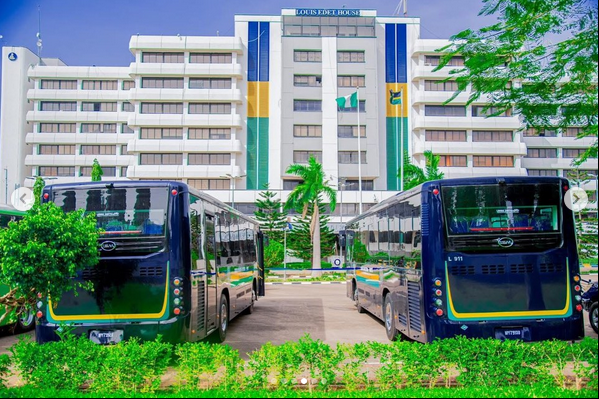
The Federal Capital Territory (FCT) Police Command has announced the launch of a welfare transport scheme for its personnel, deploying three compressed natural gas (CNG)-powered buses to ease commuting challenges within Abuja and surrounding areas.
In a statement issued on Sunday, the Police Public Relations Officer, SP Josephine Adeh, said the initiative, approved by the Inspector-General of Police, Olatunji Disu, will take effect from Monday, April 27, 2026.
According to the statement, the scheme is designed to improve the welfare of officers by providing structured and reliable transportation across key routes in the FCT.

The FCT Commissioner of Police, Ahmed Sanusi, said the buses would operate on three major corridors, all terminating at the Force Headquarters in Area 11, Abuja.
He explained that the first bus will run from the Goshen–Auta-Balefi axis through Masaka, Mararaba and Nyanya.
The second will depart from Zuba Divisional Headquarters, passing through Madalla, Abubakar Police Barracks, Brick City, Kubwa, Dutse Junction and the Secretariat.
The third bus will operate from Kuje Divisional Headquarters, covering Kuje Police Barracks, Airport Road, Lugbe and the Stadium axis.
All buses are scheduled to depart their take-off points daily at 6:15 a.m.
Read also:
- FCT Police begin screening for constable in new recruitment
- FCT police boss warns officers against harassment, extortion
- FCT police chief rallies communities for peaceful 2026 council polls
Sanusi described the initiative as a response to longstanding transportation challenges faced by personnel, noting that it reflects a growing emphasis on welfare within the police hierarchy.
He commended the Inspector-General of Police for what he called a “thoughtful intervention,” adding that improved welfare would translate into better service delivery, discipline and operational efficiency.
He also urged officers to take full advantage of the scheme.
The introduction of the CNG-powered buses comes amid broader efforts by the federal government to promote cleaner energy alternatives and reduce transportation costs, particularly within public institutions.