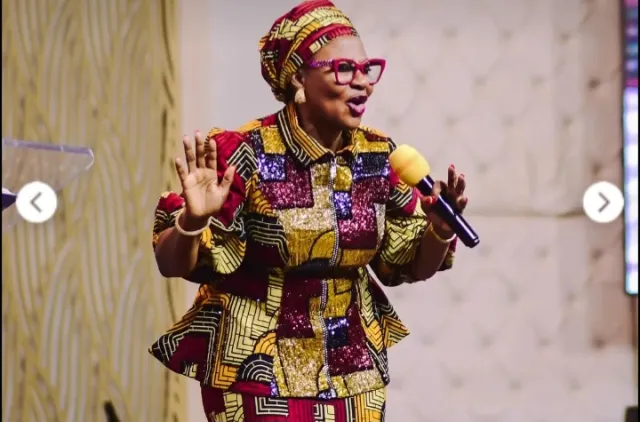
Senior Pastor of Family Worship Centre (FWC), Sarah Omakwu, has advised married couples to designate their spouses as their next of kin rather than their parents, siblings or other relatives, describing a husband or wife as the primary family member after marriage.
The cleric made the call during a recent message that has since attracted widespread attention and debate across social media platforms.

Addressing married men, Omakwu urged them to avoid naming their fathers or brothers as their next of kin on official documents, arguing that a man’s first responsibility after marriage is to his wife and children.
According to her, a spouse should be the recognised beneficiary in matters involving employment records, official benefits, inheritance and other family-related obligations.
Read Also:
- Super Falcons star Rasheedat Ajibade pays tribute to Pastor Olukoya as she presents WAFCON medal
- Nigerian pastor jailed in U.S. over $4.2m COVID-19 relief fraud
- Pastor Adeboye to lead national prayer for economic recovery
She maintained that while extended family members may care deeply for one another, siblings often become more committed to the welfare of their own immediate families, making it important for married men to prioritise their wives and children.
Omakwu extended the same advice to married women, encouraging them to list their husbands as their next of kin instead of parents, sisters or other relatives.
She also cautioned against naming multiple next of kin on official forms, insisting that only one individual should be designated and that, in the case of married people, the spouse should ordinarily occupy that position.
According to the pastor, such an arrangement reflects what she described as God’s intention for the family structure established through marriage.
Her comments have generated mixed reactions online.
While many social media users agreed that spouses should generally be recognised as the primary next of kin after marriage, others argued that the decision remains a personal one that may depend on individual family circumstances, trust and applicable legal considerations.