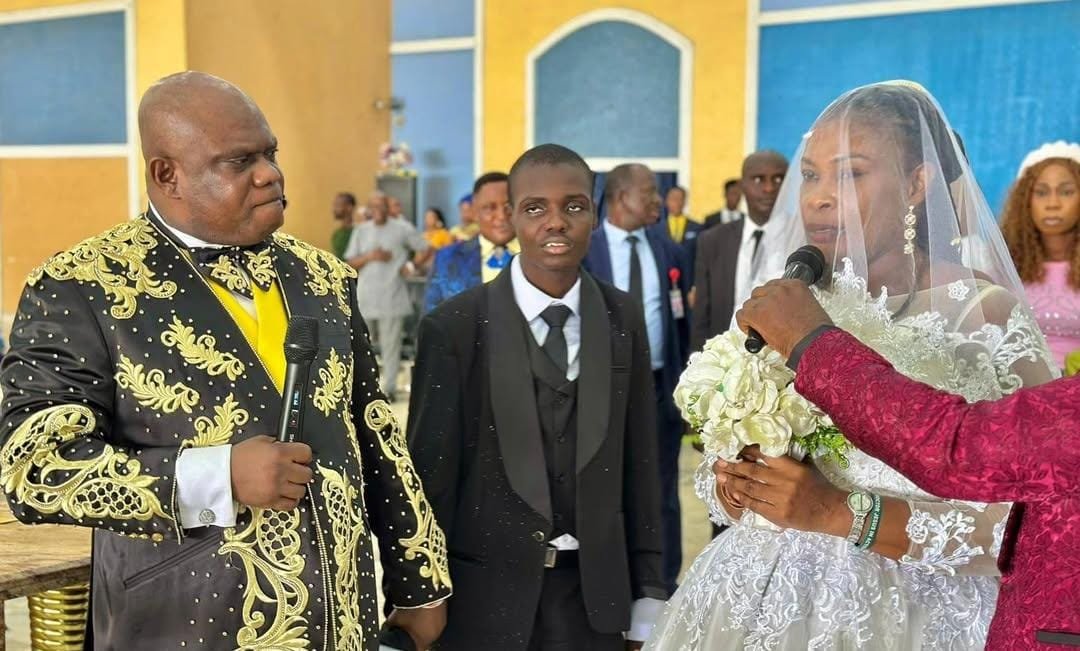
Nigeria’s social media space has ignited with mixed reactions following a controversial marriage allegedly linked to an unusual “offer” by Apostle Chibuzor Chinyere, founder of the Omega Power Ministry (OPM), with outrage, skepticism, and sympathy shaping public discourse.
The development, which has gained traction across multiple online platforms, stems from viral claims that the cleric made a “juicy” promise, reportedly involving financial support and improved living conditions, to individuals willing to meet certain conditions, including entering into marriage.
While details surrounding the arrangement remain largely based on circulating videos and social media accounts, the situation has sparked a wider debate about the intersection of faith, charity, and personal choice in a struggling economy.

A Gesture or a Concern?
Supporters of Apostle Chibuzor Chinyere have defended the initiative, describing it as an extension of his long-standing humanitarian efforts. The Omega Power Ministry has, over the years, been associated with various outreach programmes, including scholarships, housing support, and aid to vulnerable individuals.
To this group, the alleged offer represents a practical intervention aimed at addressing poverty and social instability.
“People are quick to judge, but many don’t understand the level of hardship some Nigerians are facing. If someone is being helped to build a home, what is wrong with that?” one supporter wrote on X.
However, critics argue that tying material benefits to deeply personal decisions such as marriage raises ethical concerns. Some have questioned whether such arrangements could blur the line between voluntary choice and economic pressure.
“This is not just charity, it raises serious moral questions. When survival is involved, can we really say the decision is completely free?” another user commented.
Social Media Divided
The controversy has triggered a wave of reactions, broadly split into three camps, outrage, doubt, and sympathy.
Many Nigerians expressed outrage, describing the development as exploitative and potentially harmful, especially for individuals who may feel compelled by financial hardship.
Others, however, remain skeptical, questioning the authenticity of the claims and urging caution until verified details emerge.
A third group has taken a more empathetic stance, highlighting the economic realities driving such decisions.
“In a country where millions are struggling daily, we should be more compassionate. People are doing what they can to survive,” a commenter noted.
The Human Angle
At the centre of the controversy is the couple involved, whose identities and full story have yet to be independently verified. However, snippets from viral content suggest that economic hardship may have played a role in the decision.
Nigeria’s current economic climate, marked by rising inflation, unemployment, and cost-of-living pressures, has left many citizens searching for unconventional pathways to stability.
Analysts say this context is critical to understanding why such offers, whether confirmed or not, gain traction.
Faith, Influence, and Responsibility
The situation has also reignited conversations about the role of religious institutions in social welfare.
While churches and faith-based organisations often step in to fill gaps left by weak social systems, experts warn that interventions must be handled with sensitivity and clear ethical boundaries.
Religious influence, particularly in vulnerable communities, can carry significant weight, making it essential to ensure that support initiatives do not unintentionally pressure individuals into life-altering decisions.
Read also:
- Older woman weds autistic man after pastor’s declaration
- Deborah Samuel’s parents offered lifetime employment, free house, scholarship for children
- Omega Power Ministry General Overseer reads riot act to church members
Calls for Clarity
As the debate intensifies, many Nigerians are calling for greater transparency regarding the claims and the circumstances surrounding the marriage.
Observers note that without verified details, public reactions may continue to be shaped by speculation rather than facts.
A Reflection of Deeper Realities
Beyond the immediate controversy, the incident underscores broader societal issues, poverty, inequality, and the growing influence of non-state actors in addressing citizens’ needs.
It also raises difficult questions about dignity, consent, and the extent to which economic hardship can shape personal decisions.
For now, the story continues to unfold, with Nigerians watching closely, divided between criticism, doubt, and compassion.