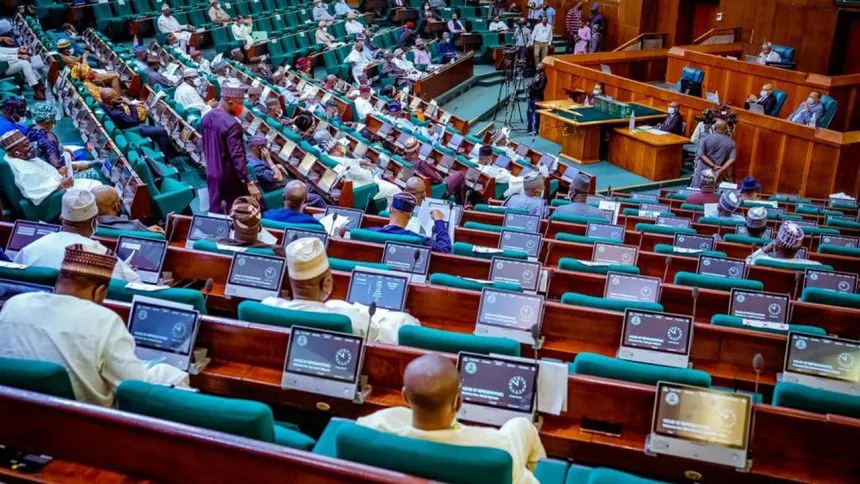
Nigeria’s House of Representatives on June 11, 2026 passed a constitutional amendment bill that would create state police forces across all 36 states for the first time in the country’s history, ending decades of debate with an overwhelming 289–1 vote. The bill now faces further legislative steps before it can become law — but its passage marks the furthest this reform has ever progressed.
What Happened
The bill — formally titled the Constitution of the Federal Republic of Nigeria (Sixth Alteration) Bill, 2026 — amends Section 214 of the 1999 Constitution, which currently makes the Nigeria Police Force the only lawful police body in the country.

The amended Section 214 would establish two constitutional bodies: a Federal Police, which would continue operating at the national level, and State Police forces, which individual state governments can create through their own Houses of Assembly. The vote in the House went 289 in favour, 1 against, with no abstentions, reflecting near-unanimous bipartisan support.
The same day the House voted, the Senate passed the bill through second reading and referred it to the Ad-hoc Committee on Constitutional Review for further work.
Under the bill, no state police force can begin operations until it is established by a state law and certified as meeting minimum national standards to be set by the National Assembly. Governors would be empowered to appoint State Commissioners of Police on the advice of the Nigeria Police Council, subject to state assembly confirmation, and to issue directives on public safety — though commissioners who consider such directives unlawful may refer them to the Nigeria Police Council, whose ruling would be final.
Read Also:
- House of Representatives to vote on state police bill Thursday
- Protest rocks APC House of Representatives primary in Adamawa cconstituency
- 6 incumbent House of Representatives members secure APC tickets in Ebonyi
Why It Matters
The push for state police has been driven directly by worsening insecurity. Across Nigeria, communities have faced banditry, mass kidnappings, terrorism, farmer-herder conflict, and armed robbery, while the centralised police force — commanded from Abuja — has been criticised for slow response times and officers unfamiliar with local terrain and languages.
The passage of the bill was given fresh urgency by the abduction of schoolchildren and teachers in Oyo State in May 2026 — just weeks before the vote. Analysts and governors have repeatedly argued that a locally embedded police force would have faster intelligence and quicker response capacity in precisely these scenarios.
At the Nigerian Governors’ Forum meeting on June 17–18, 2026, governors went further, issuing a communiqué demanding greater constitutional recognition of their roles in coordinating security, and calling for any state police framework to be legally grounded with explicit protection of citizens’ rights.
What This Means for Nigerians
The bill’s supporters argue this is a straightforward case: proximity matters in policing. Officers who know the communities they serve gather better intelligence and respond faster. States like Plateau and Oyo — where insecurity has been most acute — could build forces trained for their specific local threats.
Critics raise a serious concern: the history of governors using power against opponents and minorities in Nigeria means state police could become instruments of political repression. The bill attempts to address this through State Police Service Commissions, the National Police Council oversight mechanism, and the requirement for State House of Assembly confirmation of senior appointments. Whether those safeguards hold in practice remains the central question.
For ordinary Nigerians, the practical impact will depend entirely on how each state implements the framework — which means the bill’s passage is a beginning, not an end. Legislation, recruitment, training, and funding must all follow at the state level before a single state officer takes to the streets.
“Nigeria’s centralised policing model slows emergency responses because states lack direct control.” — Ayomide Akinwale, SBM Intelligence analyst, via Reuters/CNBC Africa
The Bottom Line
The 289–1 House vote on the State Police Bill is the most significant security reform Nigeria has attempted since independence. The remaining steps — Senate final passage, ratification by at least 24 of 36 state assemblies, and presidential assent — are expected to move relatively quickly given the political consensus. But the bill becoming law is only the start: the real test will come when governors begin standing up state police forces, and Nigerians discover whether the new architecture actually protects them better than the old one did.