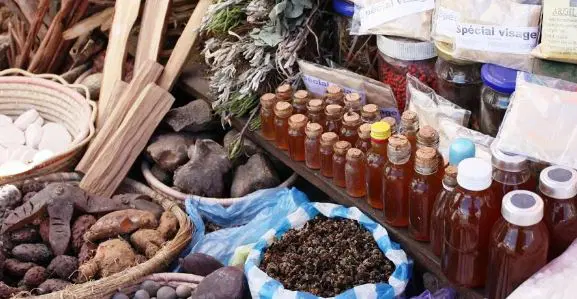
A renowned pharmacology and toxicology expert, Prof. Jude Okokon, has called for greater investment in traditional medicine research, saying Nigeria possesses enormous medicinal plant resources capable of transforming the nation’s economy and healthcare sector.
Prof. Okokon stated that the country is richly endowed with therapeutic plants whose active ingredients, if properly researched, standardised, and developed into drugs and supplements, could generate significant foreign exchange earnings for Nigeria.

Key Highlights:
- Jude Okokon said Nigeria can boost its healthcare system and economy through traditional medicine research.
- He explained that Nigeria’s medicinal plants could be developed into drugs and supplements for local use and export.
- The professor believes proper investment in herbal medicine could reduce dependence on crude oil revenue.
- Research in southern Nigeria has shown promising results for treating diseases like malaria, diabetes, cancer, and mental health conditions.
- He called on the government to provide better funding, modern equipment, and stronger support for scientific research in traditional medicine.
The don made the remarks while delivering the 133rd inaugural lecture of the University of Uyo (UNIUYO), Akwa Ibom State, titled: “Bioprospecting the Therapeutic Treasures in Plants: The Ancestral Wisdom and Scientific Innovations for Sustainable Healthcare and Autarky.”
Addressing a large audience at the 1,000-capacity TETFund Auditorium on the institution’s main campus in Nwaniba, Uyo, Prof. Okokon stressed that Nigeria could achieve economic and healthcare independence through adequate government support for medicinal plant research.
According to him, medicines can be sourced from micro-organisms, plants, and animals, adding that several medicinal plants found on farms, in gardens, and in forests possess high therapeutic value that could help tackle many diseases if fully explored.
He lamented the poor level of investment in traditional medicine by alternative medicine practitioners and relevant authorities, noting that the field remains largely neglected despite its huge economic potential.
“Many therapeutic treasures are hidden in our plants, and much more would have been achieved if researchers were provided with better working conditions and facilities as obtainable in other countries,” he said.
Prof. Okokon further argued that if Nigeria fully harnesses and commercialises its medicinal plant resources, countries such as China and India, which have successfully advanced their traditional medicine industries, would struggle to compete with Nigeria.
Read also:
- Adamawa approves pharmacy consultancy cadre
- NELFUND extends 2026 student loan application deadline
- Wike predicts Ireti Kingibe’s 2027 Senate defeat, cites performance concerns in FCT
He said exporting locally developed herbal drugs and supplements could significantly boost the nation’s foreign exchange earnings and reduce dependence on crude oil revenue.
“In fact, Nigeria’s economy would have been transformed from a petroleum-driven economy to a super economy if these natural medicinal resources had been properly exploited,” he added.
Also, the don revealed that extensive studies of medicinal plants in Akwa Ibom State and the South-South region have shown promising results in the treatment of diseases such as malaria, diabetes, obesity, cancer, gastrointestinal disorders, prostate ailments, inflammation, and mental health conditions.
He, however, identified inadequate funding and a lack of modern research equipment in Nigerian universities as major obstacles to breakthroughs in medicinal research.
Prof. Okokon therefore urged the federal government to create an enabling environment for researchers through improved funding, provision of state-of-the-art facilities, and stronger support for scientific innovation in traditional medicine.