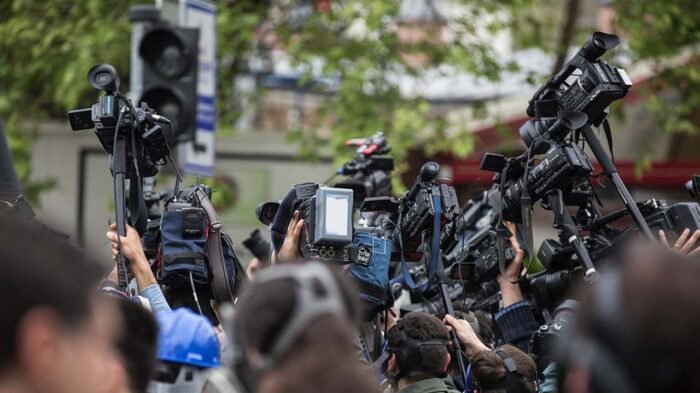
A new research study has painted a troubling picture of journalism practice in the Federal Capital Territory (FCT), revealing widespread harassment, economic hardship, self-censorship and institutional weaknesses confronting journalists in Abuja.
The study, titled: “The State of Journalism in Nigeria: Examining the Challenges Faced by Journalists in Abuja,” was conducted by a journalist and researcher, Ediri Oyibo as part of an academic investigation into the realities facing media professionals in the FCT.
The outcome of the research study was presented during the official unveiling of a book titled:: Journalism NeXt: A Comprehensive Guide to Modern Journalism, authored by the same journalist.

Drawing from responses obtained from 200 journalists across the print, broadcast and online media platforms in the FCT, the research found that journalists continue to operate in an environment shaped by legal intimidation, safety risks, financial instability and ethical pressures.
Alarmingly, the study revealed that 47 percent of journalists surveyed reported being physically threatened or assaulted, while carrying out their duties, while 50 percent said they had been harassed by security agents during assignments.
Another 33 percent disclosed that they had been monitored or placed under surveillance because of their journalism work.
The report also highlighted the growing culture of self-censorship within the journalism profession.
According to the findings, approximately 64 percent of journalists admitted to censoring themselves in the course of reporting, largely due to fears of arrest, harassment or legal consequences.
More than half of the respondents said they deliberately avoid sensitive political topics because of concerns over possible reprisals.
Legal frameworks such as the Cybercrime Act and defamation laws were identified as significant contributors to the climate of fear within the media industry.
About 67 percent of respondents agreed that existing legal instruments negatively affect press freedom and journalism practices in Nigeria.
While only about one-third of respondents said they had personally faced legal threats due to their reporting, over 62 percent indicated that they knew colleagues who had been detained because of journalistic activities.
The study argued that the trends support concerns that Nigeria’s media environment increasingly reflects authoritarian tendencies, despite constitutional guarantees of press freedom under Sections 22 and 39 of the 1999 Constitution.
Beyond safety and legal concerns, the report identified economic hardship as one of the strongest factors undermining ethical journalism in Nigeria.
According to the findings, financial insecurity was strongly linked to both ethical compromise and self-censorship among journalists.
One in four respondents admitted to accepting payments capable of influencing news coverage – a practice commonly referred to as “brown-envelope journalism.”
The study noted that poor remuneration, irregular salary payments and the broader economic crisis have left many journalists vulnerable to unethical practices.
Although 67 percent of respondents said they receive salaries regularly, 26 percent reported being owed salaries for several months.
Even among those paid consistently, many complained that their wages were inadequate, considering the demands and risks associated with the job.
The research further established that institutional support systems within media organisations remain weak.
Journalists who reported access to legal protection, safety training and organisational support were less likely to engage in unethical conduct or self-censorship, suggesting that stronger newsroom structures could significantly improve professional standards and press freedom outcomes.
Read also:
- NHRC demands justice for attacks on journalists on World Press Freedom Day
- Police arrest 13 suspects for assaulting journalist in Rivers
- UN raises alarm over rising attacks on journalists, warns no country is safe
Using the Social Responsibility Theory of the Press, Authoritarian Theory and Political Economy of the Media as theoretical frameworks, the study argued that journalism practice in Abuja is shaped by a complex interaction of political pressure, economic instability and ethical dilemmas.
The researcher warned that constitutional guarantees alone are insufficient if journalists cannot work safely and independently in practice.
“True press freedom depends not only on constitutional guarantees but also on the practical ability of journalists to perform their duties without fear, favour, or financial desperation,” the study concluded.
To address the situation, the report recommended improved welfare packages for journalists, stricter newsroom ethics policies, safety training, legal aid support and stronger accountability for security agencies accused of harassing media practitioners.