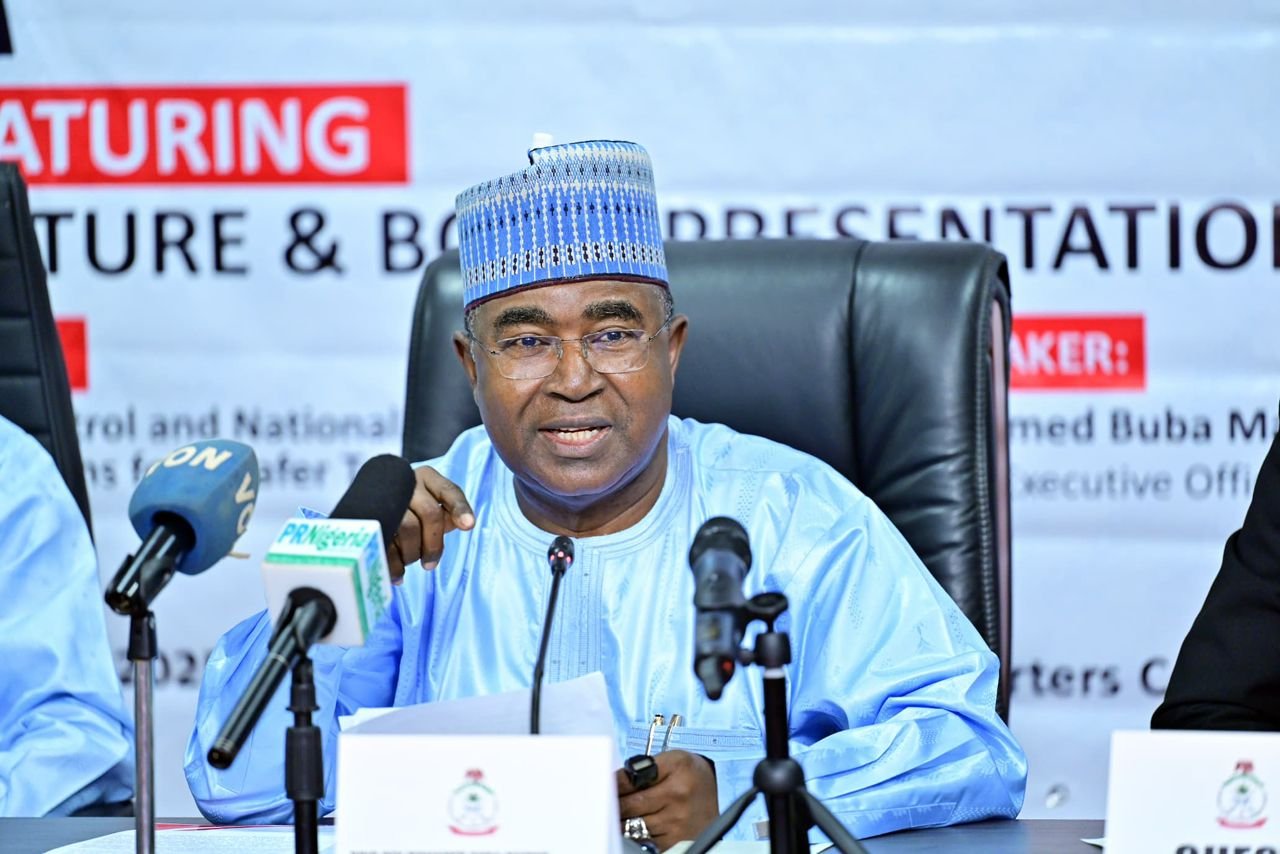
The Chairman of the National Drug Law Enforcement Agency (NDLEA), Brig. Gen. Mohamed Marwa (retd.), has warned Nigerian youths against seeking quick wealth through illicit activities and drug abuse, saying unemployment, economic hardship and hopelessness are making young people vulnerable to drug trafficking networks.
Marwa gave the warning on Saturday while delivering the 24th convocation lecture at Igbinedion University, Okada, Edo State, where he urged graduating students to embrace entrepreneurship, establish sustainable businesses and contribute to national development.

Key Highlights
- NDLEA Chairman Mohamed Marwa warns youths against drug abuse and get-rich-quick schemes.
- He identifies unemployment and economic hardship as factors exposing young people to drug trafficking.
- NDLEA has counselled, treated and rehabilitated 54,517 persons in five years.
- The agency conducted 17,673 drug awareness outreaches under its War Against Drug Abuse (WADA) campaign.
- Marwa urges graduates to embrace entrepreneurship and legitimate businesses.
- He calls on government, universities and private businesses to create opportunities for young entrepreneurs.
The lecture, titled “Graduates’ Transition to Nation Building: A Case for Sustainable Entrepreneurship and Scalable Value Chains in the University,” was delivered to the institution’s 2026 graduating class.
The NDLEA chairman said his experience in the fight against illicit drugs had exposed how economic hardship and desperation push young people into drug-related crimes.
He cited cases of couriers who accepted drug trafficking jobs because they could not afford rent, farmers who turned to illicit crops because legitimate farming was unprofitable, and university graduates who moved from frustration to drug experimentation and dependence.
“Different faces, one pattern. Idleness without hope is the most fertile soil for drug abuse and trafficking,” Marwa said.
He warned that drug trafficking networks deliberately target unemployed and desperate youths with promises of quick income, social acceptance and false status.
According to him, young people who are gainfully employed or engaged in productive businesses are less likely to be recruited into such criminal networks.
“Every young person who is gainfully engaged, running a business or working in a productive chain, is a recruit these networks have lost,” he said.
Marwa maintained that the fight against illicit drugs must go beyond arrests and enforcement to include creating economic opportunities that would prevent young people from becoming involved in drug abuse and trafficking.
Read also:
- NDLEA Dismantles ₦303.9bn Meth Lab in Enugu, Arrests Nigerian, Five Mexicans
- How Drug Abuse Fuels Cultism, Kidnapping In Edo – Okpebholo
- NANS Rejects ₦10,000 NDLEA Drug Testing Fee, Demands Immediate Suspension
“That is why, in the NDLEA, we speak of drug supply reduction and drug demand reduction, but also of something less discussed: opportunity. Enforcement closes doors that lead to harm. Entrepreneurship opens doors that lead to dignity. A country needs both,” he added.
The NDLEA chairman disclosed that 54,517 persons had been counselled, treated and rehabilitated at the agency’s 31 rehabilitation centres across the country within the last five years.
He also revealed that the agency had conducted 17,673 outreaches under its War Against Drug Abuse (WADA) campaign in schools, university campuses, markets, motor parks, places of worship, workplaces and communities during the same period.
Marwa stressed that young people struggling with drug abuse should be treated as patients requiring assistance rather than merely offenders deserving punishment.
He urged the graduating students to reject shortcuts to wealth and avoid illicit drugs, warning that no personal pressure or setback was worth sacrificing their mental health.
“No deadline, no heartbreak, no stress, no peer pressure is worth your mind,” he said.
The NDLEA boss also cautioned graduates against building businesses through dishonest practices or proceeds from illicit activities, stressing that financial discipline, integrity and environmental responsibility were essential to sustainable entrepreneurship.
“Nigeria does not lack starters. We lack finishers,” he said.
He urged the graduates to identify opportunities across production and distribution chains, particularly in agriculture, medicine, processing, storage and logistics, rather than concentrating solely on individual businesses.
Marwa lamented that Nigeria continued to export raw materials and import finished products, thereby losing employment opportunities and economic benefits that could be generated through local processing.
He argued that developing legitimate and regulated pharmaceutical value chains could create jobs, protect public health and weaken the illicit drug market.
On agriculture, he said making farming profitable through processing, storage, market access and fair pricing would reduce farmers’ incentives to cultivate illicit crops.
Marwa commended Igbinedion University for incorporating entrepreneurship into its academic programmes, particularly through its entrepreneurial skills acquisition centre, which he said had been adopted by the National Universities Commission (NUC) as a model for other universities.
He cited the institution’s poultry farm and bakery as examples of how interconnected businesses could create sustainable value chains.
The NDLEA chairman urged parents to support their children’s business ideas, while calling on the government to improve access to finance and reliable electricity.
He also encouraged private sector operators to open their supply chains to young entrepreneurs and urged universities across the country to establish practical enterprise programmes that would prepare graduates for job creation rather than dependence on government and private sector employment.
Marwa further advised the graduating students to start small, build partnerships, continue learning and protect their mental health as they transition into the labour market.
“Go out from this auditorium, not as hunters of vacancies but as architects of opportunity. Build things that last. Build chains that grow. Build lives that others can lean on,” he said.
He added that sustainable entrepreneurship and productive employment could help build a society where illicit drug trafficking networks would struggle to recruit young Nigerians.
The lecture was attended by the university’s Deputy Chancellor, Chief Lucky Igbinedion, who represented the proprietor and Chancellor, Chief Gabriel Igbinedion; Pro-Chancellor and Chairman of the Governing Council, Prof. Ahmed Mora; Vice-Chancellor, Prof. Lawrence Ezemonye; members of the governing council and Senate, parents and other guests.
For more updates, follow us on X.