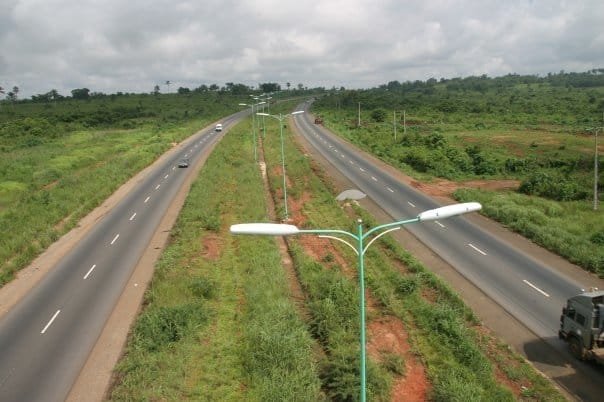
The Niger Delta Development Commission (NDDC) has accepted responsibility for the reconstruction of a critically failed 15.4-kilometre section of the Sapele–Benin Road between the Edo and Delta State borders, a key intervention aimed at restoring one of the region’s most strategic transport corridors.
The commitment was announced by NDDC Managing Director and Chief Executive Officer, Dr. Samuel Ogbuku, during a joint inspection of sections of the Sapele–Benin and Benin–Agbor roads in Benin City. The inspection was led by the Minister of Works, Senator Dave Umahi, alongside Edo State Governor Senator Monday Okpebholo, NDDC officials, representatives of major construction companies operating along the Benin–Asaba axis, and members of the Senate and House of Representatives Committees on Works.

The assessment followed concerns raised by President Bola Tinubu over the worsening condition of the critical road corridors and the severe hardship experienced by commuters, businesses and residents. Motorists have endured prolonged delays, damaged vehicles and economic losses as failed sections of the highways disrupted movement of people and goods across the Niger Delta and beyond.
Ogbuku said the intervention targeted “one of the most severely damaged portions of the road” and would improve connectivity between Edo and Delta states. The NDDC’s work is expected to complement ongoing Federal Government and Edo State efforts to restore the strategic corridor.
Minister Umahi commended the NDDC for stepping in and directed officials of the Federal Ministry of Works and the commission to jointly develop modalities for executing the project. He described the combined interventions as part of broader efforts “to restore critical transport infrastructure, ease the burden on motorists and ensure that major economic corridors remain functional.”
Read also:
- NDDC sensitizes students on the dangers, effects of cultism in Delta
- TechNexus partners NDDC for Port Harcourt Tech Expo 2026
- NDDC rolls out anti-cultism drive in Akwa Ibom schools to curb rise of youth cult activities
During the inspection, Umahi expressed strong dissatisfaction with delays and inconsistencies in the execution of the concessioned Benin–Asaba road project. He apologised to road users, stating: “I apologise to commuters plying this road. I am disappointed with the concessionaire. I take full responsibility for their misdeed and destruction of public assets.” He criticised the removal of existing asphalt against advice, describing it as destruction of public property, and ordered the arrest of any contractor or concessionaire found removing asphalt from federal roads without authorisation.
Umahi also inspected ongoing reconstruction works on the Benin–Sapele–Warri Road being undertaken by the Edo State Government on behalf of the Federal Government. One 23-kilometre section executed by CBC Global Civil and Building Construction (Nig.) Limited using Continuous Reinforced Concrete Pavement (CRCP) technology has reached about 75 per cent completion, while a 10-kilometre stretch handled by CCECC (Nigeria) Limited stands at approximately 25 per cent.
Governor Okpebholo assured residents and motorists that steps were being taken to resolve the challenges and appealed for patience as the interventions progress. A follow-up stakeholders’ meeting involving the Federal Government, the concessionaire, the Edo State Government and other parties was scheduled to review the situation further.
The Sapele–Benin corridor forms a vital economic artery linking communities, markets and industrial centres in the South-South. Years of deterioration, compounded by recent project delays, have imposed heavy costs on transporters, traders and ordinary travellers. Officials say the NDDC’s 15.4km intervention, together with complementary federal and state works, is intended to deliver lasting relief and sustainable improvements.
The commission reiterated its commitment to working closely with the Federal Government, Edo State Government and other stakeholders to ensure the necessary interventions are implemented promptly and to high standards.