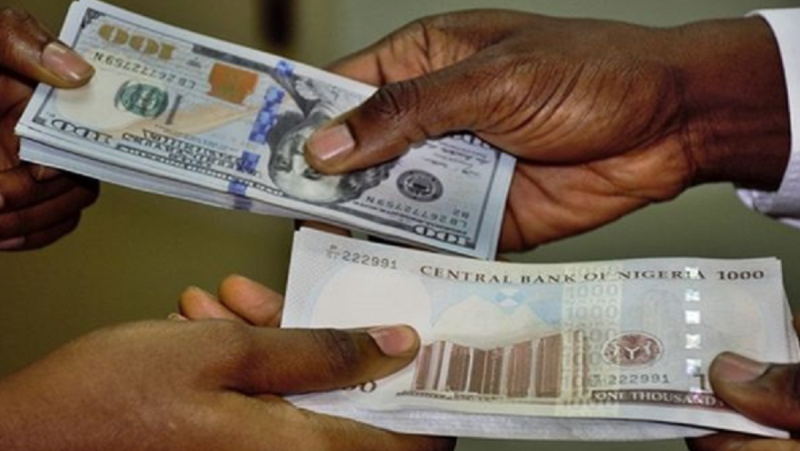
Naira held relatively steady at the official market but weakened in the parallel market on Friday, April 24, 2026, underscoring ongoing strain in the country’s foreign exchange system.
At the Central Bank of Nigeria-regulated Nigerian Foreign Exchange Market (NFEM), the naira traded within the ₦1,350 to ₦1,355 range against the US dollar, with some deals recorded around ₦1,351. This reflects short-term stability supported by the central bank’s managed float regime.

Through periodic interventions and liquidity controls, the apex bank has continued to limit sharp fluctuations and sustain confidence in the official market.
In contrast, the parallel market recorded weaker rates, driven by stronger demand for dollars outside formal channels. Bureau de Change operators quoted buying rates around ₦1,395 and selling rates as high as ₦1,420 per dollar, depending on transaction size and location.
The gap between the official and parallel market, estimated at roughly ₦40 to over ₦60, highlights persistent constraints in foreign exchange supply within the formal system.
Read Also:
- Naira holds steady at ₦1,340.88/$ amid improved forex stability
- Naira firms slightly against dollar, trades near N1,344
- Naira holds steady at N1,352 against the dollar
As a result, individuals and businesses increasingly rely on the informal market to meet their dollar needs.
Analysts attribute the sustained pressure on the naira to strong import demand, rising foreign exchange needs for travel and education, and the burden of external debt servicing. In addition, fluctuating inflows from crude oil exports, Nigeria’s primary source of dollar earnings, continue to limit supply.
Overall, the trend reflects a familiar pattern: relative stability at the official window backed by regulatory support, alongside continued depreciation in the parallel market due to high demand and limited dollar availability.