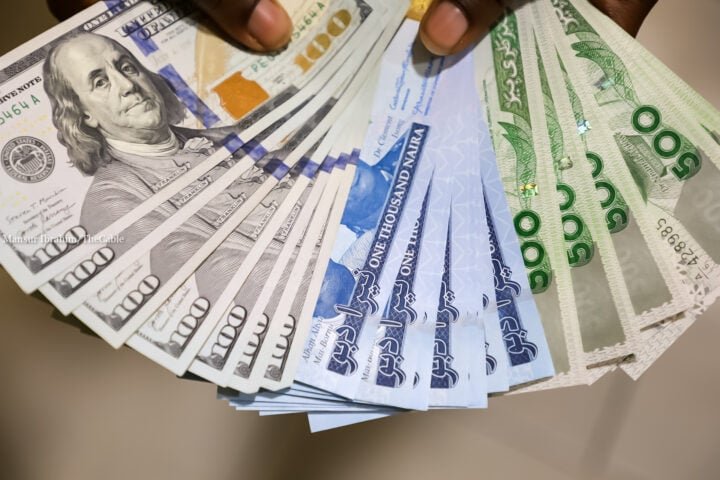
The Nigerian naira recorded a mixed performance against the United States dollar on Thursday, May 14, 2026, maintaining relative stability at the official foreign exchange market while trading slightly weaker at the parallel market amid sustained demand for foreign currency.
Key Highlights:
- Naira traded at about ₦1,375.62/$ at the official market
- Dollar exchanged between ₦1,395 and ₦1,405 at the parallel market
- FX turnover at official market rose to nearly $1.89 billion
- Analysts attribute stability to improved liquidity and CBN interventions
- Nigeria’s external reserves estimated at $48.48 billion
- Demand from importers and travelers continues to pressure black-market rates

Data released by the Central Bank of Nigeria (CBN) showed that the naira exchanged at approximately ₦1,375.62 per dollar at the Nigerian Foreign Exchange Market (NFEM) window.
Market analysts said improved foreign exchange liquidity and stronger participation by banks and investors contributed to the currency’s relative stability at the official market.
Read Also:
- Naira gains slightly against dollar at official market
- Naira records slight stability against dollar at official, parallel markets
- Court admits additional exhibits in alleged naira redesign case against Emefiele
Recent trading figures also indicated that foreign exchange turnover at the official window climbed to nearly $1.89 billion within a single trading session, reflecting renewed activity and increased confidence among market participants.
Meanwhile, the naira traded slightly weaker at the parallel market, where Bureau de Change operators in Lagos and Abuja quoted the dollar between ₦1,395 and ₦1,405 depending on location, transaction size, and demand levels.
Buying rates were reportedly quoted around ₦1,385 to ₦1,395, while selling prices ranged from ₦1,400 to ₦1,405 across major commercial centres.
Despite the pressure at the black market, the gap between official and parallel market rates remained relatively narrow at about ₦20 to ₦30, compared to significantly wider spreads recorded earlier in 2026.
Financial experts attributed the naira’s improved outlook to sustained interventions by the Central Bank of Nigeria, rising external reserves, and gradual restoration of investor confidence in the country’s foreign exchange market.
Nigeria’s external reserves were recently estimated at approximately $48.48 billion, providing additional support for market stability and liquidity management.
However, currency traders warned that persistent demand for dollars by importers, international travelers, tuition payers, and businesses operating outside the formal banking system continues to exert pressure on the parallel market.