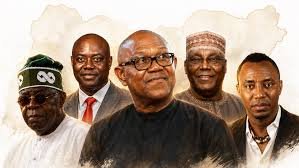
With President Bola Ahmed Tinubu widely expected to seek a second term in office, political realignments, party primaries and coalition-building have intensified across Nigeria’s political landscape. Opposition leaders, former officeholders, activists, technocrats and emerging political figures are positioning themselves for what could become one of the most competitive presidential contests in the country’s democratic history.
Key Highlights:
- President Bola Tinubu expected to seek re-election under the APC.
- Peter Obi emerges as NDC presidential candidate.
- Atiku Abubakar secures ADC ticket through direct primary.
- Former President Goodluck Jonathan remains a potential contender.
- Omoyele Sowore, Seyi Makinde, Donald Duke and others enter the race.
- Economic recovery, insecurity and unemployment expected to dominate campaigns.
- Youth voter participation likely to influence the outcome of the election.
The candidates emerged through a combination of direct primaries, indirect primaries and consensus arrangements, reflecting the varying internal democratic processes adopted by their respective political parties.

As preparations for the 2027 general election gather momentum, here are 10 prominent figures expected to shape the conversation around the race for Nigeria’s highest office.
1. Bola Ahmed Tinubu | All Progressives Congress (APC)
President Bola Ahmed Tinubu secured the presidential ticket of the ruling APC through a direct primary election and is widely expected to seek re-election in 2027.
Since assuming office in May 2023, Tinubu has implemented major economic reforms, including the removal of fuel subsidies and foreign exchange policy adjustments aimed at stabilising the economy.
As the incumbent president, he enters the race with the advantages of incumbency, an extensive political network and the backing of many APC governors and elected officials.
2. Peter Obi | Nigeria Democratic Congress (NDC)
Former Anambra State Governor Peter Obi emerged as the presidential candidate of the NDC through a consensus arrangement endorsed by party stakeholders.
Obi continues to enjoy significant support among young Nigerians, professionals and members of the OBIdient Movement following his strong performance in the 2023 presidential election.
His emergence as the NDC flagbearer positions him as one of the leading challengers to the ruling party.
Read Also:
- FG approves establishment of Bola Ahmed Tinubu Polytechnic in Gwarimpa
- Building a new Nigeria: An Abridged Agenda for Bola Ahmed Tinubu
- Tinubu nominates NDLEA Chairman’s daughter, Zainab Marwa, for NDDC Governing Board
3. Atiku Abubakar | African Democratic Congress (ADC)
Former Vice President Atiku Abubakar secured the ADC presidential ticket through a direct primary election following the formation of a broad opposition coalition.
Having served as vice president between 1999 and 2007, Atiku remains one of Nigeria’s most experienced political figures, with a nationwide political network and multiple presidential campaigns to his name.
Supporters cite his governance experience, private sector background and advocacy for economic reforms as major strengths.
4. Goodluck Jonathan | Peoples Democratic Party (PDP)
Former President Goodluck Jonathan remains one of the most discussed names in the build-up to the 2027 election despite not formally declaring his intention to contest.
Reports indicate that some stakeholders within the PDP have expressed interest in persuading Jonathan to return to the presidential race.
Since leaving office in 2015, Jonathan has focused on peacebuilding, diplomacy and election observation missions across Africa.
5. Omoyele Sowore | African Action Congress (AAC)
Human rights activist and publisher Omoyele Sowore emerged as the AAC presidential candidate through a direct primary process.
Sowore continues to campaign on anti-corruption, institutional reforms, youth empowerment and government accountability.
Although he remains outside Nigeria’s traditional political establishment, he retains strong appeal among younger voters.
6. Seyi Makinde | Allied Peoples Movement (APM)
Oyo State Governor Seyi Makinde secured the APM presidential ticket through a consensus arrangement backed by party stakeholders.
Makinde has gained national recognition for infrastructure development, education reforms and fiscal management in Oyo State.
His growing political profile has made him a figure to watch ahead of the election.
7. Adewole Adebayo | Social Democratic Party (SDP)
Lawyer and businessman Adewole Adebayo retained the SDP presidential ticket through an indirect primary election.
Adebayo has consistently advocated constitutional reforms, economic restructuring and good governance, helping him maintain visibility in national political discussions.
8. Donald Duke | Peoples Redemption Party (PRP)
Former Cross River State Governor Donald Duke emerged as the PRP presidential candidate through a delegate-based primary.
Duke remains respected for his record in tourism development, infrastructure expansion and public sector reforms during his tenure as governor.
His technocratic leadership style continues to attract supporters seeking alternatives to mainstream politics.
9. Gbenga Olawepo-Hashim | Accord
Businessman and politician Gbenga Olawepo-Hashim emerged as Accord’s presidential candidate through a consensus process.
His campaign is expected to focus on economic development, private sector growth and national unity.
10. Anita Zugwai-Chukwu | Young Progressives Party (YPP)
Anita Zugwai-Chukwu emerged as the sole presidential aspirant of the YPP and was subsequently affirmed as the party’s presidential candidate.
Her emergence represents a significant milestone for female political participation in Nigeria and places her among a small number of women who have secured presidential nominations in the country’s democratic history.
Key Issues That Could Shape the 2027 Presidential Election
Beyond personalities and party affiliations, the 2027 presidential election is expected to focus heavily on:
- Economic recovery and inflation
- Insecurity and terrorism
- Youth unemployment
- Education reforms
- Healthcare delivery
- Infrastructure development
- National unity and governance reforms
Political analysts also expect coalition-building, regional considerations, religious balancing and youth voter mobilisation to play critical roles in determining the outcome of the election.
With political campaigns gradually taking shape, the contest among these powerful figures could redefine Nigeria’s political landscape and determine the country’s direction for the next four years.