
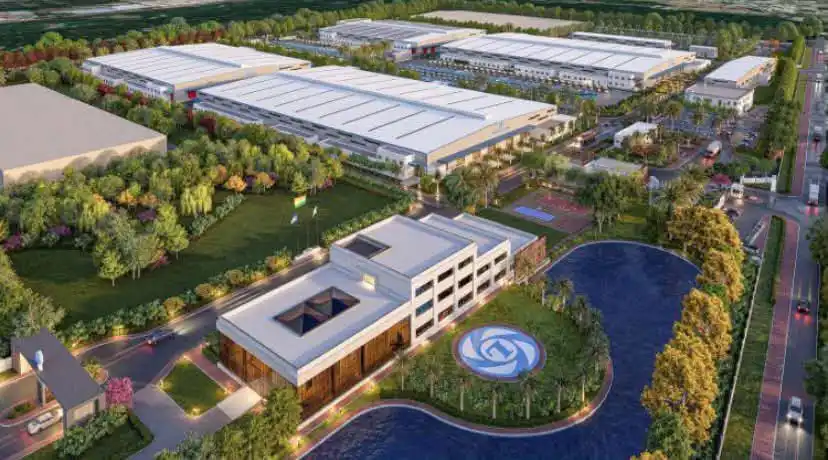
The $1.8 billion Lee Group First Industrial Park in Sagamu, Ogun State, could reshape the state’s agricultural economy by connecting farmers directly to large-scale food processing and manufacturing industries. The 450-hectare project, whose groundbreaking ceremony was performed by Governor Dapo Abiodun on Thursday, November 12, 2026, is expected to accommodate more than 29 factories and generate about 15,000 direct and indirect jobs when completed.
Located along the Lagos-Ibadan Expressway, near Makun Bridge and the Sagamu Interchange, the proposed industrial park is expected to serve as a major manufacturing hub. Its potential impact, however, extends beyond manufacturing, particularly in addressing the longstanding challenges facing farmers who often sell their produce without processing or adding significant value.

Key Highlights
- The Lee Group First Industrial Park is a proposed $1.8 billion development covering 450 hectares in Sagamu, Ogun State.
- The project is expected to accommodate more than 29 factories and generate about 15,000 direct and indirect jobs.
- Food processing facilities could create new markets for cassava, rice, poultry, fish, vegetables and other agricultural produce.
- The park could help reduce post-harvest losses and improve farmers’ access to industrial buyers.
- Its success will depend on reliable electricity, good transport links and formal partnerships with local farmers and cooperatives.
Ogun’s Agricultural Potential and the Processing Gap
Ogun State is among Nigeria’s major agricultural producers, with cassava, maize, rice, vegetables, oil palm, poultry and fish among its key products.
The state reportedly produces about 139,901 tonnes of cassava annually. In October 2026, the government also distributed agricultural inputs to 10,000 rice and cassava farmers, alongside tractors, solar dryers, warehouses, cassava processing centres and a poultry processing plant under the Special Agro-Industrial Processing Zones (SAPZ) programme, supported by the International Fund for Agricultural Development (IFAD).
Despite this agricultural activity, farmers continue to face challenges associated with limited processing facilities, inadequate storage and weak market access.
Cassava farmers, for instance, often sell fresh tubers at relatively low prices because of their short shelf life. Poultry farmers contend with high feed costs and losses linked to inadequate cold-chain facilities, while rice producers may have to transport their harvest over long distances for milling.
These challenges reduce farmers’ earnings and limit the economic benefits that agricultural production could generate for the state.
The proposed Lee Group industrial park could help address some of these problems by bringing processing facilities closer to agricultural production centres.
Food Processing Could Create New Markets for Farmers
Food processing is listed among the proposed industrial park’s core sectors, alongside food and beverages, footwear, leather, detergents, personal care products, automotive components, plastics and recycling.
The master plan presented at the groundbreaking ceremony reportedly includes dedicated areas for food factories, export factories, bonded warehouses, utilities and a power station.
These facilities could provide opportunities for farmers across different agricultural value chains.
Cassava farmers
Cassava farmers in Sagamu, Ikenne, Remo North and Obafemi-Owode could potentially supply processors producing starch, garri, cassava flour and animal feed.
Establishing processing facilities close to production areas could reduce transportation costs, limit spoilage and create more predictable demand for fresh cassava.
Rice farmers
The proposed industrial park could also provide opportunities for rice farmers benefiting from the state’s agricultural support programmes.
A milling and packaging facility in Sagamu would be strategically positioned along the Lagos-Ibadan corridor, providing access to the large consumer market in Lagos and other parts of the South-West.
This could reduce the need for some producers to transport their paddy over long distances for processing.
Poultry and fish farmers
The development of cold-chain facilities, warehouses and packaging plants could strengthen the poultry and fish value chains.
Combined with the state’s reported investment in a 140,000-capacity broiler facility and a poultry processing plant designed to handle 5,000 birds daily, the industrial park could support activities ranging from feed production to processing, packaging and distribution.
Cassava and maize by-products could also serve as inputs for animal feed production.
Vegetable and fruit growers
Solar dryers, warehouses and export facilities could help reduce losses among vegetable and fruit farmers.
Products such as tomatoes, peppers, pineapples and plantain could be dried, processed and packaged for local consumption and export, reducing pressure on farmers to sell their produce quickly during periods of high supply.
Lee Group Park Targets 15,000 Jobs Through 29 Factories
The industrial park is expected to accommodate more than 29 manufacturing factories and create approximately 15,000 direct and indirect jobs upon completion.
For the agricultural sector, the opportunities could extend beyond employment within the factories.
Farmers and cooperatives could become regular suppliers to processing companies through formal purchasing agreements. Such arrangements could give producers greater certainty about demand and help them plan their production.
The development could also create opportunities for logistics operators, warehouse workers, packaging suppliers, equipment technicians, food vendors and other service providers around Makun, Sagamu and Mowe.
The project may further increase demand for skilled workers, including food technologists, machine operators, cold-chain technicians, agronomists and agro-logistics professionals.
Lee Group reportedly employs more than 26,000 people across over 80 factories in Nigeria. Its experience in manufacturing could provide a foundation for developing industrial supply chains, although the extent to which local farmers will benefit will depend on the procurement arrangements adopted by the new park.
From Subsistence Farming to Commercial Agriculture
One of the potential long-term benefits of the project is its ability to encourage a shift from subsistence farming to commercially organised agricultural production.
If farmers have access to reliable industrial buyers, they could move towards production arrangements based on agreed quantities, quality standards and delivery schedules.
This could encourage several changes.
Contract farming: Farmers and cooperatives could enter into agreements with processors before planting, giving them greater certainty about market demand and potential earnings.
Improved production standards: Industrial buyers generally require consistent quality, moisture levels, grading and varieties. Meeting these standards could encourage farmers to adopt improved seeds, fertilisers and mechanised farming methods.
Industrial clustering: Locating food processing, packaging, recycling and logistics companies within the same industrial park could reduce operating costs and encourage the use of industrial by-products.
For example, waste from cassava processing could become an input for animal feed production, while packaging companies could supply food manufacturers within the park.
Export opportunities: The proposed export factories and bonded warehouses could support the processing and movement of Nigerian products to markets within the Economic Community of West African States (ECOWAS) and beyond.
However, the actual benefits will depend on the facilities delivered and the arrangements put in place to support local producers.
Three Priorities for the Project to Benefit Farmers
The groundbreaking ceremony marks the beginning of the project. Its impact on Ogun’s agricultural economy will depend on how effectively the proposed facilities are connected to farmers and existing agricultural programmes.
Three areas will require particular attention.
1. Connect the industrial park to farming communities
The state’s SAPZ facilities, farm settlements in Ajegunle, Ikenne and Ijebu-Ode, and its rice and cassava programmes should be linked to the industrial park through aggregation centres and formal supply agreements.
Without these arrangements, factories could source raw materials from outside the state while local farmers struggle to find reliable buyers.
2. Provide reliable electricity and road infrastructure
Agro-processing requires dependable electricity, efficient transportation and adequate storage facilities.
The proposed power station and utilities infrastructure must therefore be delivered alongside the factories. Access roads and connections to the Lagos-Ibadan Expressway will also be important for moving agricultural produce and finished goods.
3. Protect the interests of smallholder farmers
Large processors may prefer dealing with suppliers capable of delivering substantial quantities of raw materials.
To ensure that smaller farmers benefit, the Ogun State Government and project operators should encourage cooperative arrangements, transparent pricing and the inclusion of women and young people in agricultural supply chains.
Farmers across the Remo, Yewa and Egba divisions should have opportunities to participate in the project.
Conclusion: Can the Lee Group Park Deliver an Agricultural Transformation?
Ogun State has significant agricultural resources and a strategic location between Lagos, one of Nigeria’s largest consumer markets, and Ibadan, an important commercial and agricultural centre.
However, the availability of farmland and agricultural produce alone cannot guarantee higher incomes for farmers. Processing, storage, transportation and access to reliable markets remain essential to building a stronger agricultural economy.
The Lee Group First Industrial Park presents an opportunity to address some of these challenges by bringing manufacturing and food processing closer to agricultural production areas.
If completed as planned and supported by effective partnerships with local farmers, the project could create new markets for cassava, rice, poultry, fish, vegetables and other agricultural products.
Its success should ultimately be measured by more than the number of factories constructed or jobs announced. The real test will be whether farmers secure reliable buyers, reduce post-harvest losses, earn better incomes and become active participants in Ogun State’s industrial growth.
The November 12 groundbreaking ceremony has set the process in motion. The benefits will depend on what follows.
For more business and agriculture updates, follow us on X.
Read also: