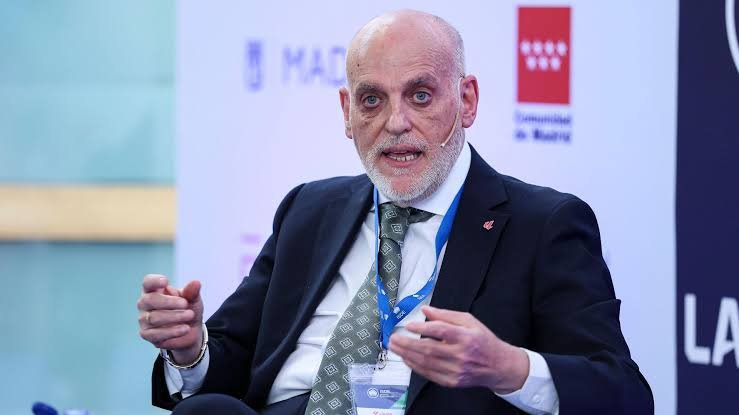
La Liga President Javier Tebas has called on FIFA President Gianni Infantino to step down, accusing the world football governing body of making decisions that are damaging the global game.
Speaking in an interview with La Gazzetta dello Sport, Tebas said Infantino’s time at the helm of FIFA should come to an end.

“In my opinion, yes, I think his time is up,” Tebas said when asked if the FIFA president should resign.
Despite his criticism, the Spanish football executive acknowledged that Infantino remains firmly backed by FIFA’s member associations and is likely to secure another term at the organisation’s congress next March.
Tebas described FIFA’s electoral process as flawed, claiming there is virtually no opposition because potential challengers believe the outcome is already predetermined.
He also alleged that many football administrators privately disagree with Infantino’s leadership but have chosen to remain silent.
Read Also:
- Rashford on target as Barcelona edge closer to La Liga title after Getafe win
- Barcelona edge Rayo Vallecano 1-0 to extend La Liga lead
- Real Madrid defeats Valencia to secure 7th consecutive La Liga win
According to Tebas, the handling of the suspension involving United States striker Folarin Balogun during the 2026 FIFA World Cup highlighted concerns about FIFA’s governance.
He argued that the controversy could have had serious consequences for Infantino had circumstances unfolded differently.
The La Liga chief further criticised proposals to expand the FIFA World Cup to 64 teams, warning that such a move would place additional strain on players and weaken domestic football competitions.
“The football industry is not just the World Cup,” Tebas said, stressing that national leagues provide the foundation for the sport and support thousands of jobs worldwide.
He also questioned FIFA’s decision to introduce mandatory hydration breaks during World Cup matches, claiming the policy served commercial interests more than player welfare.
Tebas extended his criticism to the World Cup final’s extended halftime entertainment, arguing that FIFA prioritised spectacle and commercial value over football tradition.
According to him, the governing body has increasingly made unilateral decisions without considering their wider impact on the sport.
His comments add to growing debate over FIFA’s leadership and the future direction of international football following the conclusion of the 2026 FIFA World Cup.