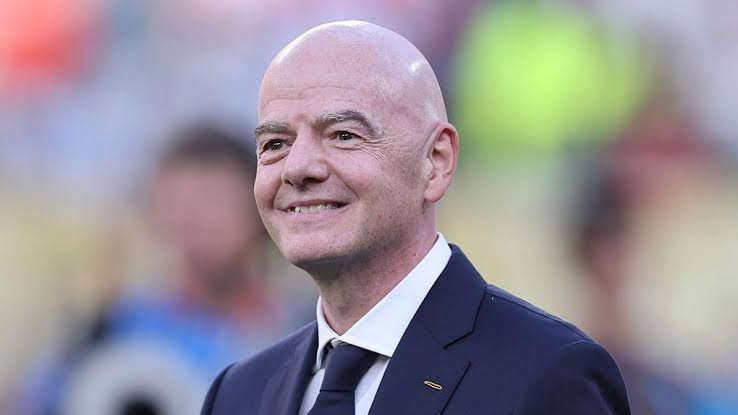
FIFA President Gianni Infantino has delivered a robust defence of world football’s governing body following criticism surrounding the 2026 FIFA World Cup, urging detractors to “meditate, pray or watch a football match” instead of spreading what he described as “hate and false rumours.”
In a lengthy message shared on his personal Instagram account and reposted by FIFA, Infantino responded directly to critics, insisting the expanded tournament showcased football’s ability to unite people across cultures and borders despite the challenges surrounding the competition.

According to the FIFA president, the World Cup remained “the greatest event on earth,” celebrating humanity through sport while bringing together millions of supporters from around the world.
“Our world needs love, not hate; tolerance, not division; celebration, not mourning,” Infantino wrote, encouraging critics to reflect on the joy, emotion and unity generated by the tournament.
He maintained that the competition was conducted in a secure environment, describing it as a tournament marked by “joy, happiness and togetherness.”
Read Also:
- La Liga President Tells Infantino To Step Down From Post
- Trump To Attend FIFA World Cup Final, Present Trophy Alongside Infantino
- Infantino defends U.S. as World Cup host amid visa concerns
Infantino dismissed concerns over several controversies that overshadowed the competition, including criticism of visa restrictions affecting some teams, officials and supporters.
He argued that while isolated visa issues occurred, millions of fans were successfully granted entry to attend the tournament, describing that outcome as evidence of football’s global appeal.
The FIFA president also defended the participation of Iran, despite diplomatic tensions between Tehran and co-host nation the United States, saying football helped unite people beyond politics.
His remarks, however, contrast with comments previously made by Iran head coach Amir Ghalenoei, who described his team’s experience at the tournament as one of the most difficult, citing logistical and travel challenges.
Iran reportedly faced visa delays for members of its delegation, relocated its training base before the tournament and experienced travel restrictions during the competition.
The tournament also attracted scrutiny over several other issues, including supporters affected by travel restrictions, investigations into crowd incidents and allegations of racist abuse during the competition.
FIFA is currently reviewing disciplinary matters arising from the World Cup, including post-match altercations following the final and other incidents involving supporters.
Infantino also defended FIFA’s handling of disciplinary decisions after criticism over the suspension of United States forward Folarin Balogun’s one-match ban ahead of the knockout stage.
The decision drew criticism from several football authorities, who questioned whether political pressure had influenced FIFA’s disciplinary process. Infantino rejected those claims, arguing that similar decisions are routinely made in football competitions around the world.
Despite the criticism, Infantino insisted the tournament’s lasting legacy should be one of unity rather than division.
He said many critics had focused on controversy while overlooking the moments that brought families, children and supporters together through football.
“Take a moment to reflect, meditate, pray or watch a football match,” he urged, adding that football remains one of the few global platforms capable of reconnecting people regardless of nationality or background.
Infantino’s comments have generated mixed reactions across the football community.
Supporters argue that the tournament attracted record attendances, entertained millions of fans worldwide and successfully delivered one of the biggest sporting events in history despite a challenging geopolitical environment.
Critics, however, contend that FIFA’s leadership has failed to adequately address legitimate concerns over travel restrictions, political neutrality, fan accessibility and tournament governance, arguing that transparency and accountability remain essential to the credibility of world football.
With FIFA’s next presidential election approaching, Infantino’s outspoken defence of the organisation is expected to fuel further debate over the governing body’s leadership and its handling of the 2026 World Cup.