• Advert Rates
  • Careers
  • About Us
  • Contact Us
  • Digital Store
Saturday, June 20, 2026
The Trumpet Newspaper Nigeria
No Result
View All Result
  • Home
  • News
    • Breaking News
    • Headlines
    • Metro
    • Health
  • Politics
  • Business
    • Ecommerce
    • Economy
    • Start-up
  • Entertainment
  • Sports
  • Opinion
    • Religion
    • Columnists
    • Contributors
    • Editorial
  • Global
    • Climate
    • Culture
    • Tourism
    • Technology
    • Weather
    • Social Media
  • e-Edition
  • Home
  • News
    • Breaking News
    • Headlines
    • Metro
    • Health
  • Politics
  • Business
    • Ecommerce
    • Economy
    • Start-up
  • Entertainment
  • Sports
  • Opinion
    • Religion
    • Columnists
    • Contributors
    • Editorial
  • Global
    • Climate
    • Culture
    • Tourism
    • Technology
    • Weather
    • Social Media
  • e-Edition
No Result
View All Result
The Trumpet Newspaper Nigeria
No Result
View All Result
ADVERTISEMENT
Home Tech

How Nigeria’s Digital Switchover Gave Birth to FreeTV

Obah Sylva by Obah Sylva
June 20, 2026
in Tech
Reading Time: 3 mins read
0
How Nigeria’s Digital Switchover Gave Birth to FreeTV
0
SHARES
5
VIEWS
Share on FacebookShare on TwitterShare on LinkedinShare on WhatsAppShare on Pinterest
Nigeria has long been a powerhouse of broadcasting in Africa, but for decades, most households relied on analogue television signals with limited channels, poor picture quality in many areas, and heavy dependence on expensive pay-TV subscriptions like DStv and GOtv.

That landscape changed dramatically on June 17, 2026, with the official nationwide launch of the Digital Switchover (DSO) platform and the debut of FreeTV — a government-backed, subscription-free digital television service offering over 100 channels.

The journey began internationally. In 2006, Nigeria joined other countries in signing the ITU’s GE06 Agreement, committing to transition from analogue to digital terrestrial television (DTT) by June 17, 2015.

ADVERTISEMENT

The benefits were clear: digital broadcasting offers superior picture and sound quality, more channels within the same spectrum, better signal reliability, and opportunities for interactive services and local content growth.

Nigeria missed the 2015 deadline due to funding shortages, infrastructure challenges, and logistical complexities. A pilot launched in Jos, Plateau State, in 2017 introduced the “FreeTV” brand, but nationwide rollout remained slow. By the mid-2020s, only a handful of states had partial digital coverage despite significant investments (reportedly around ₦80 billion over nearly two decades).

Under the administration of President Bola Ahmed Tinubu, the project gained fresh momentum. The government pivoted to a hybrid model combining terrestrial signals, satellite delivery via NIGCOMSAT, and a mobile app. This approach ensured broader reach, especially in rural areas where traditional DTT infrastructure was limited.

On June 17, 2026, at the headquarters of the Nigerian Communications Satellite Limited (NIGCOMSAT) in Abuja, the Federal Government, through the Ministry of Information and National Orientation and the National Broadcasting Commission (NBC), officially launched the DSO platform and FreeTV.

FreeTV is marketed as a neutral digital marketplace for broadcasters. It provides access to dozens of free-to-air channels — local, national, and select international — spanning news, entertainment, sports, education, culture, movies, and more. Early reports indicated over 57 channels live at launch, with plans to exceed 100.


Key features include:
•High-definition (HD) clarity and improved signal reliability.
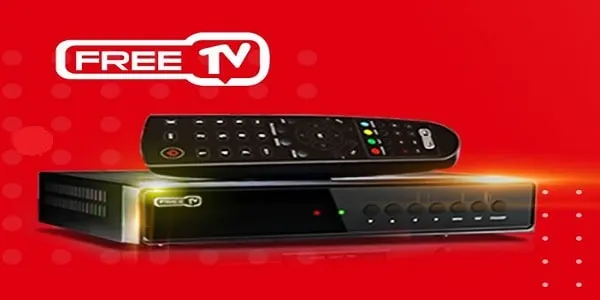
•No monthly subscriptions — viewers only need a compatible decoder/set-top box (DVB-T2 compliant) and a UHF/terrestrial antenna or satellite dish.
•Multi-platform access: Satellite (NigSat), terrestrial, and the FreeTV app on Google Play.
•Affordable entry: Decoders reportedly range from around ₦6,000 to ₦35,000, with activation often done online.

The service is positioned as a direct alternative (or complement) to pay-TV, aiming to reduce the financial burden on households while boosting local content production and advertising revenue for broadcasters.

The DSO and FreeTV are more than a tech upgrade. Officials highlight several benefits:
•Greater choice and inclusion: Rural and low-income households gain access to diverse programming without ongoing costs.
•Boost to the creative economy: More channels mean more demand for Nigerian content, creating jobs in production, studios, and related sectors.
•Spectrum efficiency: Freed-up analogue spectrum can support mobile broadband and other digital services.
•National development: Enhanced delivery of education, government information, and cultural programming.

The platform is expected to run free for at least 18 months initially as adoption ramps up, with full analogue switch-off targeted for December 31, 2028.

Read also:

  • FG Unveils FreeTV, Offers Nigerians Access To Over 100 Channels At No Cost
  • FG To Embed Journalists In Military Operations For Accurate Reportage
  • FG fixes June 17 for nationwide digital switch over rollout

While the launch has been widely celebrated, hurdles remain. Reliable electricity is a persistent issue in many areas, potentially limiting decoder usage. Some critics question long-term sustainability, content quality, and whether the hybrid model will deliver consistent coverage. Competition with established pay-TV providers and streaming services like Netflix will also test FreeTV’s staying power.

Nigeria’s digital switchover, long delayed, has finally delivered a practical outcome: FreeTV. What started as an international obligation has evolved into a homegrown platform promising wider access, better quality, and economic opportunities. For millions of Nigerians, the era of limited analogue TV and costly subscriptions is giving way to a more abundant, digital viewing experience — one that could reshape entertainment, information, and culture in the country for decades to come. As the analogue signals gradually fade, FreeTV stands as a tangible symbol of Nigeria’s broader digital ambitions.

Previous Post

Kano Pillars, Customs, COAS Shine At Day 5 Of CGC Volleyball Premier League

Next Post

CBN Open Championship Records Massive Turnout as NTF Pushes Growth of Wheelchair Tennis

Obah Sylva

Obah Sylva

Next Post
CBN Open Championship Records Massive Turnout as NTF Pushes Growth of Wheelchair Tennis

CBN Open Championship Records Massive Turnout as NTF Pushes Growth of Wheelchair Tennis

About The Trumpet

The Trumpet is a Nigerian based national news media, owned, trademarked and operated by Elomaz Communications Limited with headquarters in FCT-Abuja and regional offices in Lagos and Delta States

Follow Us

Resources

  • Home
  • News
    • Breaking News
    • Headlines
    • Metro
    • Health
  • Politics
  • Business
    • Ecommerce
    • Economy
    • Start-up
  • Entertainment
  • Sports
  • Opinion
    • Religion
    • Columnists
    • Contributors
    • Editorial
  • Global
    • Climate
    • Culture
    • Tourism
    • Technology
    • Weather
    • Social Media
  • e-Edition

Recent News

CBN Open Championship Records Massive Turnout as NTF Pushes Growth of Wheelchair Tennis

CBN Open Championship Records Massive Turnout as NTF Pushes Growth of Wheelchair Tennis

June 20, 2026
How Nigeria’s Digital Switchover Gave Birth to FreeTV

How Nigeria’s Digital Switchover Gave Birth to FreeTV

June 20, 2026
  • Cookie Policy
  • Disclaimer
  • Contact us
  • About Us
  • Cookie Policy
  • Disclaimer
  • Contact us
  • About Us

© 2025 The Trumpet News Papers - Developed by VIS Nigeria.

No Result
View All Result
  • Home
  • News
    • Breaking News
    • Headlines
    • Metro
    • Health
  • Politics
  • Business
    • Ecommerce
    • Economy
    • Start-up
  • Entertainment
  • Sports
  • Opinion
    • Religion
    • Columnists
    • Contributors
    • Editorial
  • Global
    • Climate
    • Culture
    • Tourism
    • Technology
    • Weather
    • Social Media
  • e-Edition

© 2025 The Trumpet News Papers - Developed by VIS Nigeria.

We use cookies on our website to give you the most relevant experience by remembering your preferences and repeat visits. By clicking “Accept All”, you consent to the use of ALL the cookies. However, you may visit "Cookie Settings" to provide a controlled consent.
Cookie SettingsAccept All
Manage consent

Privacy Overview

This website uses cookies to improve your experience while you navigate through the website. Out of these, the cookies that are categorized as necessary are stored on your browser as they are essential for the working of basic functionalities of the website. We also use third-party cookies that help us analyze and understand how you use this website. These cookies will be stored in your browser only with your consent. You also have the option to opt-out of these cookies. But opting out of some of these cookies may affect your browsing experience.
Necessary
Always Enabled
Necessary cookies are absolutely essential for the website to function properly. These cookies ensure basic functionalities and security features of the website, anonymously.
CookieDurationDescription
cookielawinfo-checkbox-analytics11 monthsThis cookie is set by GDPR Cookie Consent plugin. The cookie is used to store the user consent for the cookies in the category "Analytics".
cookielawinfo-checkbox-functional11 monthsThe cookie is set by GDPR cookie consent to record the user consent for the cookies in the category "Functional".
cookielawinfo-checkbox-necessary11 monthsThis cookie is set by GDPR Cookie Consent plugin. The cookies is used to store the user consent for the cookies in the category "Necessary".
cookielawinfo-checkbox-others11 monthsThis cookie is set by GDPR Cookie Consent plugin. The cookie is used to store the user consent for the cookies in the category "Other.
cookielawinfo-checkbox-performance11 monthsThis cookie is set by GDPR Cookie Consent plugin. The cookie is used to store the user consent for the cookies in the category "Performance".
viewed_cookie_policy11 monthsThe cookie is set by the GDPR Cookie Consent plugin and is used to store whether or not user has consented to the use of cookies. It does not store any personal data.
Functional
Functional cookies help to perform certain functionalities like sharing the content of the website on social media platforms, collect feedbacks, and other third-party features.
Performance
Performance cookies are used to understand and analyze the key performance indexes of the website which helps in delivering a better user experience for the visitors.
Analytics
Analytical cookies are used to understand how visitors interact with the website. These cookies help provide information on metrics the number of visitors, bounce rate, traffic source, etc.
Advertisement
Advertisement cookies are used to provide visitors with relevant ads and marketing campaigns. These cookies track visitors across websites and collect information to provide customized ads.
Others
Other uncategorized cookies are those that are being analyzed and have not been classified into a category as yet.
SAVE & ACCEPT