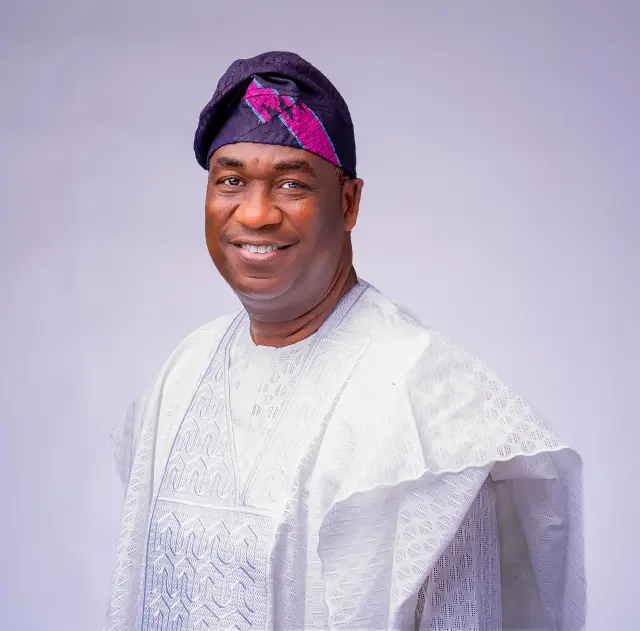
Lagos State Deputy Governor, Dr Kadri Obafemi Hamzat, has unveiled a 100-point governorship manifesto for 2027, setting out ambitious targets for healthcare, education, transport, housing, security and public service delivery.
Latest: Sanwo-Olu endorses Deputy, Hamzat for 2027 Lagos Governorship, as momentum builds across APC ranks

Titled The Lagos Promise (Ileri Eko), the manifesto was presented on October 30, 2026, at the Wole Soyinka Centre for Culture and Creative Arts in Iganmu, Lagos, under the declaration: “A promise is a debt. Gbese ni Ileri.”
The document is organised into seven pillars and 31 chapters, with 100 pledges divided into 87 firm commitments and 13 aspirations that depend on consultation, federal government cooperation or judicial decisions.
The distinction gives voters a framework for assessing Hamzat’s proposals, although questions remain about the cost of implementation, the status of projects already underway and the administration’s record on issues he now promises to address.
Key Highlights
- Hamzat’s manifesto contains seven pillars, 31 chapters and 100 pledges.
- The deputy governor proposes increasing Lagos’ public bus fleet from 1,000 to 4,000.
- Healthcare plans include 100 upgraded primary healthcare centres and two new general hospitals.
- He promises to expand Ilera Eko health insurance to cover one in three Lagos residents.
- A proposed Service Delivery Office would publish performance baselines and monitor government commitments.
- The manifesto’s major unanswered questions concern funding, timelines, federal responsibilities and the 13 aspirational pledges.
What Hamzat Is Promising
The seven pillars of The Lagos Promise form the acronym P.R.O.M.I.S.E, representing People First, Renewal, Opportunity, Machinery of Government, Inclusion, Security and Resilience, and Everyday Dignity.
1. People First: Healthcare and Education
Under the People First pillar, Hamzat proposes expanding healthcare access and improving public education.
His healthcare commitments include increasing the number of Maternal and Child Centres from 10 to 15 and extending their services to underserved communities.
He also plans to expand the Ilera Eko health insurance scheme from nearly two million beneficiaries to one in three Lagos residents.
Other proposals include upgrading 100 primary healthcare centres to flagship status, building new general hospitals in Ogombo and Ibeju-Lekki, and completing ongoing projects.
These include the 150-bed Massey Children’s Hospital, the 280-bed Ojo General Hospital and the 150-bed Somolu General Hospital, providing a combined 580 beds.
The manifesto also promises additional recruitment of doctors, nurses and midwives, alongside improved working conditions to discourage health professionals from leaving the state.
In education, Hamzat proposes strengthening the EKOEXCEL programme, which operates in 1,028 public primary schools, reviewing teachers’ remuneration, expanding digital learning and pursuing the establishment of a University of Medicine and Health Sciences.
2. Renewal: Transport, Water and Waste Management
Transport and infrastructure account for some of the manifesto’s most ambitious proposals.
Hamzat wants to increase Lagos’ public bus fleet from 1,000 to 4,000 vehicles, with the capacity to transport one million passengers daily.
On rail transportation, he promises to extend the Blue Line to Okokomaiko, connect the Blue and Red lines at the National Theatre Station and advance the Green Line from Marina to the Lekki Free Trade Zone in partnership with the Federal Government.
The water transportation plan includes dredging an additional 140 kilometres of waterways, optimising 15 ferry routes, refurbishing 25 terminals and jetties, and procuring 75 additional electric vessels under the Omi Eko initiative.
He also proposes integrating road, rail and water transportation through a unified ticketing system.
For water supply, the manifesto promises completion of the 70-million-gallon-per-day Adiyan Phase Two waterworks and rehabilitation of 24 micro and mini waterworks.
On waste management, Hamzat targets 95 per cent collection coverage across the state.
3. Opportunity: Jobs and Business Development
The Opportunity pillar focuses on employment, entrepreneurship and reducing the cost of doing business.
Hamzat promises to publish a single schedule of lawful government charges to address multiple levies imposed on businesses.
He also proposes allocating a defined share of state procurement to qualifying small businesses.
The manifesto highlights the Lagos State Employment Trust Fund, which Hamzat said has provided more than ₦15 billion to over 21,000 businesses.
For vocational education, he proposes placing trainees with employers for periods of six to 12 months, with the state covering 40 per cent of their stipends.
4. Machinery of Government: Accountability and Public Service Reform
The Machinery of Government pillar contains some of the manifesto’s most significant governance proposals.
Hamzat promises that within his first 100 days in office, he would send a bill to establish a Child Protection and Nutrition Agency.
The proposed agency would work towards ensuring that every child under 18 is either in school or learning a trade and has adequate food.
He also proposes establishing a Lagos State Service Delivery Office through an executive order to publish government performance baselines and monitor commitments.
Other proposals include creating a state wealth fund with an independent board and published accounts, as well as an independent Performance Council.
The manifesto also promises an annual report comparing government pledges with actual achievements.
Under proposed service charters, government agencies would be required to acknowledge complaints within 48 hours, provide responses within seven days and resolve them within 30 days.
5. Inclusion, Security and Everyday Dignity
The remaining pillars address social inclusion, public safety, housing and the quality of everyday life.
On security, Hamzat proposes strengthening the Lagos State Neighbourhood Safety Agency across all 20 local government areas and 37 local council development areas.
He also promises expanded street lighting and CCTV coverage, alongside a State Intelligence Fusion Centre to support efforts against cybercrime, financial crime and organised criminal activity.
His housing proposals include completing ongoing housing projects, strengthening the Lagos Home Ownership Mortgage Scheme and introducing mortgage arrangements based on 10 per cent down payments, single-digit interest rates and longer repayment periods.
What Works in the Manifesto
1. Measurable commitments
One of the strongest features of the manifesto is its use of specific targets.
Proposals such as 4,000 buses, 100 upgraded primary healthcare centres, 15 Maternal and Child Centres and 95 per cent waste collection coverage give journalists, civil society organisations and residents figures against which government performance can be assessed.
The proposed complaint-resolution periods of 48 hours, seven days and 30 days also provide measurable service standards.
This level of detail could improve public scrutiny if the administration publishes regular progress reports.
2. Focus on everyday problems
The manifesto addresses issues that directly affect Lagos residents, including traffic congestion, waste disposal, water shortages, healthcare access and the cost of operating businesses.
The proposal for a single schedule of lawful government charges is particularly relevant to small businesses that face overlapping levies and demands from different public authorities.
If properly enforced, the measure could reduce the financial burden on traders, artisans and entrepreneurs.
3. A proposed accountability framework
The Service Delivery Office, Performance Council and annual promise-versus-delivery report could provide a structure for monitoring government performance.
Their inclusion suggests that Hamzat recognises the importance of public accountability in gaining and retaining the confidence of voters.
However, their effectiveness would depend on independence, access to reliable information and the willingness of government to publish unfavourable findings.
4. Greater attention to water transportation
Hamzat’s proposal to expand ferry services and treat Lagos’ waterways as a major transport corridor is one of the more distinctive aspects of the manifesto.
His statement that “Lagos is a water state. The lagoon must be our third highway” reflects an effort to use the state’s geography to reduce pressure on its roads.
The proposed electric vessels, additional ferry terminals and integrated ticketing system could improve connectivity if supported by reliable infrastructure and effective regulation.
Where the Manifesto Raises Questions
1. Continuity Could Become a Political Liability
Hamzat’s experience in government is one of his strongest qualifications, but it also exposes him to questions about the performance of the administration he has served.
He has been deputy governor since 2019 and previously served as a commissioner under former governors Bola Tinubu and Babatunde Fashola.
His experience includes involvement in major state projects and policy responses, including the Blue and Red rail lines, Lekki Deep Sea Port and the COVID-19 response.
Governor Babajide Sanwo-Olu has endorsed him as a candidate for continuity, arguing that Lagos needs consolidation rather than experimentation.
However, this position also means Hamzat cannot easily distance himself from the administration’s shortcomings.
Persistent concerns over waste management, flooding, traffic enforcement and the reach of Ilera Eko raise an important question: why have some of these problems remained unresolved under an administration in which he has held a senior position?
The manifesto needs to explain what has prevented progress and what will change under his leadership.
2. The Financing Plan Is Missing
The scale of the proposed projects makes funding one of the most important unanswered questions.
Expanding the bus fleet by 3,000 vehicles, procuring 75 electric vessels, upgrading 100 primary healthcare centres, building two general hospitals and completing major water infrastructure will require substantial investment.
The proposed Green Line extension and mortgage arrangements also raise questions about funding responsibilities and the financial commitments expected from the state government.
The manifesto, as presented in the launch material reviewed for this article, does not provide a detailed costed financing plan for these commitments.
Lagos has a substantial economy and internally generated revenue base, but it also faces significant infrastructure demands and debt obligations.
Voters need to know how much the proposals will cost, how they will be funded and which projects will receive priority.
The proposed state wealth fund also requires further explanation, particularly regarding its funding sources, investment rules and safeguards against misuse.
3. The 87 Firm Commitments and 13 Aspirations
The division of the 100 pledges into 87 firm commitments and 13 aspirations is a notable feature of the manifesto.
It recognises that some government projects depend on factors beyond the direct control of the state administration.
However, voters need the complete list of the 13 aspirational pledges and an explanation of why each one cannot be guaranteed.
Projects involving federal partnerships, judicial decisions or other external approvals could include some of the most ambitious infrastructure proposals.
Without the full breakdown, residents cannot determine which major commitments Hamzat would be directly responsible for delivering and which depend on other authorities.
4. Housing Proposals Need More Detail
The proposed mortgage arrangement of 10 per cent down payment and single-digit interest rates is attractive, particularly for residents seeking to own homes.
However, the manifesto needs to explain who would qualify, the price range of the properties, the repayment periods and how the government would support the financing arrangement.
Lagos’ housing challenges extend beyond access to mortgages.
Rent affordability, land ownership, informal settlements and the condition of existing housing also require attention.
Low-income earners, including market traders, drivers and artisans, may struggle to qualify for formal mortgage schemes even with reduced interest rates.
The government therefore needs to explain how its housing policy would reach residents who cannot access conventional mortgage financing.
5. Inclusion Needs Stronger Commitments
The Inclusion pillar recognises Lagos as a diverse city whose residents come from different backgrounds.
Campaign materials have emphasised equity regardless of where a person comes from, provided the individual lives in Lagos.
However, the manifesto needs more specific commitments on issues such as gender-based violence, disability access, youth unemployment and the protection of informal workers.
One notable proposal is the plan to bring 30,000 waste sorters into a formal system, provide training and equipment, and ensure they receive proper payment.
Similar practical commitments could strengthen the inclusion agenda across other vulnerable groups.
6. Security Depends on Federal Cooperation
The proposed State Intelligence Fusion Centre and expansion of neighbourhood safety operations could improve intelligence gathering and local security coordination.
However, policing remains primarily a federal responsibility.
The Lagos State Neighbourhood Safety Agency has a supporting role and does not exercise the same powers as the Nigeria Police Force.
The manifesto therefore needs to explain how the proposed security structures would work with federal agencies to address kidnapping, cult-related violence, organised crime and extortion.
CCTV cameras and street lighting can assist security operations, but they cannot replace effective investigation, policing and prosecution.
Read also:
- Jandor withdraws from Lagos APC governorship race after Hamzat’s endorsement by Tinubu
- Gov Umo Eno Unveils ARISE 2.0 Manifesto, Promises Economic Transformation Ahead of 2027 Elections
- 2027 Election: APC Unveils Tinubu’s Four-Pillar Manifesto, Puts Security at Top of Second-Term Agenda
The Political Subtext: A Succession Plan
Beyond its policy proposals, The Lagos Promise is also a political document designed to position Hamzat as the candidate who can continue the current administration’s development agenda.
Sanwo-Olu’s endorsement has been framed around loyalty and continuity.
The governor recalled that Hamzat stepped down for him in 2018 after discussions among party leaders, before agreeing to run alongside him.
The endorsement strengthens Hamzat’s position within the governing political structure, although it also raises familiar questions about internal party competition and the influence of established political interests.
Supporters see his experience as an advantage, arguing that he understands the state’s development plans and can continue ongoing projects.
Critics are likely to question whether continuity is the best option after years of unresolved challenges involving transport, waste management, flooding and urban governance.
The 2027 election will test whether Lagos voters prefer an experienced administration seeking to consolidate its record or a candidate promising a different approach.
Verdict: A Serious Manifesto That Needs a Price Tag
The Lagos Promise presents a detailed programme covering many of the issues that shape daily life in Lagos.
Its measurable targets, proposed service standards and emphasis on public accountability give voters a basis for evaluating its commitments.
However, the document still needs important details before its proposals can be judged as a fully deliverable programme.
Hamzat should publish:
- A costed financing plan: The estimated cost of each major commitment, its funding source and the expected financial contribution of federal and private-sector partners.
- The full list of 13 aspirational pledges: Voters should know which commitments depend on external decisions and why.
- A detailed implementation timetable: Major infrastructure projects need clear commencement dates, completion targets and measurable milestones.
- An assessment of the current administration’s record: Hamzat should explain why some of the problems identified in his manifesto remain unresolved and how his proposed administration would address them differently.
The deputy governor has offered voters a statement that captures the central challenge of his campaign: “If one of them is not delivered, it will be noted, and I must own it.”
That commitment will carry weight only if the proposed performance reports are published, independently assessed and made accessible to the public.
For Lagos residents, the real test of The Lagos Promise will begin after the campaign speeches and manifesto launch. Its value will ultimately be determined by the projects completed, the services improved and the promises fulfilled.
For more Lagos 2027 updates, follow us on X.