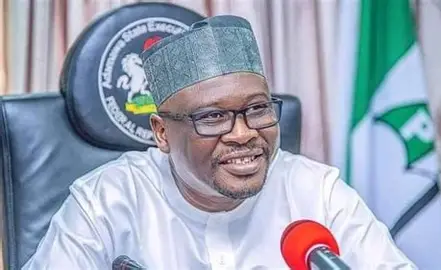
Governor Ahmadu Fintiri of Adamawa State, once celebrated as one of the most influential and widely accepted political figures in Northern Nigeria, now finds himself at the centre of a growing political storm, following his reported alignment with the All Progressives Congress (APC). For years, Governor Fintiri enjoyed uncommon political support across religious, ethnic and social divides in Adamawa State. During the 2023 governorship election, he commanded massive crowds made up of Christians, Muslims and other groups, with many residents viewing him as a symbol of political balance and resistance against external influences.
However, recent political developments appear to have altered the atmosphere surrounding his administration and political future. Many of his loyal supporters, especially within the Peoples Democratic Party (PDP), have reacted strongly to his decision to associate with the ruling APC under President Bola Tinubu. While some political observers see the move as strategic and inevitable in Nigeria’s evolving political landscape, others regard it as a betrayal of the ideals and political struggle that brought him to power.
Key Highlights:

- Ahmadu Fintiri is facing growing political criticism following reports of his alignment with the APC, a move that has sparked mixed reactions among supporters and political observers.
- Many former supporters within the PDP view the development as a departure from the political principles and opposition stance that helped build his popularity during the 2023 governorship election.
- Despite the backlash, several PDP stakeholders at state, local government, and ward levels are reported to have followed Fintiri into the APC, suggesting he still retains significant political influence in Adamawa.
- The controversy has been intensified by allegations of candidate imposition in the APC governorship race, with some religious and political groups expressing concerns about representation and the future direction of the state’s politics.
- As the 2027 elections approach, Adamawa is experiencing increasing political divisions, with debates centered on loyalty, internal party democracy, religion, ethnicity, and the need for leaders who can promote unity, stability, and development.
Political tensions intensified after reports emerged, alleging that the governor had in the past, openly criticised the APC and strongly opposed any form of alliance with the ruling party. Critics now argue that his latest political direction contradicts earlier positions he was believed to have held publicly and privately. What makes the situation more dramatic, is the visible shift in public sentiment. Individuals who once stood firmly behind the governor are now openly expressing disappointment both online and offline. Former supporters who previously mobilised voters in his favour are increasingly distancing themselves from his political camp, with some even campaigning against his recent decisions.
Despite the backlash, several PDP stakeholders at the state, local government and ward levels reportedly followed Governor Fintiri into the APC, suggesting that the governor still retains significant political influence and organisational control within Adamawa politics. Sources close to the governor, who preferred anonymity, claimed that recent actions, utterances and body language displayed by Governor Fintiri at political gatherings suggest he may have been operating under intense political pressure. According to the claims, considerations surrounding political survival, personal safety and future ambitions including a possible senatorial bid after completing his tenure as governor may have influenced his decision.
There are also speculations in political circles that powerful figures within the federal government may have played roles in persuading the governor to align with the APC, although no official evidence has been presented to support such claims.
Others, however, insist that the decision was entirely his and should be viewed as a strategic political calculation ahead of the 2027 elections. Another major source of concern among residents is the alleged imposition of an APC governorship candidate in Adamawa State.
The development has triggered intense debate among religious and ethnic groups, particularly within Christian communities who fear political marginalisation. Some critics argue that supporting a candidate allegedly imposed by external political interests, contradicts the collective resistance many Adamawa residents displayed during the 2023 elections, especially against the candidacy of Senator Aishatu Binani. To such critics, Governor Fintiri’s latest political alignment represents a sharp departure from the sentiments of many ordinary voters who rallied behind him during that period.
Religious considerations have also continued to shape political conversations in the state. While some Muslim supporters reportedly defend the APC arrangement as politically beneficial, many Christian groups have begun reconsidering their political loyalties, with growing support allegedly shifting towards former Senator Ishaku Abbo and other emerging political figures. Another name gaining attention in political discussions is Moris Vonovulki, who is also believed to be attracting support from sections of the Christian community and younger voters seeking alternatives ahead of the next governorship race.
Political analysts and religious leaders have repeatedly warned against allowing religion, ethnicity and regional sentiments to dominate political decision-making, arguing that such divisions often weaken governance, create instability and negatively affect economic development. Beyond Adamawa State, debates surrounding internal democracy within political parties have continued to dominate discussions across Nigeria following recent APC primaries in several states.
Read also:
- We lost the Fintiri we know, APC supporters lament over outcome of governorship primary
- Senatorial Aspirant In Adamawa quits APC, cites imposition Of 28 Aspirants by Fintiri, Tinubu
- Gov. Fintiri emerges APC consensus candidate for Adamawa North
Many Nigerians have taken to social media to criticise what they describe as flawed primary processes and alleged candidate imposition. As the 2027 general elections gradually approach, Adamawa State appears increasingly politically divided, with many residents uncertain about the future direction of the state’s politics. For many citizens, the situation represents more than just a party switch. It is a test of loyalty, trust and political identity in a state where religion, ethnicity and political history remain deeply intertwined.
Regardless of political affiliation, observers believe the coming months will be critical in determining whether Adamawa’s political class can prioritise unity, peaceful coexistence and democratic fairness over personal ambition and partisan interests.
Ultimately, many residents hope that political leaders and supporters alike will avoid inflammatory rhetoric, reject divisive politics and focus instead on choosing leaders capable of delivering stability, development and inclusive governance for the people of Adamawa State.