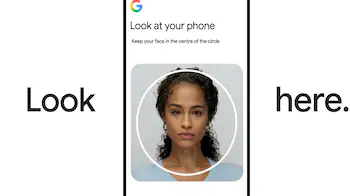
Google has introduced a new biometric feature called “selfie video” (also referred to as “selfie for sign-in”), giving users an additional option to regain access to their Google Accounts when traditional recovery methods fail.

The feature aims to simplify account recovery for people who lose access to their trusted devices, backup email addresses, or phone numbers, while incorporating live-movement checks to help resist deepfake impersonation attempts.
How It Works
To set up the feature, eligible users record a short reference video in their Google Account settings. They look at the camera and follow on-screen prompts to make simple guided head movements, capturing their face from multiple angles.
This reference video is stored encrypted on Google’s servers and used solely for sign-in and recovery purposes (unless the user opts in for additional features). When recovering an account later, the user records a new live selfie video with similar movements. Google’s system compares the live video to the stored reference to verify identity.
The process is designed to confirm the user is a real person currently in front of the camera, rather than relying on static images that could be spoofed.
Read Also:
- Google, TikTok, LinkedIn shut down 28 Million fraudulent accounts tied To Nigeria in sweeping crackdown
- Google’s AI Overhaul: Gmail’s new smart search feature sparks privacy concerns
- Google sanctions Russia
- Google Signs 20-Year Nuclear Power Deal With Constellation Energy, Shares Jump 13%
Availability and Eligibility
The rollout began on July 23, 2026, and is gradually becoming available to users. However, it is not open to everyone:
Eligible: Many personal Google Accounts.
Ineligible: Google Workspace (work/school) accounts, accounts for children, users enrolled in the Advanced Protection Program, and some standard personal accounts.
Users must set up the selfie video before they need it — it cannot be added during an active lockout or recovery process.
To check and enable it, go to your Google Account settings → Security → look for the “Selfie for sign-in” or similar option under sign-in methods.
Security and Privacy
Google emphasizes that the video is encrypted, stored securely, and can be deleted by the user at any time. It is positioned as an optional backup method alongside existing options like passkeys, recovery phones/emails, and trusted contacts. Google strongly recommends using multiple recovery methods.
Concerns have been raised about biometric data storage, but Google states the video is used only for authentication unless explicitly shared for other purposes. Independent security researchers will likely test its resilience against advanced deepfakes and presentation attacks in the coming weeks.
Why This Matters
Losing access to a Google Account can be devastating — it often controls Gmail, Photos, Drive, YouTube, and other services holding years of personal data. Traditional recovery can be slow or impossible if backup options are unavailable or outdated.
This feature joins a growing trend of biometric recovery options (similar to Apple’s Face ID workflows or Microsoft’s facial recognition tools), aiming to make recovery both more convenient and more secure.
Should You Set It Up?
If you have a supported personal account, enabling selfie video as a backup can provide peace of mind — especially for users who travel frequently or worry about device loss. However, treat it as one layer in a multi-method recovery strategy rather than a standalone solution.
As account security threats evolve with AI, Google’s move reflects a broader industry shift toward usable, resilient authentication methods that balance convenience with protection.