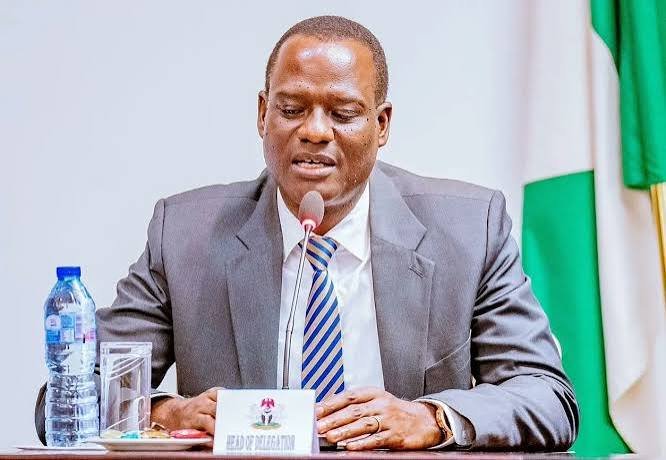
The Minister of Finance and Coordinating Minister of the Economy has inaugurated an Inter-Ministerial Committee to develop the VAT Modification Order 2026, a key regulatory framework designed to support the implementation of Nigeria’s Tax Reform Acts and strengthen the country’s Value Added Tax (VAT) system.

Key Highlights
Finance Minister inaugurates committee to draft the VAT Modification Order 2026.
Committee to align VAT implementation with the Tax Reform Acts 2026.
New Order will define VAT-exempt and zero-rated goods and services.
Stakeholders from government and the private sector to participate in the review.
Committee given six weeks to submit a draft Order and implementation framework.
Reform aims to improve investment, industrialisation, exports and ease of doing business.
The inauguration took place on 24 July 2026 at the Federal Ministry of Finance headquarters in Abuja.
Speaking at the ceremony, the Minister described the Tax Reform Acts, which took effect on 1 January 2026, as the most comprehensive overhaul of Nigeria’s tax system in decades.
According to the Minister, while the previous VAT Modification Order has been superseded by the new legislation, the committee’s responsibility is not to recreate the old framework but to develop a modern, coherent and forward-looking VAT Modification Order that complements the new tax regime and supports Nigeria’s economic transformation.
The committee has been mandated to review the existing VAT administration framework, identify areas requiring clarification, engage stakeholders across the public and private sectors, develop comprehensive lists of VAT-exempt and zero-rated supplies, draft an implementable VAT Modification Order, and recommend legislative amendments where necessary.
The Minister said the committee’s work should be guided by five core principles: fidelity to the law, growth-oriented design, clarity and certainty, broad stakeholder engagement, and international best practices.
“This Order should promote industrialisation, investment, exports, innovation, food security and energy transition, without undermining the integrity of the VAT system,” the Minister said.
Read also:
- Finance Minister Seeks Stronger West African Tax Cooperation To Boost Revenue
- FG Launches YOUTHCRED Programme, Offers Up To ₦2m Loans to 500,000 Young Entrepreneurs
- Venezuela Seeks Release Of $4 Billion Gold Reserve Held In UK For Earthquake Recovery
- Foreign capital inflows to Nigeria hit record $10.37bn in Q1 2026 as investor confidence soars
The committee has six weeks to complete its assignment and submit a draft VAT Modification Order 2026, schedules of exempt and zero-rated supplies with corresponding Harmonised System (HS) Codes, implementation notes and a stakeholder consultation report.
Membership of the committee includes representatives of the Federal Ministry of Finance, Nigeria Revenue Service, Nigeria Customs Service, Federal Ministry of Industry, Trade and Investment, Joint Revenue Board, Manufacturers Association of Nigeria (MAN), Tax Advisory Committee, and the Tax Justice and Governance Platform.
The Minister expressed confidence that the committee’s blend of public and private sector expertise would produce a VAT framework that enhances certainty, improves competitiveness and supports sustainable economic growth.