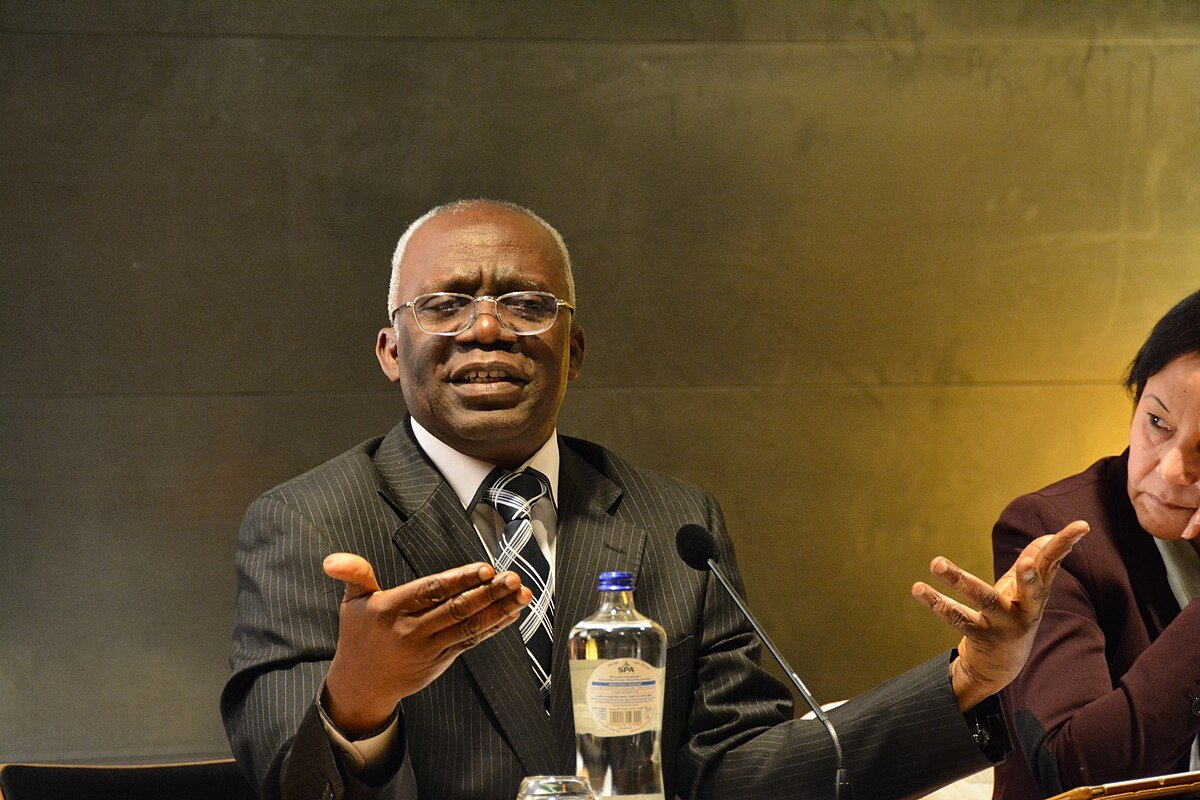
Human rights lawyer and Senior Advocate of Nigeria, Femi Falana, SAN, has sued the Federal Republic of Nigeria before the ECOWAS Community Court of Justice over alleged violations of his fundamental rights during successive military administrations.
Falana, in suit number ECW/CCJ/APP/30/2026, filed in Abuja, alleged that his rights to personal liberty, dignity, fair hearing, property and freedom of movement were violated in a series of incidents between the 1980s and 1990s.

Key Highlights
- Femi Falana has filed a suit against Nigeria before the ECOWAS Court.
- The case concerns alleged human rights violations dating back to the 1980s and 1990s.
- Falana alleged multiple arrests, detentions and restrictions on his movement.
- He cited incidents involving the former National Security Organisation and State Security Service.
- The lawyer also referenced his detention following protests against the annulment of the June 12, 1993 presidential election.
- Falana alleged that some court orders for his release were not initially obeyed by the military authorities.
- He cited reports by the United Nations Working Group on Arbitrary Detention and Amnesty International.
- The suit referenced former military President Ibrahim Babangida’s 2025 memoir and its account of the June 12 election.
- Falana is seeking declarations that several of the alleged actions against him were unlawful and unconstitutional.
- He is seeking $10 million in damages over the alleged violations.
- The allegations remain subject to determination by the ECOWAS Court.
Falana Takes Decades-Old Allegations to ECOWAS Court
Falana, a former President of the West African Bar Association, has been involved in human rights and public accountability advocacy since his call to the Nigerian Bar in 1982.
In his application, he traced his confrontation with the authorities to his National Youth Service period in Oyo State between 1982 and 1983.
During the period, Falana represented University of Ibadan students facing charges including conspiracy and attempted murder.
He alleged that his NYSC discharge certificate was subsequently withheld because of his legal representation of the students, although the case was eventually decided in their favour.
Falana Alleges 1985 Arrest and Detention
Falana alleged that armed agents of the then National Security Organisation arrested him at the Lagos State High Court on June 8, 1985.
According to his application, the agents subsequently took him to his chambers and searched the premises without a warrant.
He further alleged that he was detained for seven weeks at the NSO facility on Awolowo Road, Ikoyi, Lagos, alongside other political detainees.
Falana said he later appeared before the Justice Samson Uwaifo Panel, which was established to investigate detention cases.
He alleged that the explanation provided by security authorities concerning his detention was inaccurate.
Read also:
- Falana Demands EFCC Probe Into N-Power Programme, Disappearance Of N33.75bn Cash Transfer Funds
- Falana Leads Defence As Trial Opens Over Gbajabiamila Bribery Allegations
- Stop Inviting African Dictators, Falana Criticises NBA Over George Weah Invitation
- ECOWAS Court Gets New President, Vice-President As Brumskine Pledges Timely Justice
Lawyer Alleges Abduction and Travel Restrictions
The suit also details an alleged incident in April 1990 when Falana said State Security Service officials abducted him from his Lagos residence.
According to his account, he was taken towards the Lagos-Epe Road and abandoned in a bush.
Falana alleged that although the SSS denied involvement, his request for an investigation was rejected by the military authorities.
He also alleged that his movement was restricted in October 1991 when security officials prevented him from travelling to Harare, Zimbabwe, for a human rights conference.
According to the application, his international passport was subsequently confiscated for six months.
Falana Recalls 1992 Detention Over Treason Allegations
Falana further alleged that he was arrested and detained in May 1992 alongside Dr Beko Ransome-Kuti and Baba Omojola.
The three were later transferred to Kuje over allegations of conspiracy and treasonable felony.
Falana alleged that a fundamental-rights application resulted in an order directing his release, but that the military authorities initially failed to comply with the order.
The detainees were subsequently arraigned before a Chief Magistrate Court and later admitted to bail.
June 12 Struggle Featured in ECOWAS Court Suit
Falana’s application also covers his alleged arrest during protests that followed the annulment of the June 12, 1993 presidential election.
He alleged that he, Chief Gani Fawehinmi, SAN, and Dr Beko Ransome-Kuti were charged with conspiracy, sedition and incitement after publicly challenging the annulment.
According to the application, court orders granting bail were initially not honoured, leaving the three in detention until their release in August 1993.
Falana’s case further refers to arrests and detentions between 1994 and 1998, including incidents connected to his international human rights activities, advocacy over the trial of Ken Saro-Wiwa and other MOSOP leaders, as well as labour and human rights campaigns.
Falana Cites 1998 Arrest Over Labour Advocacy
In another incident cited in the application, Falana alleged that he and nine others were arrested in March 1998 after he delivered a paper at a labour workshop.
They were subsequently charged with conspiracy and unlawful assembly before a Chief Magistrate Court in Ilorin.
The case was eventually abandoned and struck out for want of diligent prosecution, according to Falana’s account.
Babangida Memoir Features in Falana’s Case
The application also makes reference to the February 2025 publication of former military President Ibrahim Babangida’s memoir, A Journey in Service.
Falana argued that Babangida’s acknowledgment in the memoir that MKO Abiola won the June 12, 1993 presidential election was significant.
He contended that activists, including himself, had been arrested and prosecuted for challenging the annulment and publishing results of the election.
Falana alleged that despite the subsequent acknowledgment, no apology or other effective remedy had been provided for the arrests, detention and prosecution arising from opposition to the annulment.
The application also referenced President Bola Tinubu’s attendance at the presentation of Babangida’s memoir and alleged that the Federal Government had not provided an apology or other remedy for the violations complained of.
Falana Seeks $10 Million in Damages
Falana is asking the ECOWAS Court to declare several of his arrests between 1985 and 1996 unlawful and unconstitutional.
He is also seeking declarations concerning his alleged abduction on April 8, 1990, the alleged restriction of his movement in 1991, and the seizure of his NYSC certificate and international passport.
Other reliefs sought include declarations concerning his 1992 arraignment over alleged conspiracy and treasonable felony and his 1993 arraignment over allegations including conspiracy, sedition and unlawful assembly.
Falana is further seeking $10 million in damages over the alleged violations of his rights to dignity, personal liberty, fair hearing, property and freedom of movement by Nigerian authorities between 1985 and 1996.
ECOWAS Court to Determine Falana’s Claims
The allegations contained in Falana’s application remain subject to judicial determination by the ECOWAS Community Court of Justice.
The case places his decades-old claims of arrest, detention, alleged abduction and restrictions on his movement before the regional court for consideration.
The proceedings are expected to determine the legal questions arising from the alleged violations and the remedies, if any, to which Falana may be entitled.
Follow us on X for more updates on the Falana ECOWAS Court case.