The Enugu State government has tasked stakeholders and partners on massive malaria elimination awareness campaign at the grassroots, especially on free testing and treatment of malaria in the state.
There is an ongoing free testing and treatment of malaria in all government-owned health facilities and some private health facilities in the state.
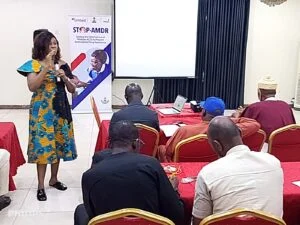
Commissioner for Health, Prof. George Ugwu, gave the task on Saturday at the 2026 first quarter malaria’s advocacy, communication and social mobilisation group meeting held in Enugu.

Key Highlights:
- The Enugu State Government has intensified efforts to eliminate malaria by urging stakeholders and partners to expand awareness campaigns on free malaria testing and treatment at the grassroots level.
- George Ugwu said free malaria testing and treatment are currently available in all government-owned health facilities and selected private health facilities across the state.
- The state government, under Peter Mbah, is targeting zero malaria prevalence within the next few years through increased public awareness and preventive measures.
- Residents are being encouraged to maintain environmental cleanliness, sleep under insecticide-treated nets, and take advantage of free malaria services at nearby primary healthcare centres.
- Traditional rulers, religious leaders, and development partners, including Jhpiego, have pledged continued support for malaria elimination and broader healthcare improvements in Enugu State.
Represented by Dr. Ifeyinwa Ugwunweze, the Health Secretary of Enugu-East Local Government Area, the commissioner said that the state is pursuing total malaria elimination with the overwhelming awareness needed.
According to him, our health-loving Governor Peter Mbah, is optimistic that Enugu State can achieve zero malaria prevalence within a few years.
“At this stage, we, both stakeholders, partners and everybody concerned to stop the menace of malaria, are taking the message of free testing and treatment of malaria to the hinterlands, to our rural people.
“For the rural people to know that it is their right to demand and access free testing and treatment of malaria in the primary healthcare centres close to their homes.
“We are sending massages of other necessary things to be done to eliminate malaria, like good environmental cleanliness and always sleeping under insecticide treated nets, which some have already,” he said.
The commissioner appreciated various stakeholders and partners for their huge contributions to malaria elimination in the state.
He noted that there is the need for more aggressive work to be done by getting every resident to key in into the malaria elimination focus of the state government to hit its target.
Corroborating, Igwe Emmanuel Anichebe, who represented the Enugu State Traditional Rulers’ Council, said that the royal fathers would give the government all support to drive the message to all communities in the state.
Read also:
- Malaria Day: Enugu sets new target of below 5% prevalence rate
- Enugu scales up free malaria testing, treatment in 527 health facilities
- Enugu, partner enrol 1,000 pregnant women on free health insurance scheme
“Royal fathers will drive the message home and ensure that government-owned health facilities in our communities are up and doing in the state’s free testing and treatment of malaria campaign,” Anichebe noted.
Speaking, the Chief Imam of Enugu, Sheik Ibrahim Ugwu, assured that religious leaders would work with the state government on the awareness on malaria elimination.
In a message, Mr Ozioma Nwobodo, state Coordinator of Johns Hopkins University Affiliate (Jhipiego), assured that the organisation would continue to provide professional partnership to Enugu State.
Nwobodo noted that Jhipiego would scale up it support, not only on malaria elimination but other aspect of healthcare delivery to improve the quality of lives of the residents of the state.
Earlier, the Programme Manager, Enugu State Malaria Elimination Programme, Dr. Ifeoma Otiji, noted that the stakeholders and partners of the programme had created huge visibility and discourse on malaria as a state emergency.