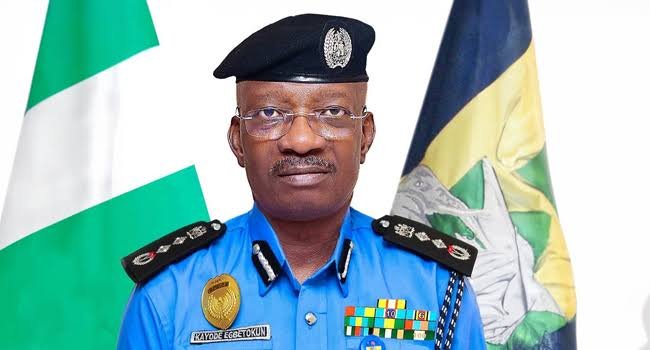
The 22nd Inspector-General of Police, Olukayode Egbetokun, formally retired on Thursday after 36 years of service in the Nigeria Police Force, delivering an emotional valedictory address at his pulling-out parade in Abuja.
Egbetokun described the occasion as a defining moment in his career, noting that his final salute in uniform marked the culmination of decades of policing and public service. He also announced that the federal government had approved the introduction of academic and professional programmes leading to National Diplomas in police colleges nationwide.

“Leadership of the Nigeria Police Force is never the story of one individual, but the unfolding story of an institution in constant service to the nation,” Egbetokun said, emphasizing that policing is a continuous institutional journey rather than the accomplishment of a single person.
The outgoing police chief expressed gratitude to President Bola Ahmed Tinubu for the confidence placed in him to lead the force, highlighting his administration’s focus on strengthening institutional processes, expanding operational capacity, and enhancing the police’s ability to respond to evolving security challenges.
During his tenure, reforms were implemented to reinforce professionalism, promote merit-based advancement, and strengthen intelligence-led policing. Notably, the Police Intelligence Bureau was upgraded to a full department headed by a Deputy Inspector-General of Police, while the legal and medical units were elevated to directorate status to improve efficiency.
Read Also:
- Cynosure Hospital denies viral video linked to Jessica Elena’s death
- PDP BoT holds emergency meeting in Abuja after Court of Appeal ruling
- Contract to connect Abuja to Itakpe-Warri Rail to be awarded in 2026 – NRC MD
Egbetokun also highlighted technological improvements, including the transformation of the police cybercrime centre into a modern facility capable of monitoring Nigeria’s cyberspace and supporting contemporary investigations. The national criminal database was expanded, and officers across commands received enhanced training to boost investigative and operational capacity.
Operational presence was strengthened through the establishment of additional Police Mobile Force squadrons, new area commands, and divisions aimed at bringing policing closer to communities. The Special Intervention Squad, he said, recorded notable operational successes nationwide.
On international collaboration, Egbetokun noted partnerships that provided officers with scholarships and specialised training in countries including the United States, United Kingdom, China, Egypt, Germany, and the United Arab Emirates.
Infrastructure development was another key milestone, with projects completed or redeveloped in Kano and Kaduna states, ongoing works in Lagos, and commissioning of modern police headquarters in Ogun and Adamawa states.
Among other achievements, Egbetokun highlighted the federal government’s recognition of April 7 as National Police Day in honour of officers, and the passage of the Police Institutions and Establishments Act, which provides direct funding for police training institutions.
He thanked officers for their loyalty and dedication, and also acknowledged the support of the Minister of Police Affairs, the National Assembly, sister security agencies, international partners, and his family
Egbetokun formally handed over leadership to his successor, the 22nd Indigenous Inspector-General of Police, Olatunji Rebuwandisu, urging him to continue strengthening the force.
“As I leave today, I do so with immense pride in the Nigeria Police Force and with full confidence that this great institution will continue to grow stronger in its commitment to protecting the Nigerian people,” he said.