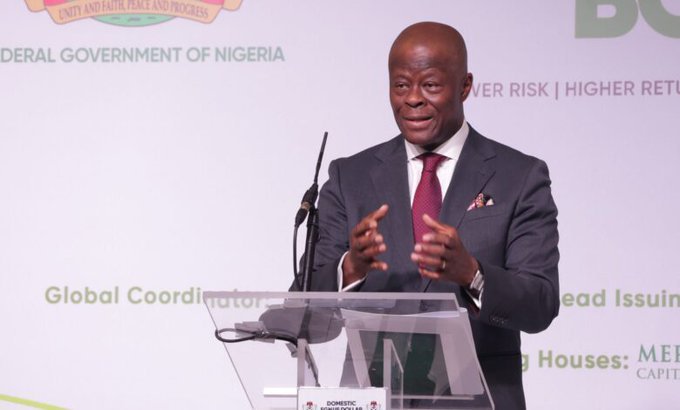
The Minister of Finance and Coordinating Minister of the Economy, Wale Edun, has advised developing countries to fashion out strategies strategies to reduce the impacts of global economic shocks.
The minister’s gave the advice in a statement issued by the Head of Information and Public Relations Unit of the ministry, Efe Ovuakporie.
Edun made the appeal during a G24 news briefing held alongside meetings of the International Monetary Fund (IMF) in Washington, D.C.

He cautioned that overly aggressive interest rate increases could weaken ongoing economic reforms, while delayed policy action may worsen inflationary pressures.
According to him, central banks in developing economies play a crucial role in managing challenges such as energy disruptions and geopolitical uncertainties.
Edun noted that responses to these challenges differ across countries, especially between oil exporters and importers, stating that while nations like Nigeria may gain from higher oil prices, oil-importing countries often face increased costs.
However, either category of nations, he insisted, continue to experience inflation driven by global energy trends.
He added that even oil-producing countries are not shielded from rising costs, as increases in gas, fertiliser, and food prices continue to affect economies broadly.
The minister emphasised the need to strengthen economic resilience, urging governments to make use of available fiscal buffers and introduce targeted, short-term support for vulnerable populations instead of reversing key reforms.
He warned against returning to subsidy regimes, noting that policies such as fuel subsidy removal and foreign exchange liberalisation have helped reinforce Nigeria’s economic structure despite external shocks.
Edun also stressed the importance of protecting vulnerable groups from rising living costs without compromising long-term reforms necessary for sustainable growth.
He observed that favourable oil price movements could improve fiscal and external balances for exporting nations, creating opportunities for responsible investment.
Nonetheless, he underscored the importance of maintaining sound macroeconomic discipline.
He further pointed out that some countries have adopted hedging strategies to stabilise oil revenues, helping to improve predictability and support long-term planning amid global volatility.
The minister expressed concern that declining development assistance and increasing debt servicing obligations are putting additional pressure on developing economies.
According to him, many countries now spend more on debt servicing than they receive from aid and investment, limiting their ability to fund development initiatives.
Edun called on multilateral institutions to provide more liquidity support and policy guidance to help developing nations manage current economic challenges.
He identified domestic revenue generation as a more sustainable solution, advocating for improved tax systems and stronger private sector involvement to boost government earnings and reduce reliance on external funding.
He also recommended concessional financing and innovative risk management approaches to lower borrowing costs, noting that high debt burdens continue to hinder growth.
Read also:
- FG, IsDB partnership aimed at achieving $1tn economy by 2030 -Edun
- Edun tasks NIPSS participants on practical pathways to unlock Nigeria’s orange economy
- Edun meets IMF director in Abuja, pushes for stronger ECOWAS economic coordination
On the role of technology, Edun acknowledged that while Artificial Intelligence may initially deepen inequality, it also offers opportunities to enhance revenue collection through automation and digital systems.
He added that improving tax-to-GDP ratios will depend largely on adopting such technologies to increase efficiency and transparency.
Edun also raised concerns about slowing global trade, attributing it to supply chain disruptions and growing economic fragmentation, which are pushing developing countries to focus more on domestic production and regional cooperation.