A former flight attendant, Alex Quigley, has raised fresh concerns over what airline passengers consume midair, warning that some of the popular in-flight food and beverage choices may be far less safe than travellers assume.
His revelations, coming at a time when Nigerians increasingly take to the skies, whether on the early morning Lagos-Abuja business shuttles or long-haul flights to London, Dubai, and beyond, are already sparking unease.

In an interview with Women’s Health on Friday, Quigley explained that passengers often overlook the health risks tied to what they eat or drink once airborne, focusing instead on seat preference or baggage issues. But, he insists, those seemingly harmless choices could significantly affect their well-being thousands of feet above sea level.
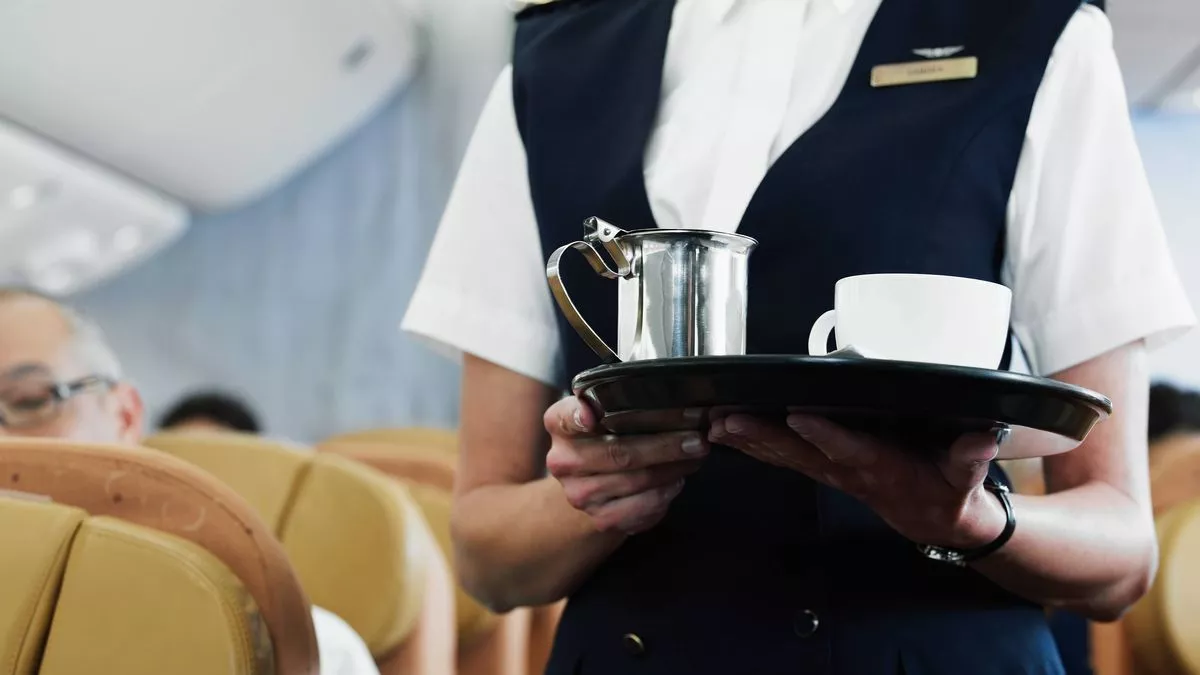
One of the biggest red flags, Quigley said, is the hot beverage service offered by airlines. According to him, aircraft rely on potable water tanks that are rarely cleaned or refilled with strict regularity. “Aeroplanes utilize potable water tanks, and often, that water sits there for a long, long time. There’s no telling how often or when the tank has been cleaned last,” he revealed.
Even more disturbing, he recounted a routine practice that may shock Nigerian travellers who depend on a morning caffeine boost before facing hectic schedules. “We were never allowed to pour the remaining coffee brewed into the drain of the airplane and were usually instructed to pour the coffee out into the toilet… I never knew or saw anyone empty and refill or wash them out in between trips,” Quigley said.
This disclosure calls into question just how hygienic that complimentary cup of coffee or tea really is, and for frequent flyers commuting daily between Abuja and Lagos, it is particularly unsettling.
Read also:
- ABANDONED: Man serves as Teacher for 22 years without salary In Delta
- Sylva threatens to sue Sahara Reporters over incriminating report
- N-Power beneficiaries threaten nationwide protest, issue 30-day ultimatum
The former flight attendant also warned against strong-smelling snacks, which can quickly turn offensive in a pressurised cabin. He cited corn nuts—sometimes even served in first-class snack baskets—as an example. “The roasted barbecue flavour is the worst. When you open the bag, it smells like something is burning on the plane,” he said, noting how such odours can make the flight uncomfortable for others.
Similarly, meat-based meals are not always the safest option. “You’re putting the trust of storing any meat in the flight attendant’s hands… food poisoning on a plane? No thanks!” Quigley cautioned.
What passengers eat before boarding also matters. Gas-inducing foods—such as beans, fatty meals, dairy, and carbonated sodas—can trigger bloating and discomfort once airborne. Because of the cabin’s pressurised environment and recycled air, even natural bodily functions can create an unpleasant shared experience. “Air in the aeroplane is circulated, but it’s never fresh. That means if someone passes gas, you’re breathing that in over and over again,” Quigley remarked.
Alcohol consumption, another common indulgence, carries its own risks. While many Nigerians enjoy a glass of wine or cocktail midair, believing it helps them relax, Quigley warned that alcohol hits harder at altitude. “You’re not actually doing yourself a favour by drinking on a flight. When pressure is decreased in the aeroplane, the body can’t absorb oxygen as well,” he explained. The result, he added, is increased dehydration, dizziness, and fatigue.
Another flight attendant echoed the warning, particularly against certain drink mixes. Bloody Marys and orange juice-based cocktails, she said, are especially harsh because they are salty or highly acidic. “I always tell folks to drink water,” she advised.